
Magic City
Miami
Art Deco, ocean drive, and Latin heat
What makes this place famous?
Images that explain Miami
Photography first. Words second.
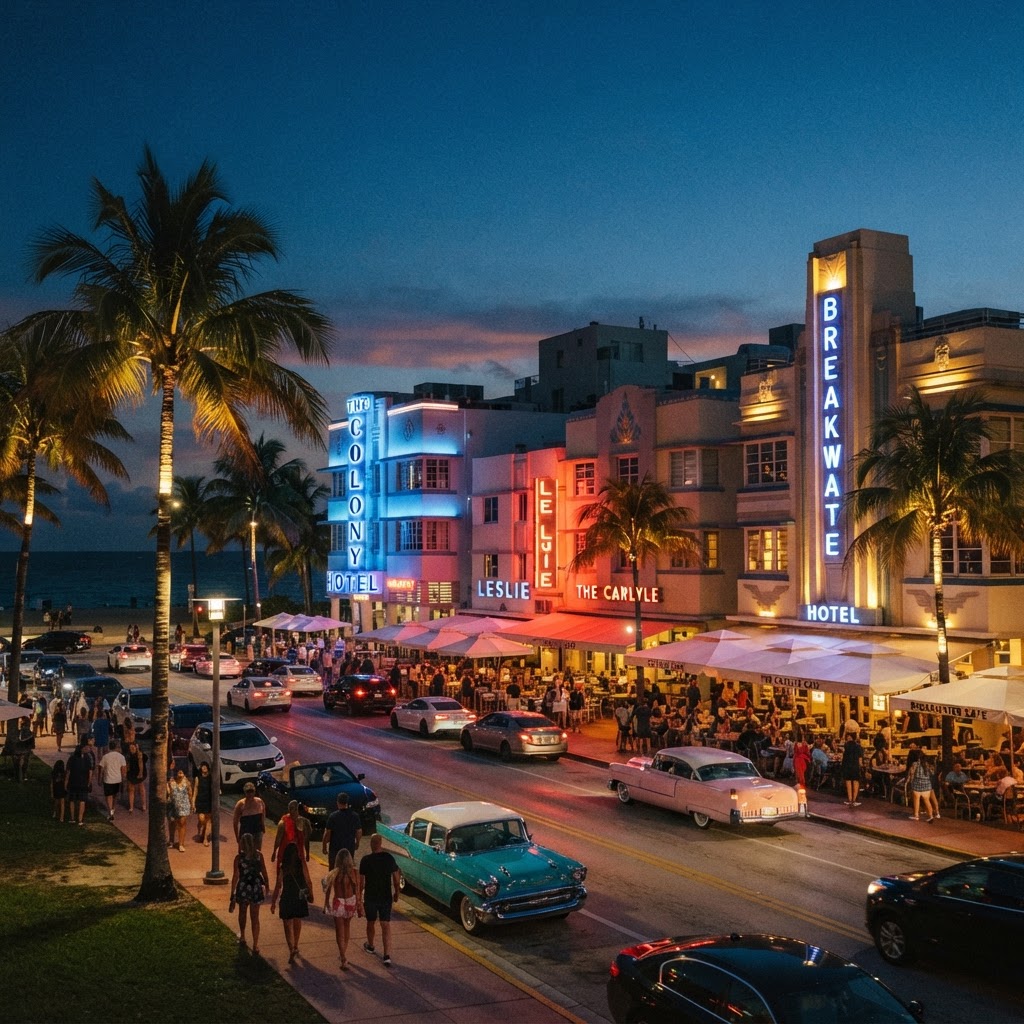
Ocean Drive Art Deco hotels
A pastel chorus of streamlined 1930s coastal dreams.

Wynwood Walls murals
A spray-painted cathedral where paint and salt argue.
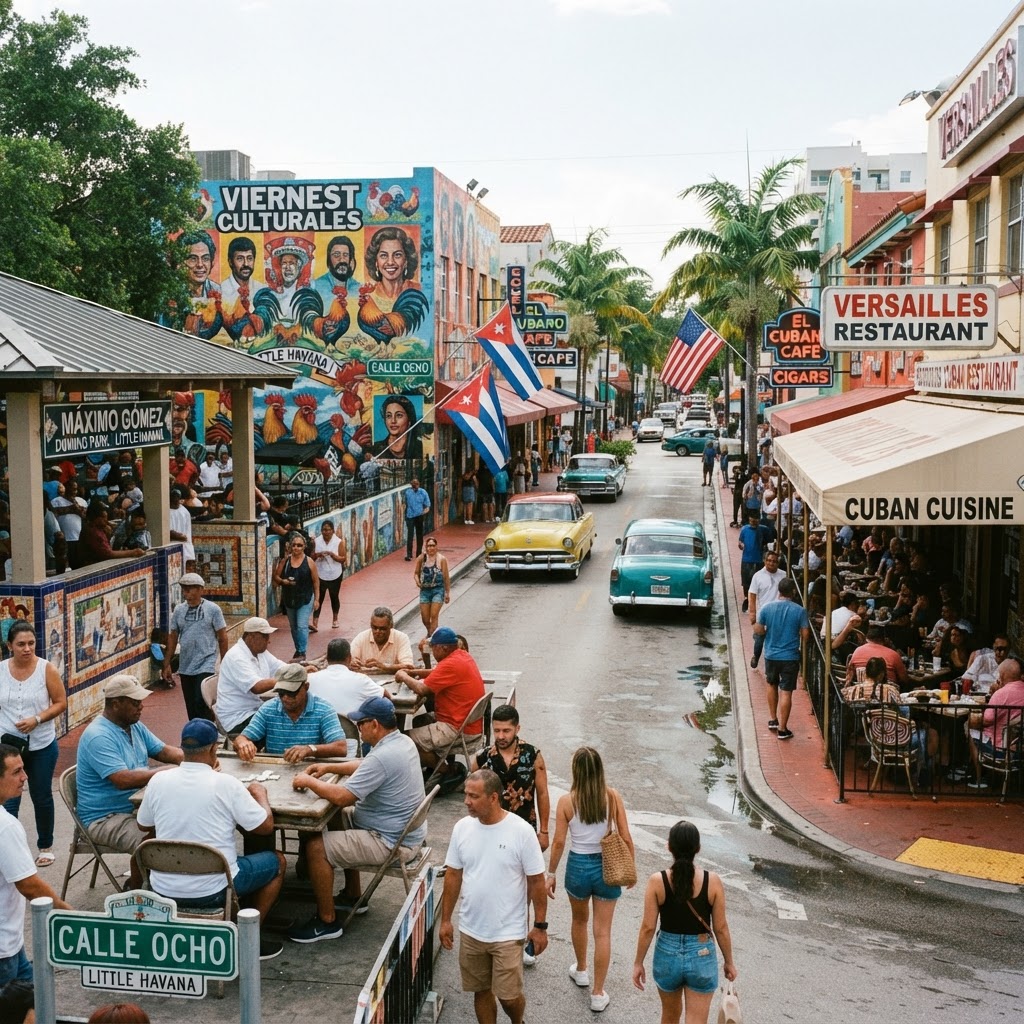
Calle Ocho, Little Havana
A cigar-smoke lit geography of rum and rhythm.

Vizcaya Museum and Gardens
A Venetian villa of coral stone and orange scents.
Introduction
Miami, at a glance
Miami sits at an intersection of ocean, air, tile and neon: the Atlantic at one shoulder, Biscayne Bay folding inboard, the pastel horizontals of Art Deco façades, and the vertical flash of contemporary towers. Those four signature images—South Beach’s shoreline geometry, the low-rise rhythm of Ocean Drive, Wynwood’s painted warehouses, and the bay’s luminous sweep—are the visual vocabulary of a city that reads equally well as a summer day and a late-night jazz solo.
Why visit? For the way Miami layers histories and climates into a single, walkable story. You come for a strip of white sand and a quick dip in the Atlantic, and you stay because the city’s urban textures—the Cuban coffee carts, the galleries in a former warehouse district, the dinner tables threaded with Caribbean and South American flavors—turn transit into discovery. Miami is not a single mood; it’s a sequence of scenes that keep rearranging themselves in appetizing, unpredictable ways.
Why should I come?
Why visit Miami?
What should I expect to find that matters? Visit for concentrated contrasts: the preserved 1920s Art Deco ensemble on Ocean Drive, Cuban life on Calle Ocho, Wynwood’s large-scale murals and the barrier-island beaches; three lenses—architecture, food, street art—make the city legible. Expect the smell of espresso, the rum-filtered warmth of evenings, and an urban coast that stages both performance and repose. Come ready to meet the city's rhythms.
Country
United States
Currency
United States Dollar
Language
English
Airport
Miami International Airport (MIA)
Time Zone
America/New_York (Eastern Time; UTC-5 standard, UTC-4 daylight)
Best Time
December–April
What shouldn’t I miss?
Miami's must-see sights

Pérez Art Museum Miami (PAMM)
What do locals choose to show visitors? PAMM’s glass facades open to Biscayne Bay, where contemporary art meets sea breeze and footsteps echo in sunlit galleries; pause to hear ferry horns and feel humid salt air through the museum’s terraces.
View Details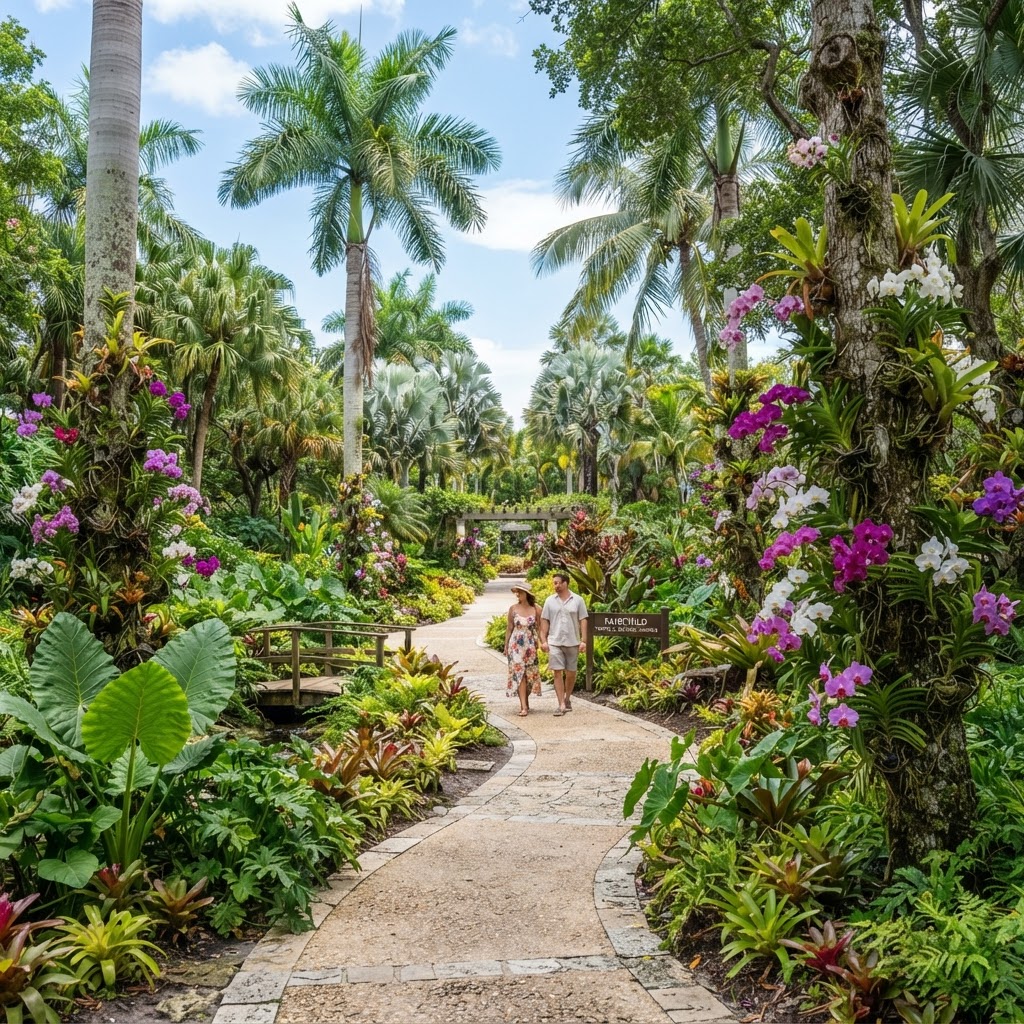
Fairchild Tropical Botanic Garden
A living archive of tropical palms and orchids; the humid canopy releases citrus and wet-earth scents while hummingbirds slice the warm air, best explored by slow paths and deliberate breath.
View Details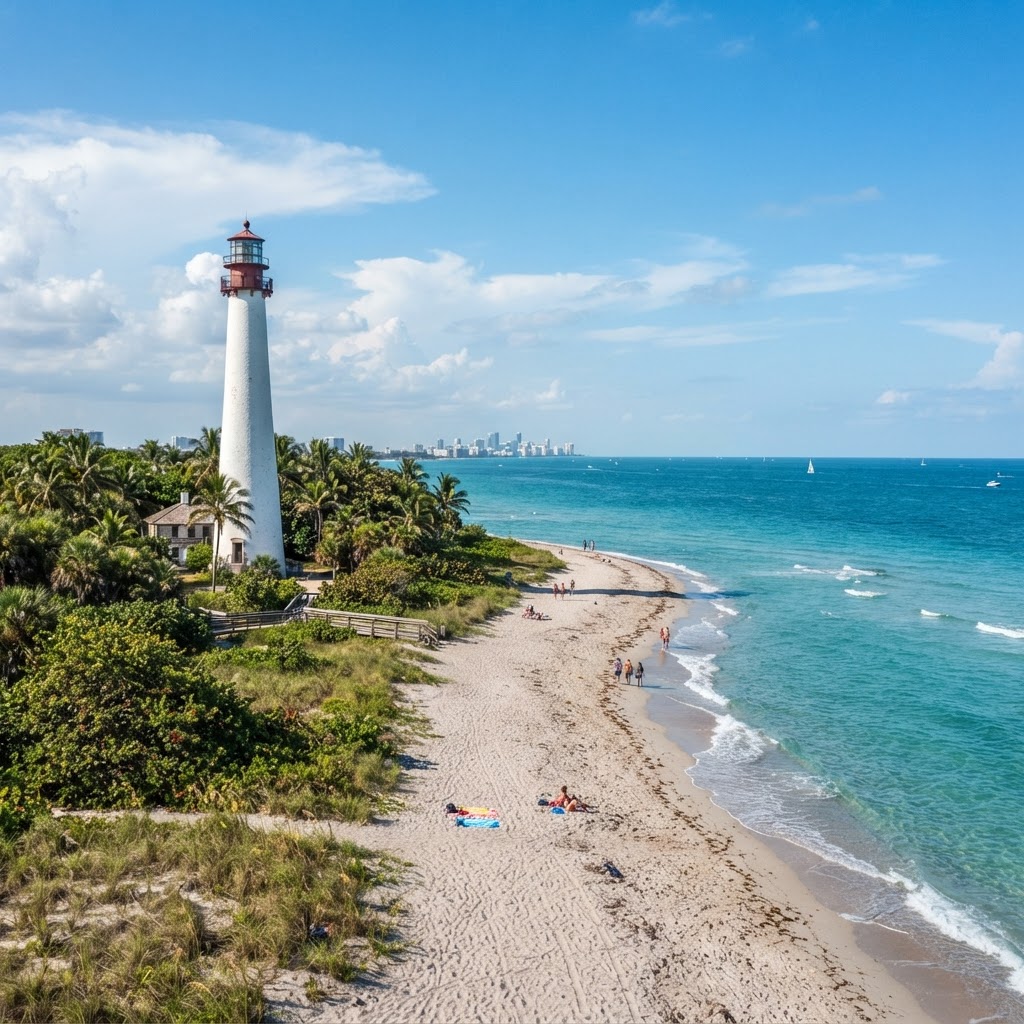
Bill Baggs Cape Florida State Park
An Atlantic edge with the Cape Florida Lighthouse, where warm sand presses underfoot and the ocean spray tastes of salt while kayaks glide past the reef; climb the lighthouse for a wind-whipped city-to-sea panorama.
View Details
Miami Seaquarium
A long-standing marine park where salt-soured air meets the slap of dolphin tails and the humid tang of marine pools; family-friendly and offering close views of sea life and live presentations.
View Details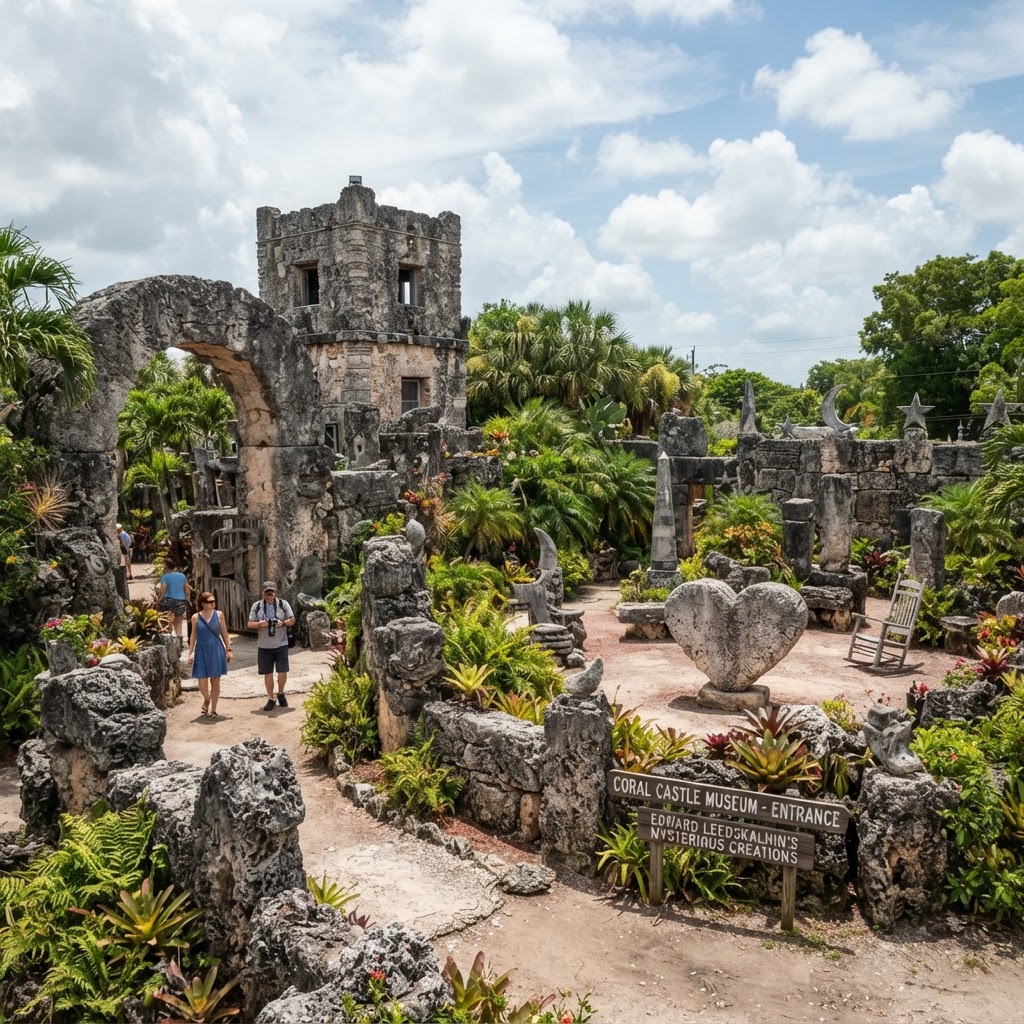
Coral Castle (Homestead)
A mysterious sculpted estate of oolitic limestone where quiet gears creak and warm stone holds the sun’s heat; an eccentric, tactile stop south of the city that rewards curious hands and quiet questions.
View DetailsDid You Know?
A city of small surprises
The facts that change the way you see it.
Founded by a woman
Miami is often cited as the only major U.S. city founded by a woman: Julia Tuttle, a local landowner, persuaded railroad magnate Henry Flagler to extend his line in the 1890s, a decisive act that launched Miami’s development into an incorporated city in 1896.
Cruise capital
PortMiami has long been one of the world’s busiest cruise ports—handling millions of passengers annually—and its terminals connect the city directly to the Caribbean and beyond, shaping Miami’s identity as a maritime gateway.
What experiences can I book?
Keep exploring Miami
Tap an attraction to open Makutet Experiences, filtered for Miami.
What do locals know?
Practical insight from people who've lived it
Little Havana
Little Havana (Calle Ocho) is Miami’s Cuban cultural core, centred on SW 8th Street with cigar shops, social domino tables and cafecito counters; you hear salsa bands and the chatter of Spanish-language radio. Annual Calle Ocho festival highlights the barrio’s theater, food and political memory, and the aroma of roasted coffee and frying pastelitos anchors the streetscape.
Versailles Restaurant
Versailles Restaurant on SW 8th Street is a long-standing Cuban institution known for cafecito, ropa vieja and pastelitos, frequented for community meetings and casual meals; its counters and mirrored interior evoke mid‑20th century immigrant life. The steady hiss of espresso machines and the bright citrus of mojo are signature sensory markers of the place.
Wynwood Walls
Wynwood Walls is a concentrated outdoor mural park showcasing international and local street artists, framed by galleries, breweries and creative businesses; the district’s painted walls rotated into a global street-art destination. Footsteps on concrete and the scent of nearby kitchens make visiting a layered sensory route through contemporary public art.
Lincoln Road Mall
Lincoln Road Mall is an open‑air pedestrian shopping street in South Beach with boutiques, cafes and weekend markets, designed for strolling between retail and people-watching; the promenade is shaded by palms and punctuated by outdoor seating. Expect clinking plates, espresso steam and the nearby whisper of ocean breeze as you walk between stores.
Coconut Grove — Bayfront Bohemia
Coconut Grove feels like Miami’s oldest bohemian neighbourhood: shady bougainvillea lanes, marinas and café terraces where the salt‑sweet tang of Biscayne Bay drifts through the air. With more brunch spots than you can sample, wander under banyans to discover indie galleries, weekend markets and a relaxed, seaside pace that contrasts sharply with nearby high‑rise Miami.
Coral Gables — Miracle Mile & Venetian Pool
Coral Gables unspools like a Mediterranean reverie around Miracle Mile: coral‑stone façades, shady avenues and the Venetian Pool’s tiled cascades where the cool limestone and the soft murmur of water meet banyan‑shaded courtyards. The neighborhood smells faintly of jasmine and citrus, inviting lingering walks past classic cinemas, lush college grounds and architected hotels that reward slow exploration.
Miami Design District — Galleries, Craft & Curated Coffee
The Miami Design District is where bold public art meets curated retail and gallery culture: gleaming façades, installations and boutique ateliers. Expect the faint aroma of espresso and new leather in gallery doorways and the metallic echo of opening nights; arrive midday, when showrooms hum and designers and collectors populate terraces, turning the quarter into a living design exhibition.
Virginia Key — Quiet Beaches & Skyline Vistas
Virginia Key is an unexpected pocket of shoreline and mangrove‑scented air off Biscayne Bay: quiet beach stretches, kayak launches and picnic groves with unguarded skyline views of downtown Miami. The place carries a maritime hush broken by gull calls and distant motorboats; arrive at golden hour, to watch the city silhouette deepen and to feel the cooling bay breeze as lights begin to wink on.
Book it
The moments worth booking ahead
Curiosity becomes a plan. These are the experiences that turn a wish list into a date in your calendar.
Art Deco walking tour
A guided Art Deco walking tour with the Miami Design Preservation League explains facades and history, ensuring contextual depth that a casual stroll won't supply.
Everglades airboat ride
An Everglades airboat tour from Miami gives direct wildlife viewing and ecological interpretation, so reserve a slot for consistent departure windows and knowledgeable pilots.
Little Havana food tour
A Little Havana food and cultural tour curates restaurants, cafecitos and cultural stops, connecting tastes and stories in a way independent wandering rarely achieves.
Wynwood mural tour
A Wynwood guided mural and gallery tour pairs artists’ backstories with site visits, offering informed context that deepens the visual experience of public art.
The story of Miami
How Miami came to be
Long before the pastel façades and glass towers, the low islands, mangrove fringes and riverine plains around Biscayne Bay were home to the Tequesta people. European contact arrived with Spanish explorers in the 16th century, but the region remained sparsely settled for centuries: Havana and St. Augustine mattered more to New World navigation than this subtropical inlet. The natural landscape—barrier islands, tidal flats and rich fisheries—shaped the rhythms of human life here long before urban grids were imposed.
A decisive turn came in the late 19th century. In 1896 Julia Tuttle, who owned land on the north bank of the Miami River, persuaded Henry Flagler to extend his Florida East Coast Railway by promising the economic promise of citrus and real-estate development. That railroad link remade south Florida from a seasonal frontier into a boomtown. In the 1920s Miami experienced a land boom that produced much of the low-scale, ornamented architecture seen today; the Art Deco and Mediterranean Revival buildings of South Beach and Coral Gables are material legacies of that era.
The mid-20th century introduced new layers: the Cuban Revolution of 1959 sent waves of migrants whose cultural imprint reshaped Miami’s language, cuisine and politics, while later decades brought arrivals from across Latin America and the Caribbean. At the same time Miami became an international hub for trade, finance and culture: galleries in Wynwood, restored Art Deco districts, and civic investments in arts institutions rewrote the city’s image. Yet the narrative is never only triumphal—Miami has navigated racial segregation, environmental vulnerability to hurricanes and sea-level rise, and stark inequality, all of which continue to inform debates about the city’s future.
Where should I stay?
Where to stay in Miami
Curated stays chosen to suit every kind of traveller.

South Beach (Miami Beach)
First-timers · beachgoers · nightlife
There is no bad time to stay here — only different energy. South Beach places you steps from sand, neon-lit evenings, and ocean-breeze mornings; expect warm sand beneath your toes, music seeping from open windows, and a walkable mix of hotels, eateries and nightlife.
Check availability
Brickell financial district
Urban professionals · couples · short stays
There is a simple reassurance in skyline-facing rooms. Brickell suits business-minded travellers and couples who want sleek bars, rooftop pools and quick transit connections; concrete and glass hold the midday heat while evening terraces offer cool breezes and cocktail chatter.
Check availability
Coconut Grove
Families and long-stay travellers
There is calm before any decision you make about hotels here. Coconut Grove’s shady lanes, bayfront parks and bohemian cafés suit longer stays and slower mornings; jacaranda shade, marina salt, and the soft creak of boat lines set a languid tempo.
Check availability
Fontainebleau Miami Beach
Resort seekers · style-conscious travellers
There is historic glamour you can rely on. Fontainebleau pairs mid-century glamour with large pool decks and beachfront service; expect the echo of splash and lounge music, and book a room for full-service resort amenities and a signature sense of Miami ceremony.
Check availabilityWhy this destination?
Why Miami, and not somewhere else
The Signature Moment begins before the sun breaks fully over the Atlantic—on a seawall at South Pointe Park, where the bay and the ocean meet and the first light takes its time painting the city. On a clear morning the skyline reads like a drawing: low Art Deco blocks, New World Mediterranean rooftops, modern towers softening in the distance. A local fisherman strings bait on a pier; joggers pass by in measured rhythm. The air is humid but sweet, carrying the smell of salt and citrus from a nearby market. This is a good hour to calibrate: watch light rearrange the city’s familiar lines and learn to see Miami as a composition of edges—shore, road, bay, building.
From there, move inland to Little Havana, where Calle Ocho condenses Cuban diasporic life into a short, dense strip. A cortadito and a hand-rolled cigar set a steady tempo; dominoes click in a park, and storefronts display vintage signs in Spanish. The neighborhood’s modest size is its virtue: you can cross it by foot and find lacquered wood chairs, tilework, and the kind of conversations that make eating here feel like an act of local participation. The stories you overhear—about the 1960s exiles, about relief and reinvention—add a human scale to Miami’s grander narratives.
By midday, you could be under the painted canopies of Wynwood. Former industrial blocks are now galleries and studios; the Wynwood Walls collection made the district a proving ground for international street artists and a case study in cultural reinvention. Walk slowly. A mural’s scale demands time: the pigment, texture, occasional hand-lettering, and the way insects and rain have altered the surface. Nearby, a lunch scene will fold in Venezuelan arepas, Peruvian ceviche, and a taco joint doing its own bright thing. The culinary meld is as public as the murals—food here is a visible record of migration and entrepreneurship.
Finish as the day bends into evening at South Beach’s Ocean Drive, but not in the postcard way. Find a bench at Lummus Park and watch the Art Deco façades shift from hard morning edges to saturated pastels; neon will arrive soon but not yet. The ocean breathes constant and steady behind you, and the city—noisy, hospitable, complicated—arrives in layers: the pedestrian promenade, a couple dancing on the sidewalk, a late-night kitchen starting service. Miami's signature moment is not a single event but this concatenation of scenes—the hush of dawn, the domestic rituals of neighborhood life, the bright civic canvases, and the intimacy of a bench facing the sea—that together make you understand why people keep returning. It is a city of arrivals; it is also, insistently, a place to be arrived at.
Can I book somewhere to stay?
Where to stay in Miami
Live rates across Booking.com, Agoda, VRBO and Hotels.com — compare in one search, no extra cost to you.
Popular destinations
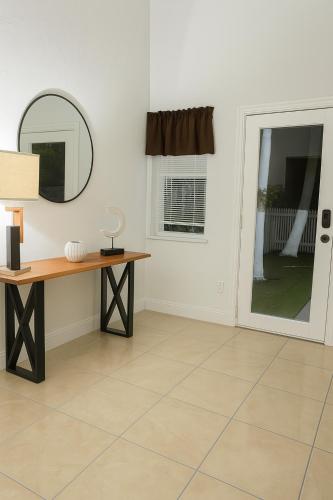
Safari Wynwood
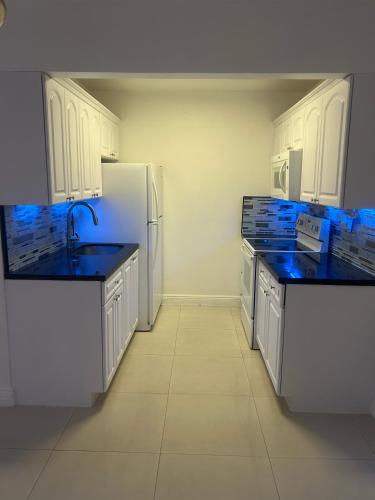
Vacay Spot Wynwood Jungle Getaway, Shower Massage jets, BBQ, Patio LED vibes, Prime LOC! 6 blocks away from Bars, Nite Clubs, Res, Shops

Sense28 Edgewater, an AvantStay Hotel
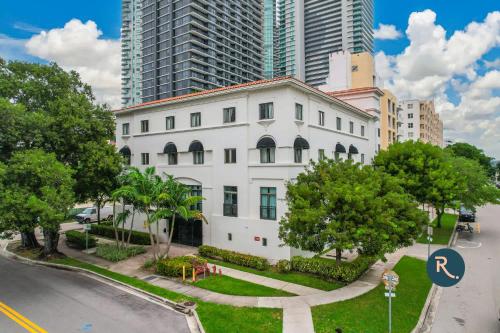
Roami at The Palace

Free Parking - Near to Wynwood & Design District
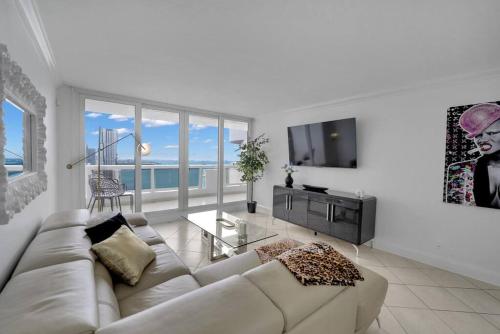
Ray of Light! Miami Penthouse!

Villa Zenora
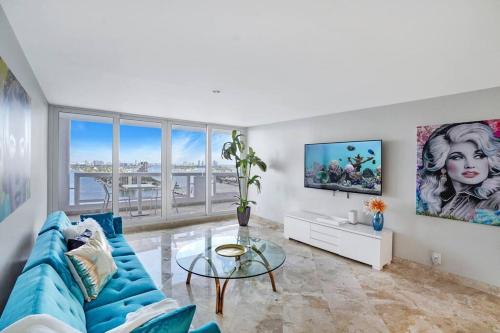
First Class! - Crystal clear water views!

The Marilyn! Renovated and Amazing Skyline Views!
Live rates across our partner network (Booking.com, VRBO, Expedia, Hotels.com) via Stay22. Makutet may earn a commission when you book — at no extra cost to you. Prices update in real time and may vary before booking.
When to come
Planning your Miami trip
There is no bad time to visit — only cheaper and cooler.
November–April
Clear skies, lower humidity and comfortable evenings make these months the most agreeable for walking neighborhoods, eating outdoors, and sampling beach time without oppressive heat.
May and October
Transitional months can offer good value and thinner crowds, though afternoon thunderstorms begin to appear and humidity rises; plan flexible outdoor time.
June–September
Summer brings intense heat, frequent afternoon storms and the official Atlantic hurricane season; if you travel then, prioritize indoor options and stay alert to weather advisories.
What else do I need for my trip?
Everything else for your trip

Flights to Miami
Find the best flights to Miami.
Explore
Accommodation in Miami
Discover the best hotels and resorts in Miami.
Explore
Airport Transfers
Arrange transport between Miami Airport and your accommodation.
Explore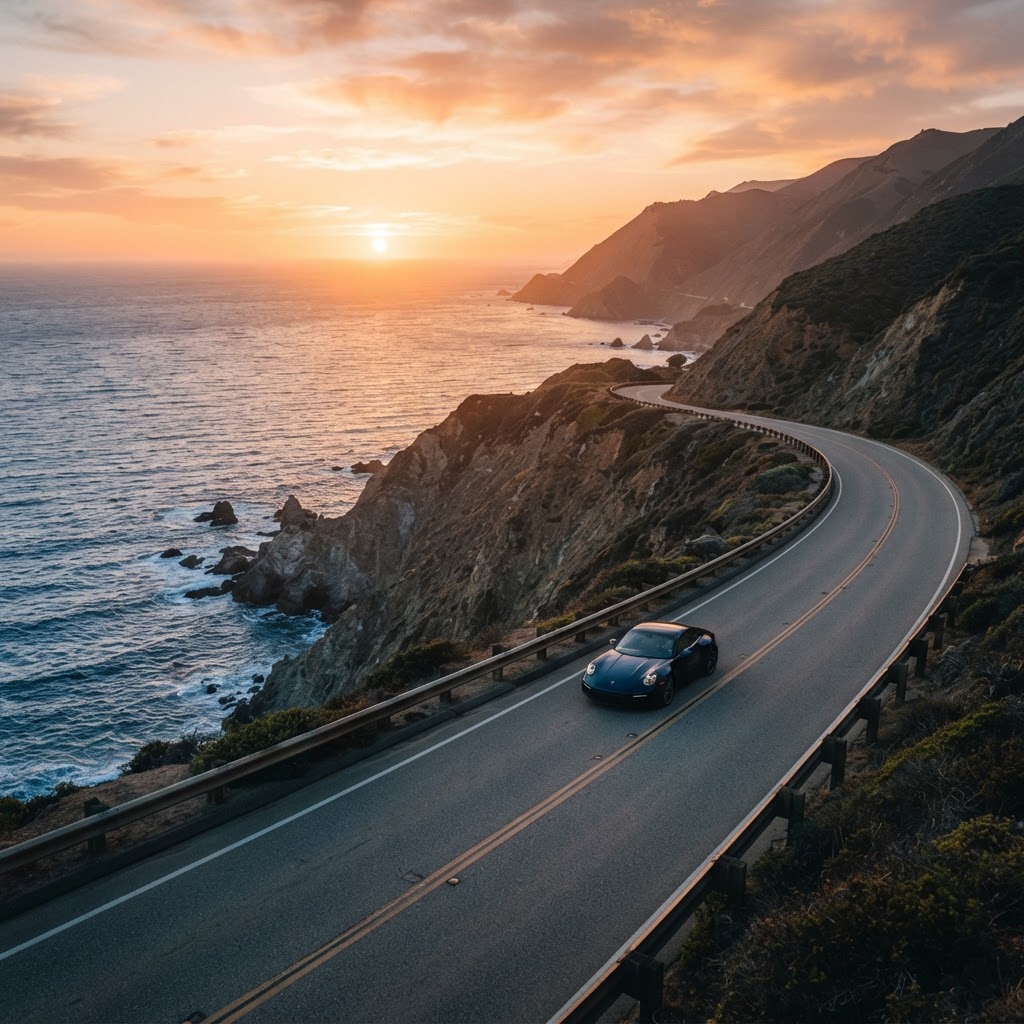
Car Hire
Explore Miami and surrounding regions with a rental vehicle.
Explore
Travel Insurance
Protect your trip before travelling to United States.
Explore
eSIM & Connectivity
Stay connected throughout your visit to Miami.
ExploreWhat do I need before travelling?
What you need before you go
Budget tips for Miami
- ·You can visit Miami on a mid-range budget; carry small bills for markets and street vendors, as some cash-only counters still operate, and use affordable lunch plates or food trucks to stretch costs. Prioritise public beaches and free gallery nights where possible, and expect salt and sun on your jacket pocket.
Getting around: transit and rides
- ·You can rely on Metrorail and Metrobus for many city routes, so buy a reloadable EASY Card, or use Miami-Dade's PalmTran and free trolleys for short hops, as they link neighbourhoods economically. Insist on metered taxis when using street cabs, or request the app's fare estimate, and enjoy the warmth of coastal breezes between stops.
Safety basics
- ·You will find most areas safe by day; stay aware at night in unfamiliar blocks and keep valuables discreet, as petty theft occurs around busy tourist spots. Use well-lit routes after dark and prefer rideshare pick-ups at official points, and keep a calm, alert posture under the palms.
Connectivity and sim cards
- ·You can get prepaid SIMs at the airport or downtown shops; pick a short-term data plan, as many services depend on mobile apps, and top up online when needed. Expect strong coverage in core districts and a sea-salted phone screen after beach days.
Good to Know
Miami FAQs
Final inspiration
Go and see for yourself
Miami is a city that insists on movement: the tide, the traffic, the rhythms of a kitchen that never fully shuts down. Travel here alters the sense of scale—short distances can hold long stories—and rewards a slow, curious gait. Walk a block off Ocean Drive and you might overhear three languages, find a bakery doing a Cuban colada, or stumble into a park where pelicans angle above a glassy bay.
Leave room for contradiction. You can spend one day luxuriating on sand, the next touring a museum collection, and the evening sampling food that traces the Atlantic’s arc to the Caribbean and beyond. Miami’s pleasures are decidable and restless; the city is most luminous when you let it wander into you rather than when you try to see it all at once.
See It Through A Creator's Eyes
Want to discover Miami through people who have actually experienced it?
Explore Miami through the stories, photos, and perspectives of travel creators who have been there.
Find Creators Who Have Been to Miami