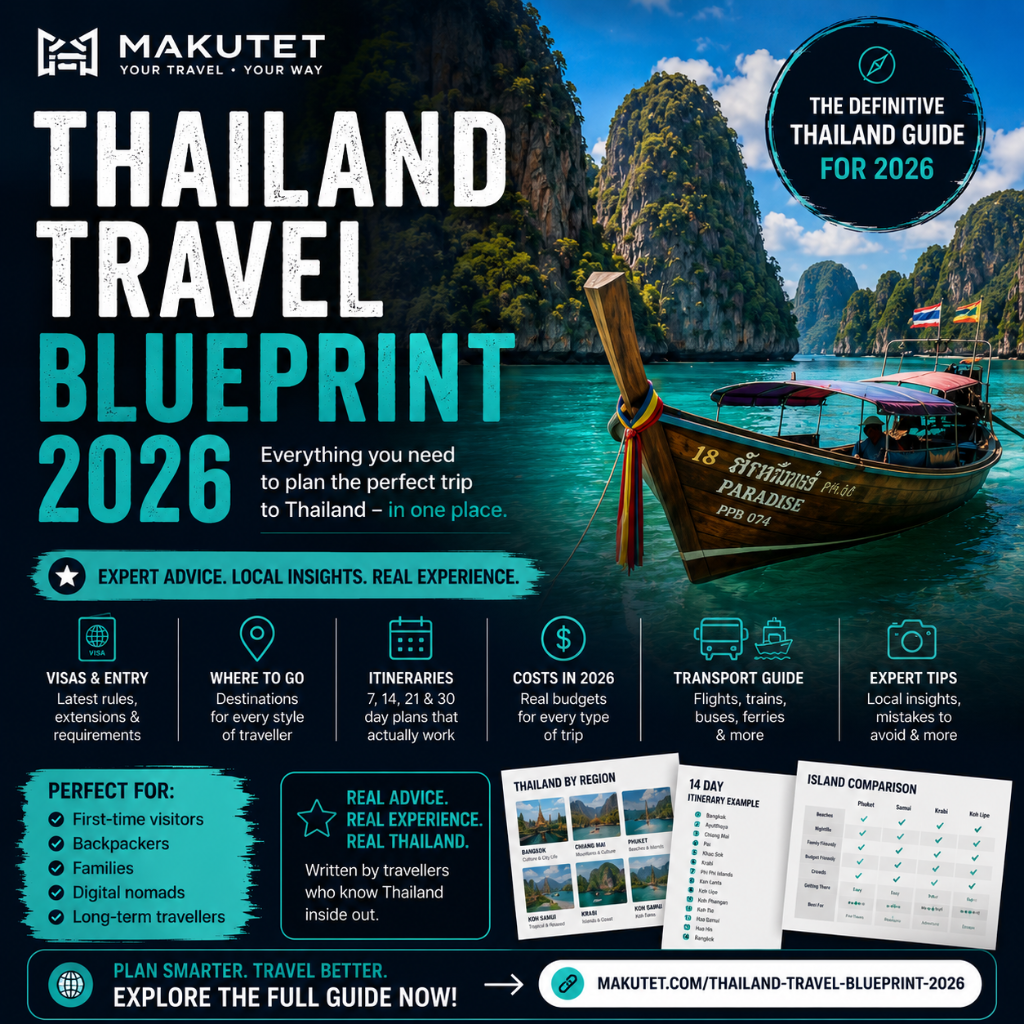
Thailand is the rare destination that rewards every kind of traveller — the backpacker counting baht, the honeymooning couple chasing sunsets, the family weighing safety and the digital nomad hunting fast Wi-Fi and a long-stay visa. This is our complete 2026 blueprint: not a list of clichés, but the planning framework we use ourselves, refined over years of living in and travelling across the country.
Live Thailand Intelligence
Visa Watch
Thailand Implements New Visa Exemption Limits Effective Sept 15, 2026
Visa Watch
Thailand Overhauls Visa Exemption Rules Effective September 15, 2026
Visa Watch
Thailand Overhauls Visa-Exempt Entry Rules Effective September 15, 2026
Opportunity
Trip.com Launches Global September 2026 Travel Promotion Campaign
The Case for Thailand
Why Thailand Remains Southeast Asia's Most Complete Destination
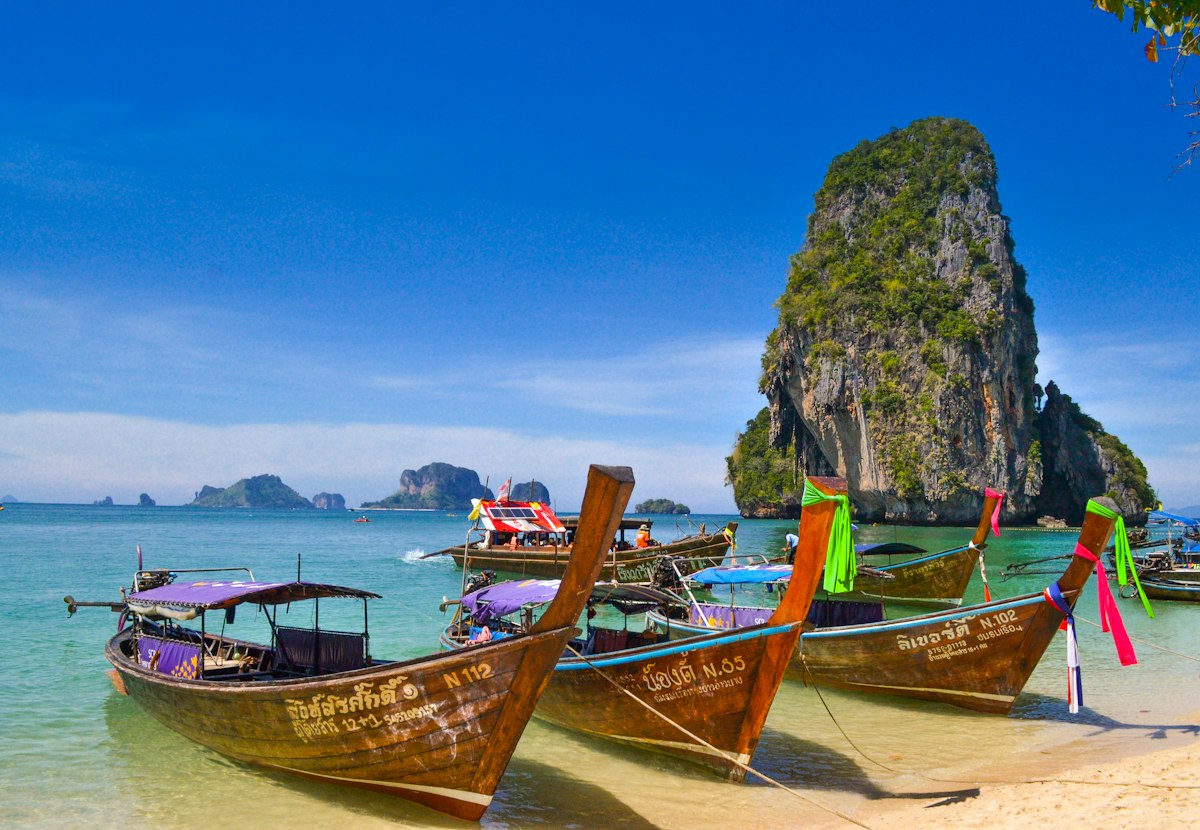
Plenty of countries do one thing brilliantly. Thailand's superpower is range — it does almost everything well, and it does it within a tourism infrastructure that has been refined for fifty years.
Travellers often compare Thailand to its neighbours — Vietnam for value, Bali for atmosphere, the Philippines for raw beaches. Each comparison reveals something true, but each also misses the point. Thailand is the only country in the region where you can land at a world-class international airport, eat a £1.50 bowl of boat noodles that genuinely changes your life, sleep in a £25 boutique guesthouse or a £400 overwater villa, and move between a megacity, ancient temple towns, jungle national parks and dozens of islands — all on a single, affordable, well-connected loop.
That completeness is why Thailand absorbs first-timers and seasoned travellers equally. The first-timer gets a gentle, safe, English-friendly introduction to Asia. The returning traveller peels back the layers: the Isaan northeast almost no tourists reach, the diving culture of the Gulf, the slow river towns of the north. You can visit Thailand five times and barely repeat yourself.
There's also the matter of value. In 2026, with sterling and the dollar both holding up reasonably against the baht, Thailand remains one of the highest quality-to-cost ratios on earth. A mid-range traveller lives like a minor king here. A budget traveller stretches a trip for months. And luxury, by Western standards, is astonishingly affordable — five-star service for the price of a three-star room back home.
The Makutet view
Thailand isn't the cheapest country in Asia anymore, and it isn't the most "undiscovered." Its real edge is reliability: the food is consistently superb, the transport actually works, the people are genuinely warm, and the infrastructure means you spend your energy enjoying the country rather than fighting it. That is worth more than a few saved baht.
Before You Go
Entry Requirements & Visas for 2026
Thailand's entry rules became dramatically more generous in 2024–2025, and most travellers now enter with almost no paperwork. Here's exactly how it works in 2026.
The single most important update: Thailand's 60-day visa exemption now applies to passport holders from over 90 countries — including the UK, the United States, Canada, Australia, most of the EU and many more. If you arrive by air or land for tourism, you are simply stamped in for 60 days, free of charge, with no advance visa required. This replaced the old 30-day rule and fundamentally changed how long people can comfortably stay.
The four routes into Thailand, simplified:
- Visa exemption (most travellers): 60 days on arrival, free, for eligible nationalities. Extendable once by 30 days at a local immigration office for 1,900 THB — so up to 90 days total without ever applying for a visa.
- Visa on arrival (VOA): For a smaller list of nationalities not covered by exemption — 15 days, granted at the airport for a fee. Most Western travellers will not need this.
- Tourist Visa (TR): A single-entry tourist visa giving 60 days, applied for at an embassy/consulate or e-Visa portal before travel — useful if your nationality isn't exempt, or if you want a cleaner long-stay paper trail.
- Long-stay options: The Destination Thailand Visa (DTV) for remote workers and "soft power" activities (up to 5 years, 180 days per entry), the Long-Term Resident (LTR) visa, the Education (ED) visa, and retirement visas for over-50s. These are covered in depth in our dedicated visa guide.
The TDAC — don't skip this
From 2025 Thailand introduced the Thailand Digital Arrival Card (TDAC), replacing the old paper TM6 immigration form. Every arriving traveller must complete the TDAC online, typically within 72 hours before arrival. It is free — only use the official government portal, never a paid third-party site. Fill it in before you fly and screenshot the confirmation.
Extensions are genuinely easy. If you fall in love with the country (you will), walk into any provincial immigration office with your passport, a photo, a copy of your TM30 address registration and 1,900 THB, and you'll usually walk out the same day with an extra 30 days. Overstaying, by contrast, carries fines and can affect future entries — so always know your stamp's expiry date.
Makutet Travel Intelligence
Read the full Thailand Visa Guide 2026
Exemptions, VOA, tourist visas, the DTV, retirement visas, TDAC and extensions — explained step by step.
Sort travel insurance before you go — some long-stay visas require it.
SafetyWing's monthly cover suits long Thailand trips and nomad visas; EKTA is better for fixed two-week holidays.
Find Your Thailand
Thailand by Traveller Type
The same country feels completely different depending on who you are. Here's how Thailand plays to each kind of traveller — and the trap each one tends to fall into.
First-time visitors
Start in Bangkok for two or three nights to acclimatise, then pick one northern base (Chiang Mai) and one beach or island (Phuket, Krabi or Koh Samui). Don't try to "see it all" — the classic first-timer mistake is cramming six destinations into ten days and spending the trip in transit. Two or three bases, done properly, beats a frantic checklist every time.
Couples
Thailand is a honeymoon heavyweight for good reason. Pair a culture-rich city or northern stay with a romantic island — Koh Samui and Krabi (Railay) offer the best blend of beauty, dining and easy access. Splurge on one or two standout stays; here, "luxury" is within reach of a normal holiday budget.
Families
Thailand is wonderfully family-friendly: Thai culture adores children, food is flexible, and healthcare is excellent. Favour calmer beaches (Khao Lak, Koh Lanta, Hua Hin) over party islands, build in pool downtime, and don't underestimate the heat for small children. Private transfers are worth every baht with kids and luggage.
Backpackers
The classic route still works: Bangkok → Chiang Mai → Pai → south to the islands, with the full moon party on Koh Phangan as a rite of passage. Hostels are cheap and social, overnight buses and trains save on accommodation, and 12Go makes booking transport painless. Budget £25–35 a day and you'll live well.
Digital nomads
Chiang Mai remains the spiritual home of the nomad scene — cheap, social, fast Wi-Fi and endless cafés — while Bangkok suits those who want big-city energy and coworking. The new DTV visa finally gives remote workers a legitimate long-stay route. Get a strong eSIM on arrival and a backup data plan; your income depends on connectivity.
Luxury travellers
Thailand's high end is world-class and comparatively affordable: Aman, Four Seasons, Soneva and Rosewood all operate here. Combine a Bangkok riverside palace-hotel with a private-pool villa in Phuket or a Soneva resort in the Gulf. Private drivers, domestic business class and fine dining cost a fraction of European equivalents.
Retirees
Thailand has a large, established expat-retiree community, especially in Chiang Mai, Hua Hin and parts of the islands. The retirement (O-A / O-X) visa route, low cost of living and excellent private hospitals make long, comfortable stays realistic. Slower-paced towns like Hua Hin and Chiang Rai reward those not chasing nightlife.
Whatever your style, get connected the moment you land.
An Airalo Thailand eSIM activates before you arrive — no airport SIM queues, no roaming bills.
Where to Go
Thailand by Region
Thailand divides loosely into Bangkok and the central plains, the cultural north, the Andaman (west) coast, and the Gulf (east) islands. Here are the headline destinations and who each suits.
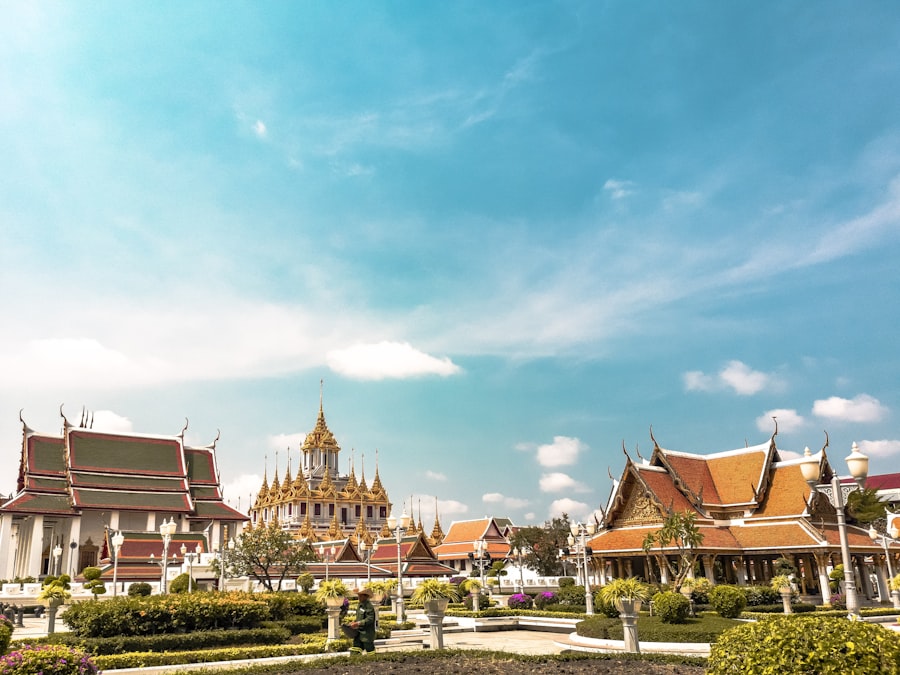
Bangkok
Thailand's electric capital — temples, rooftop bars, markets and the country's best food, all in one chaotic, brilliant city.
Best for: First-timers, food lovers, stopovers
Vibe: Fast, modern, endless
Suggested: 2–3 nights

Chiang Mai
The cultural heart of the north — old-city temples, mountain treks, ethical elephant sanctuaries and a huge café and nomad scene.
Best for: Nomads, culture, couples
Vibe: Relaxed, creative, cool
Suggested: 3–4 nights
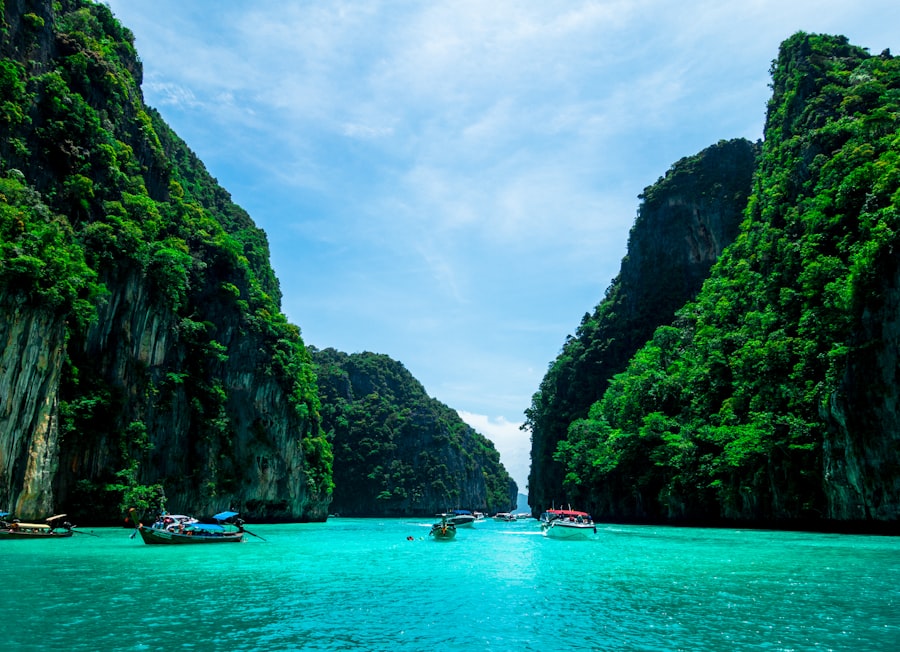
Phuket
Thailand's largest island and biggest beach hub — everything from package resorts to private villas, plus a gateway to Phang Nga Bay.
Best for: Families, luxury, convenience
Vibe: Developed, varied, lively
Suggested: 3–5 nights

Krabi
Postcard limestone cliffs and the iconic Railay peninsula — climbing, kayaking, longtail boats and some of Thailand's most dramatic scenery.
Best for: Couples, nature, photographers
Vibe: Scenic, active, romantic
Suggested: 3–4 nights

Koh Samui
A full-service Gulf island with an airport, palm-fringed beaches, wellness resorts and easy hops to Koh Phangan and Koh Tao.
Best for: Couples, wellness, mid-luxury
Vibe: Polished, tropical, easy
Suggested: 3–5 nights

Koh Phangan
Famous for the Full Moon Party, but increasingly a yoga, wellness and digital-detox island once you leave the beach bars behind.
Best for: Backpackers, wellness, parties
Vibe: Dual-natured, social
Suggested: 3–5 nights

Koh Tao
One of the cheapest places in the world to learn to scuba dive — small, social and budget-friendly with a tight diver community.
Best for: Divers, backpackers, budgets
Vibe: Laid-back, underwater
Suggested: 3–4 nights
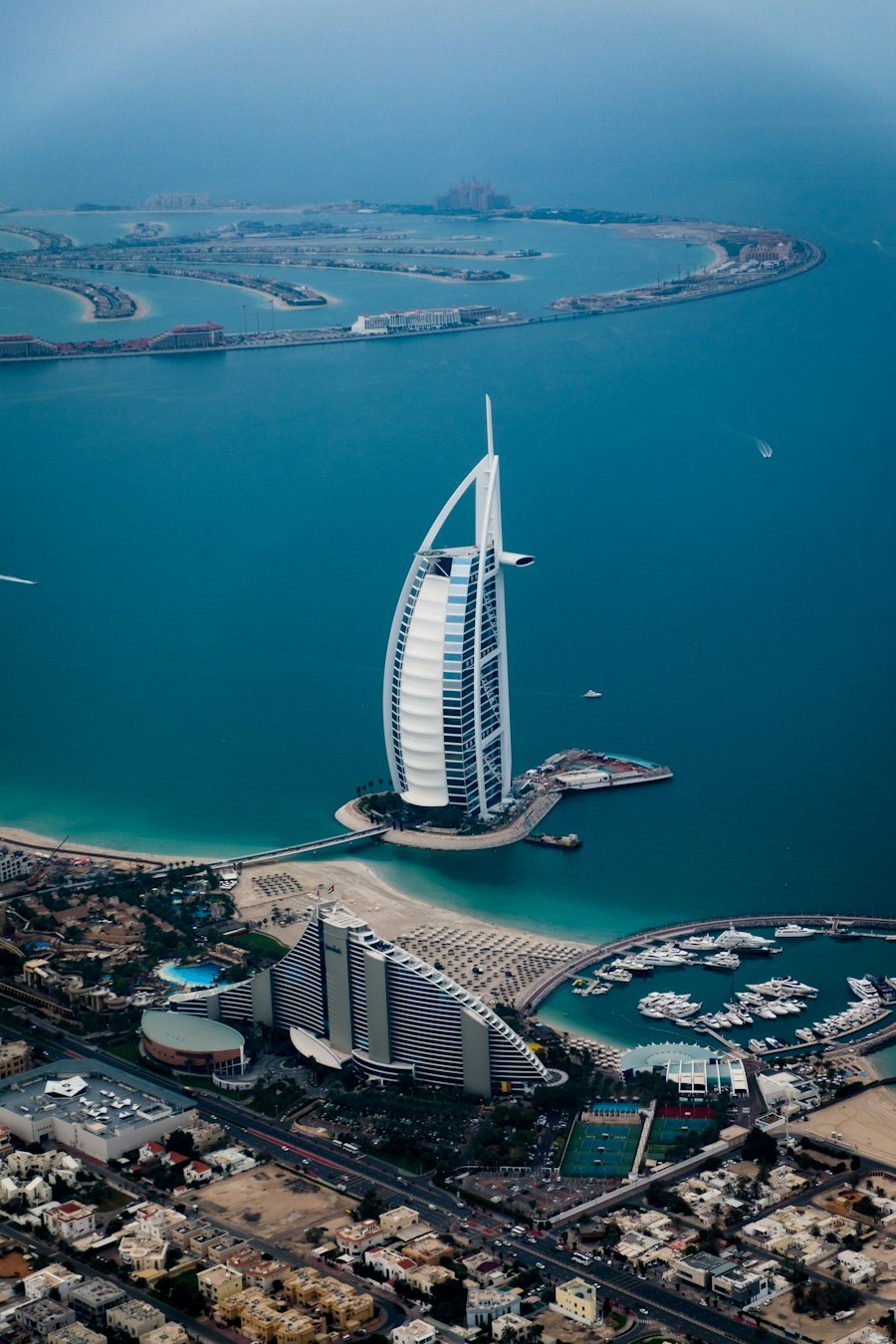
Khao Sok
Ancient rainforest, a stunning reservoir and floating bungalows under limestone karsts — Thailand's most underrated nature escape.
Best for: Nature, couples, adventure
Vibe: Wild, serene, remote
Suggested: 1–2 nights
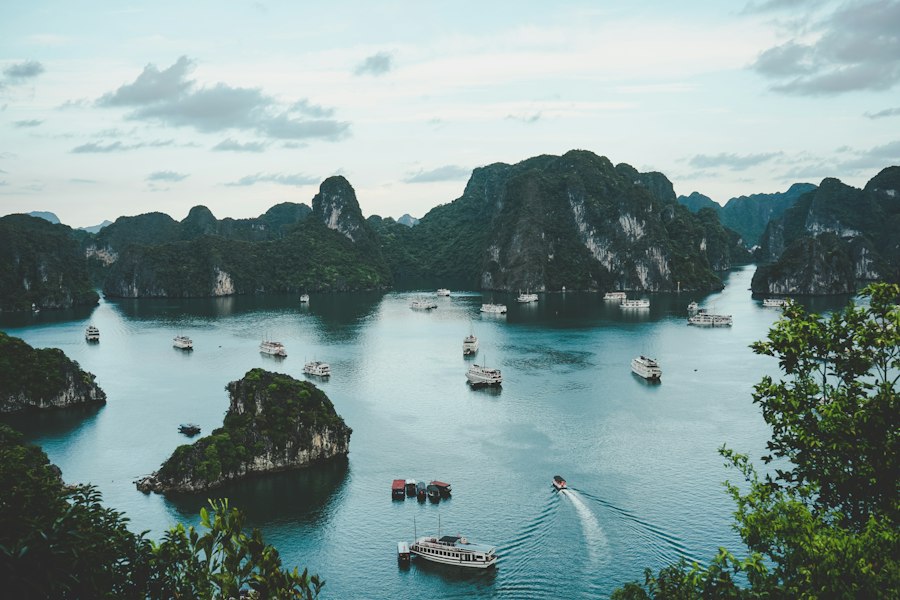
Pai
A tiny mountain town north of Chiang Mai — hippie cafés, hot springs, canyon sunsets and the famously winding 762-curve road to reach it.
Best for: Backpackers, slow travel
Vibe: Bohemian, mellow
Suggested: 2–3 nights
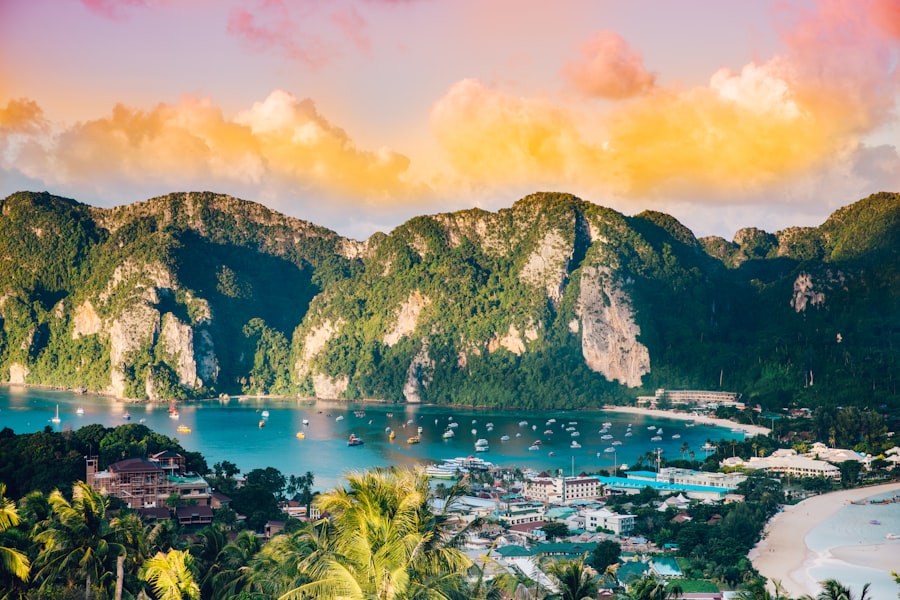
Hua Hin
A genteel royal beach town a few hours from Bangkok — golf, night markets and a calm, family- and retiree-friendly pace.
Best for: Families, retirees, weekenders
Vibe: Calm, traditional
Suggested: 2–3 nights

Pattaya
Closest beach city to Bangkok — busy and famous for nightlife, but with surprisingly good family attractions and islands just offshore.
Best for: Quick beach fix, nightlife
Vibe: Brash, convenient
Suggested: 1–2 nights

Hidden Thailand
Isaan's temples and markets, Nan's slow valleys, Koh Kood's empty beaches — the Thailand most tourists never reach.
Best for: Repeat visitors, explorers
Vibe: Authentic, untouristed
Suggested: Varies
Found your region? Lock in a base before prices climb.
Stay22's live map compares Booking, Agoda and Airbnb prices on one screen — ideal for Thailand's wide range of stays.
Budgeting
Thailand Costs in 2026
Thailand suits every budget — but knowing where each tier sits keeps your trip on track. These are realistic daily costs per person in 2026, excluding international flights.
| Tier | Daily budget (pp) | Accommodation | How you travel |
|---|---|---|---|
| Budget | £25–35 / $32–45 | Hostels, fan rooms, guesthouses | Buses, trains, street food, scooters |
| Mid-range | £55–90 / $70–115 | 3–4★ hotels, boutique stays | Mix of flights & private transfers, casual restaurants |
| Premium | £120–200 / $150–255 | 4–5★ hotels, pool villas | Domestic flights, private drivers, fine dining |
| Luxury | £300+ / $380+ | Aman, Four Seasons, Soneva | Private everything, business class, butler service |
Budget
Mid-range
Premium
Luxury
A few realities behind the numbers. Food is where Thailand stays magical at every tier — a superb street meal costs £1.50–3, and even at the mid-range you rarely need to spend more than £8–12 on a great dinner. Accommodation is where budgets actually diverge: the jump from a £20 guesthouse to a £150 villa is enormous in comfort but small in absolute terms by Western standards.
The hidden costs that catch people out: airport transfers (use fixed-price private cars), island ferries and transfers (they add up fast on multi-island trips), activities and tours, and the temptation of cheap massages and cocktails that quietly inflate a "budget" day. Build a 15% buffer and you'll never feel squeezed.
The single best money move
Withdraw cash from ATMs in larger amounts to spread the fixed 220 THB foreign-card fee, always choose to be charged in Thai baht (decline "dynamic currency conversion"), and carry a travel debit card with low foreign fees. Card acceptance is growing, but Thailand still runs heavily on cash outside cities.
When to Go
Month-by-Month Guide
Thailand has three broad seasons — cool/dry (Nov–Feb), hot (Mar–May) and green/wet (Jun–Oct) — but the two coasts run on slightly different rain calendars, which is the key to year-round travel.
| Period | Weather | Best for | Notes |
|---|---|---|---|
| Nov–Feb | Cool, dry, sunny | Everywhere — peak season | Best weather nationwide; book early, prices highest |
| Mar–May | Very hot | Islands, diving | April is hottest; Songkran (Thai New Year) mid-April |
| Jun–Aug | Green season begins | Andaman lulls, fewer crowds | Short afternoon downpours; great value |
| Sep–Oct | Wettest (Andaman) | Gulf islands, deals | Andaman peaks for rain; Gulf (Samui) often still good |
Nov–Feb
Mar–May
Jun–Aug
Sep–Oct
The crucial trick most guides bury: the Andaman coast (Phuket, Krabi, Phi Phi) and the Gulf coast (Samui, Phangan, Tao) have opposite rainy peaks. When the Andaman is at its wettest in September and October, the Gulf islands are often dry and lovely. So if you're travelling in shoulder or green season, choose your coast by month and you can find sunshine almost any time of year.
For festivals, time your trip around Songkran (the nationwide water-fight New Year in mid-April) or Loy Krathong / Yi Peng (the floating-lantern festival in November, magical in Chiang Mai) — both are bucket-list cultural experiences, but both also spike prices and crowds.
Travelling in green season? Flexible flights pay off.
Aviasales compares 750+ airlines into Bangkok and the islands — set a price alert in low season for the best fares.
Getting Around
Transportation in Thailand
Thailand is one of the easiest countries in Asia to travel through — the network is dense, cheap and reliable. Here's how to move between and within destinations.
Between cities and regions:
- Domestic flights: Cheap and fast — Bangkok to Chiang Mai or Phuket takes ~80 minutes from as little as £25. Airlines: Thai AirAsia, Thai Lion, Bangkok Airways, Thai Vietjet.
- Trains: Atmospheric and scenic. The overnight sleeper from Bangkok to Chiang Mai is a genuine highlight — book a second-class A/C sleeper berth in advance.
- Buses & minivans: Reach everywhere the trains and planes don't. Comfortable VIP coaches run long routes; minivans cover shorter regional hops.
- Ferries: The islands are reached by a web of ferries and speedboats — High Season, Lomprayah and others run the main routes.
Within a city or area:
- Grab (Southeast Asia's Uber) is the safest, fairest way to get around cities — fixed prices, no haggling.
- BTS Skytrain & MRT make central Bangkok fast and cheap to cross — avoid the legendary traffic entirely.
- Tuk-tuks & songthaews are fun but agree the price first; they're often pricier than Grab for tourists.
- Scooter hire unlocks the islands and the north — but only ride if licensed and insured, wear a helmet, and know that accidents are the #1 cause of traveller injury here.
Scooters & insurance
Renting a scooter without a valid motorcycle licence usually voids your travel insurance — and Thai roads are unforgiving. If you've never ridden, the islands are not the place to learn. Check that your policy explicitly covers motorbike use before you twist the throttle.
Skip the airport-taxi scramble after a long flight.
Kiwitaxi pre-books a fixed-price private driver who meets you at arrivals — worth it with luggage, kids or a late landing.
Booking ferries, buses and trains between islands and cities?
12Go shows every operator, time and price for Thai buses, trains and ferries on one screen, with instant e-tickets.
Choose Your Island
Thailand Island Comparison
The single most common Thailand planning question: which island? Here's a direct comparison of the major ones, so you can match an island to your trip rather than guessing.
| Island | Coast | Best for | Beaches | Access |
|---|---|---|---|---|
| Phuket | Andaman | Everything / first-timers | Varied, busy | Own airport |
| Krabi / Railay | Andaman | Scenery, climbing, couples | Dramatic, stunning | Fly Krabi + boat |
| Koh Lanta | Andaman | Families, slow travel | Long, quiet | Fly Krabi + ferry |
| Koh Phi Phi | Andaman | Parties, day trips | Iconic, crowded | Ferry from Phuket/Krabi |
| Koh Samui | Gulf | Couples, wellness, comfort | Palm-fringed | Own airport |
| Koh Phangan | Gulf | Parties + wellness | Pretty, varied | Ferry from Samui |
| Koh Tao | Gulf | Diving, budgets | Small, social | Ferry from Samui/Chumphon |
| Koh Kood | East | Escape, luxury-quiet | Empty, pristine | Trat + ferry |
Phuket
Krabi / Railay
Koh Lanta
Koh Phi Phi
Koh Samui
Koh Phangan
Koh Tao
Koh Kood
The decision usually comes down to three things: which coast suits your travel month (see the month-by-month section), how much you value quiet versus convenience, and how far you're willing to travel from the nearest airport. Phuket and Samui win on ease; Lanta, Khao Sok and Koh Kood win on calm; Tao wins on budget and diving.
Makutet Travel Intelligence
Still torn between islands?
Our deep-dive island comparison breaks down each one beach by beach, with honest pros and cons.
US Travellers
Thailand for American Travellers
Thailand is one of the most rewarding long-haul trips a US traveller can take — but the distance and a few practicalities are worth planning around.
Getting there: There are no nonstop flights from most of the US to Thailand; you'll connect through a hub — typically Tokyo, Seoul, Doha, Dubai, or Taipei. From the West Coast, total travel time runs ~19–22 hours; from the East Coast, expect 22–26. The upside: those one-stop itineraries are often very competitively priced, and a stopover can become a bonus mini-destination.
Entry: US passport holders get the 60-day visa exemption — no advance visa for tourism. Complete the TDAC online before arrival. Ensure your passport has at least six months' validity.
Money & costs: With the dollar holding firm against the baht, Americans get excellent value. Tipping is not obligatory as it is at home — round up or leave small change; high-end venues add a service charge. Notify your bank of travel and bring a card with no foreign-transaction fees.
Practicalities: Thailand uses 220V and Type A/B/C sockets — your US plugs fit many outlets, but check that your devices are dual-voltage. Healthcare is excellent and cheap by US standards, but you still want travel insurance for the flight home and any serious issue. Jet lag is real on a 12-hour time difference — build a slow first day into your plan.
Long-haul from the US? Compare one-stop routings carefully.
Aviasales surfaces the cheapest US–Thailand connections across 750+ airlines, including Gulf and Asian carriers Americans often miss.
UK Travellers
Thailand for UK Travellers
Thailand has been Britain's favourite long-haul winter escape for decades — and in 2026 it's as accessible as ever.
Getting there: Thai Airways, EVA Air, and one-stop options via the Gulf (Emirates, Qatar, Etihad) and Asia (Singapore, Cathay) connect the UK to Bangkok in roughly 11.5 hours nonstop or 14–16 with a stop. Winter is peak season for Brits escaping the cold, so book festive-period travel months ahead.
Entry: UK passport holders receive the 60-day visa exemption for tourism — no advance visa needed. Complete the TDAC online before you fly, and check six months' passport validity.
Money & costs: Sterling stretches a long way here. A mid-range two-week trip that would cost a fortune in Europe is genuinely affordable in Thailand. Use a fee-free travel card (Monzo, Starling, Chase, Wise), always pay in baht, and withdraw larger cash sums to dilute ATM fees.
Practicalities: Thailand runs on the same 220–240V as the UK, so your devices work — you just need a Type A/C adapter. The time difference is +6 or +7 hours, gentler than the US jet lag. The NHS doesn't cover you abroad, so travel insurance is essential; pay particular attention to motorbike and adventure-activity clauses.
Makutet Travel Intelligence
The Complete UK → Thailand Guide
Flights, costs in £, and a first-timer's route.
UK travellers: get covered before you go.
EKTA offers straightforward comprehensive cover for two-to-four-week Thailand holidays at competitive UK prices.
Avoid These
Common Mistakes First-Time Visitors Make
After years of watching travellers arrive, the same avoidable errors come up again and again. Sidestep these and you're ahead of 90% of first-timers.
- Cramming in too much. Ten days does not mean ten destinations. Internal travel eats time — pick two or three bases and go deeper.
- Ignoring the two-coast weather split. Booking the Andaman in October because "it's Thailand" leads to a washout. Match coast to month.
- Renting a scooter untrained or uninsured. The leading cause of traveller injury. If you must, get a licence, wear a helmet, and check your policy.
- Falling for the "temple is closed" scam. A friendly stranger says your destination is shut and offers a tuk-tuk to a "better" spot (a gem shop). It's never closed — walk on.
- Disrespecting temple etiquette. Cover shoulders and knees, remove shoes, never point your feet at a Buddha, and never climb on sacred statues.
- Drinking tap water. Stick to bottled or filtered water; it's cheap and everywhere.
- Underestimating the heat. Hydrate, pace temple days for the morning, and don't plan strenuous activity for midday in hot season.
- Over-tipping out of guilt or under-budgeting transfers. Tipping isn't expected the Western way — but island transfers and ferries quietly add up. Budget for them.
- Booking everything rigidly in advance. Lock in your first nights and island hotels in peak season, but leave room to extend where you fall in love — and you will.
Plan Your Route
Suggested 7, 14, 21 & 30-Day Itineraries
Four field-tested routes, each balancing city, culture and coast without the transit-heavy mistake. Mix and match to taste.
7 Days — The Essential Taster
Bangkok (2N) → fly to Krabi or Phuket (4N), with a Phang Nga Bay or Phi Phi day trip. One city, one beach, no rushing. Ideal for a first short trip or a stopover extension.
14 Days — The Classic Loop
Bangkok (3N) → Chiang Mai (3N) incl. Pai or elephant sanctuary → fly south to Koh Samui or Krabi (5N) → back to Bangkok (1N) to fly home. The definitive first-timer's Thailand — city, north and islands.
21 Days — North & Two Coasts
Bangkok (3N) → Chiang Mai (3N) → Pai (2N) → Khao Sok rainforest (2N) → Andaman islands, e.g. Koh Lanta (4N) → hop to the Gulf or back via Krabi (4N) → Bangkok (1N). Adds nature and a second island region.
30 Days — The Deep Dive
All of the above, slower, plus a stretch of hidden Thailand — Isaan (Khon Kaen / Nong Khai), Chiang Rai, or the untouched eastern islands (Koh Kood). A month lets Thailand breathe and rewards you with the country tourists miss.
Makutet Travel Intelligence
Want these itineraries day-by-day?
Our detailed Thailand itinerary guide expands each route with daily plans, transport and timings.
Build any of these routes into a real plan in minutes.
Klook is the go-to for booking Thai tours, transfers and attraction tickets — strongest coverage in Asia, with instant vouchers.
The Bottom Line
The Makutet Thailand Verdict
After everything — the visas, the regions, the costs and the logistics — what should you actually take away?
Thailand earns its reputation. It is the most complete, most forgiving and most rewarding entry point to Asia, and it scales up endlessly for those who return. The country's genius is that it meets you where you are: arrive nervous and it holds your hand; arrive seasoned and it hands you the keys to a region most travellers never unlock.
Plan with three principles and you'll have a near-perfect trip. First, go deep, not wide — two or three bases beat a frantic checklist. Second, match your coast to your month — the Andaman/Gulf rain split is the single most useful piece of Thailand planning knowledge. Third, leave room to stay longer — almost everyone wishes they'd booked more time, and Thailand's 60-day exemption makes extending effortless.
Do that, and Thailand won't just be a holiday. It'll be the trip you spend years trying to recreate — and the reason you keep coming back.
Makutet's one-line verdict
For range, value, safety and sheer joy per pound or dollar spent, Thailand in 2026 is still the best all-round destination in Southeast Asia — and the smartest first long-haul trip you can take.
Makutet Travel Intelligence
Stay ahead of Thailand entry & visa changes
Our Visa Watch tracks live immigration and entry-requirement updates as they happen.
Ready to plan your Thailand trip?
Mantra turns this blueprint into a day-by-day itinerary built around your dates, budget and style.
Plan My Thailand TripRelated Thailand Resources
Thailand Visa Guide 2026
Exemptions, TDAC, extensions & long-stay
Complete Thailand Guide (UK)
Planning a trip from the UK
Thailand Itinerary Ideas
7, 14 & 21-day routes
Thailand Flights & Hotels
How to book smart
Thailand Islands Compared
Which island is right for you
Bangkok for First-Timers
Is it worth visiting?
Chiang Mai Guide
Northern Thailand base
Phuket Guide
Thailand's biggest island
Krabi Guide
Limestone cliffs & beaches
Koh Samui Guide
Gulf coast island living
Koh Tao Guide
Diving & budget island life
Khao Sok Guide
Rainforest & floating bungalows
Pai Guide
Mountain town in the north