
The Eternal City
Rome
Colosseum, Vatican and 3,000 years of history
What makes this place famous?
Images that explain Rome
Photography first. Words second.
St. Peter's Basilica
The Catholic world's baroque, marble heart.

Trevi Fountain
Water's theatrical promise to returning pilgrims.

Pantheon
Temple turned church; a perfect Roman circle.

Spanish Steps
Where steps become a city's social stage.
Introduction
Rome, at a glance
Four images will likely define your first memory of Rome: the Colosseum’s weathered tiers, the dome of St. Peter’s rising above the Vatican, the oculus-lit rotunda of the Pantheon, and a narrow Trastevere lane glowing under lamplight. Each frame is a different register of the same city — imperial spectacle, papal ambition, ancient ingenuity and intimate neighborhood life — and together they begin to explain why Rome is more than a collection of landmarks.
Why visit? Because Rome is a place that keeps its past in active conversation with the present. A Roman forum is not a museum display sealed from daily life but an open theater of layered time; Renaissance façades shelter cafés where people meet, and churches preserve antiquity within living liturgy. The city rewards slow attention: small discoveries accrue into a complex sense of continuity and change that is singularly Roman.
Why should I come?
Why visit Rome?
What makes this place famous? Rome is a built timeline: republican forums, imperial monuments and Renaissance churches stacked like chapters that you can walk between, day by day, meal by meal, piazza by piazza. Visit for monuments, for museums, for street food. Come ready to read its layers.
Country
Italy
Currency
Euro
Language
Italian
Airport
Leonardo da Vinci–Fiumicino Airport (FCO)
Time Zone
Europe/Rome (CET/CEST, UTC+1 standard, UTC+2 DST)
Best Time
Apr–Jun
What shouldn’t I miss?
Rome's must-see sights

Roman Forum
The civic and religious centre of ancient Rome, a layered ruin of temples, basilicas and triumphal arches where political speeches once echoed and cobbled pathways still reveal centuries of continuous occupation.
View Details
Castel Sant'Angelo
A cylindrical mausoleum turned fortress and papal residence, linked to the Vatican by the elevated Passetto and offering sweeping views across the Tiber and historic centre.
View Details
Villa Borghese Gardens
A broad landscaped park with Italianate gardens, ponds and the Galleria Borghese museum, prized for Bernini sculpture, Caravaggio canvases and shady avenues for cycling and picnics.
View Details
Capitoline Museums
A hilltop complex housing Rome's oldest public art collection, with bronze and marble antiquities, baroque galleries and terraces that overlook the Forum and cityscape.
View DetailsDid You Know?
A city of small surprises
The facts that change the way you see it.
An independent state inside Rome
Vatican City is a sovereign city-state completely enclaved within the municipal boundaries of Rome; it is the smallest internationally recognized independent state by area and population.
A dome that still amazes
The Pantheon’s concrete dome, completed under Emperor Hadrian around 126 AD, remains the largest unreinforced concrete dome in the world and has been in continuous use for nearly two millennia.
What experiences can I book?
Keep exploring Rome
Tap an attraction to open Makutet Experiences, filtered for Rome.
What do locals know?
Practical insight from people who've lived it
Roscioli
A deli-restaurant near Campo de' Fiori known for its carbonara and Cacio e Pepe; expect precise technique, freshly milled pecorino aroma and a focused approach to classic Roman dishes.
Campo de' Fiori market
A morning market that mixes produce stalls, flowers and small vendors; smell citrus and basil, negotiate for tomatoes and observe neighbourhood rhythm as sellers call prices and customers inspect goods.
Aventine Keyhole (Buco della Serratura)
A tiny, famous view through the Priorato dei Cavalieri di Malta gate that frames St Peter's dome; a quiet hand-to-eye moment where the city aligns, accompanied by distant traffic murmur and clipped garden scents.
Testaccio Food Quarter
Testaccio is Rome’s working-class table: a jumble of forni, butcher stalls and trattorie where the aroma of roasting porchetta and fresh ricotta from Mercato Testaccio hangs in the air. Savour the carbonara at a corner osteria, because these recipes keep centuries of neighbourhood taste alive; wander the food stalls mid-morning to hear vendors’ calls and watch butchers at their block, which offers a visceral, savory portrait of Roman daily life.
Garbatella Stroll
Garbatella’s low houses, communal cortili and Art Nouveau touches read like a social novel of 1920s Rome; listen for the espresso hiss at local bars and the clack of children’s shoes on the cobbles as you move through the lanes. Wander the alleys at golden hour, because the warm light flatters the pink stucco and reveals tiny frescoes and neighbours chatting; enjoy the scent of bougainvillea and drying laundry between windows, an intimate olfactory snapshot of Roman life.
Quartiere Coppedè
Coppedè is a secretive fairy-tale quarter where medieval turrets collide with Liberty ornamentation and whimsical reliefs; the district sometimes smells faintly of pine sap when breezes drift from nearby Villa Torlonia, underscoring its gardened aura. Take a slow loop around Piazza Mincio, because each façade conceals a new sculpted surprise and the area rewards curious, unhurried attention; expect carved frogs, gilded lamps and an improbable theatricality at every corner.
Gianicolo (Janiculum) Terrace
Gianicolo’s terrace delivers a sweeping Roman panorama with a slightly quieter feel than central viewpoints; inhale the resinous scent of umbrella pines near Porta San Pancrazio and listen for the ceremonial cannon report that punctuates evening air. Catch sunset here, because the light threads across St Peter’s dome to the Tiber and the city reveals its layered geometry; bring a light jacket for the hilltop breeze, which keeps the air brisk as the sky cools and complements a late gelato.
Book it
The moments worth booking ahead
Curiosity becomes a plan. These are the experiences that turn a wish list into a date in your calendar.
Skip the line
Reserve a timed-entry ticket for the Vatican Museums to avoid long queues and align your visit with specific galleries and the Sistine Chapel.
Colosseum underground
Book a guided Colosseum underground and arena tour ahead to access substructures and get expert context for the amphitheatre's engineering.
Borghese timed entry
Purchase a timed ticket for Galleria Borghese because entry is strictly limited to two-hour slots and secures uninterrupted viewing of key sculptures.
Testaccio cooking class
Reserve a market-to-table cooking class in Testaccio to learn about Roman ingredients, shop with a chef and taste dishes you helped prepare.
The story of Rome
How Rome came to be
Rome’s origin story is half myth and half material archaeology. The tale of Romulus and Remus — twins raised by a she-wolf, one of whom killed the other and founded the city in 753 BC — became shorthand for a civic identity that fused violence, providence and destiny. Archaeological evidence, however, shows a much slower accretion: hilltop settlements along the Tiber that grew into a network of communities by the eighth to seventh centuries BC and then into a city-state that would reshape the Mediterranean.
By the fourth and third centuries BC Rome had ceased to be merely a local power. Through alliances, conquest and administrative innovation it transformed from kingdom to republic and then, after civil wars and the end of republican government in the first century BC, into an imperial capital. The Forum, the Palatine and the Capitoline were not static monuments but working centers of law, memory and imperial ceremony; the Colosseum, completed under the Flavian emperors in the first century AD, embodied the scale of that public culture.
After the fall of the Western Empire Rome contracted and changed, becoming a seat of papal authority from late antiquity onward. The papacy’s political and cultural ambitions from the Middle Ages through the Renaissance and Baroque periods reshaped Rome: basilicas were rebuilt, obelisks re-erected, and piazzas conceived as theatrical stages. In 1870 Rome became the capital of a unified Italy, and the modern city since has had to reconcile its role as a living metropolis with the stewardship of a unique and densely palimpsestic patrimony.
Where should I stay?
Where to stay in Rome
Curated stays chosen to suit every kind of traveller.

Monti
First-timers · romantics · photographers
There is no bad time to visit — pick the one that suits your trip, because Monti's narrow lanes, vintage boutiques and intimate trattorie reward slow walking and nightfall conversation; choose Monti for easy access to the Coliseum and a creative, cobbled atmosphere.
Check availability
Trastevere
Food-lovers · night owls · couples
A riverside quarter of winding lanes, lively piazzas and late-night osterie where Roman food culture is tactile and vocal; its cobbles, lemon aromas and street chatter suit evenings spent wandering between trattorie and bars.
Check availability
Prati
Vatican-visitors · shoppers · families
A tidy, tree-lined district beside the Vatican, prized for elegant shops, quieter streets and direct access to St. Peter's; practical for museum-going families and shoppers who prefer measured pace over bohemian bustle.
Check availabilityWhy this destination?
Why Rome, and not somewhere else
There is a particular afternoon you will meet Rome on its own terms: after a morning at the museums and a slow lunch, you cross the Tiber via the pedestrian Ponte Sisto and climb the steps into Trastevere. The neighborhood’s streets are narrow, the light is angled, and the air carries the scent of frying artichokes and the terse, friendly conversations of neighbors finishing their errands. Here the city’s historic spectacle gives way to domestic rhythms, and you begin to register Rome as a place where monumental history and ordinary life occupy the same blocks.
Continue upward to the Janiculum (Gianicolo) just before sunset and the panorama opens — terracotta roofs, domes punctuating the skyline, St. Peter’s dome marking the western horizon. The view is not an abstract tableau but a compact geography of epochs: the layout of imperial fora, the sinew of medieval churches, the ceremonial axes of the Baroque. On clear evenings you can trace the city’s ridge lines and see how urban layers press one upon the other, each era inscribing its presence but rarely erasing what came before.
Walk back down through the Campo de’ Fiori as night approaches. The market stalls are closing, but the square’s stone takes on a different purpose after dark: tables are set, voices rise, and the limestone glows under lamplight. From here the cobbles lead without pretension to the Pantheon, whose portico and unlit oculus still command a hush even when tourists gather. Once inside, the effect is bodily: the dome compresses sunlight and air into a single, quiet architecture that has been in continual use since antiquity.
Later, when you step out into a quieter lane and order an espresso or a gelato from a counter where the owner knows half the neighborhood, Rome’s density reveals itself as a habit of communal life. The monuments return to the mind as facts and anchors, but the memory you carry away will be shaped as much by the intimacy of these small encounters as by the scale of its ruins. That is the city’s enduring proposition: history here is not a backdrop but a living condition, and to leave Rome is to feel that you have been inside a story that will continue to read you back.
Can I book somewhere to stay?
Where to stay in Rome
Live rates across Booking.com, Agoda, VRBO and Hotels.com — compare in one search, no extra cost to you.
Popular destinations

Belvedere

The Friendly Stay

Casa Catone (affitta camere)
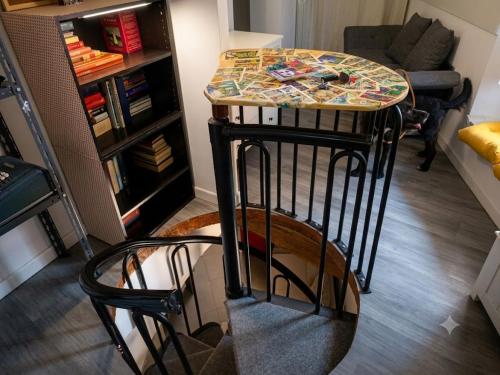
La Tua Finestra sulla Città Eterna

la gatta bianca

LH Hotel Domus Caesari

Villino Fiorella
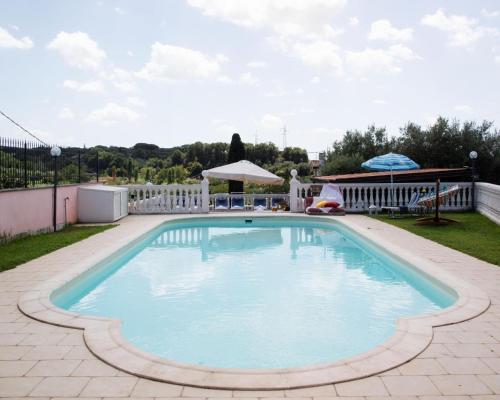
Villa Ennio

Residenza D'epoca Pietra Di Ponente
Live rates across our partner network (Booking.com, VRBO, Expedia, Hotels.com) via Stay22. Makutet may earn a commission when you book — at no extra cost to you. Prices update in real time and may vary before booking.
When to come
Planning your Rome trip
There is no bad time to visit — only cheaper and cooler.
Apr–Jun
Spring is lively: mild temperatures, blooming gardens and long daylight hours that suit walking between monuments and stopping for coffee in shaded piazzas.
Jul–Aug
Summer brings heat and crowds; many Romans leave the city in August, but major sights remain busy and midday can be stifling without shade or a plan to retreat indoors.
Nov–Feb
Winter is cooler and quieter at major sites; museums and churches are open, and the reduced tourist density makes for more intimate access to popular interiors.
What else do I need for my trip?
Everything else for your trip

Flights to Rome
Find the best flights to Rome.
Explore
Accommodation in Rome
Discover the best hotels and resorts in Rome.
Explore
Airport Transfers
Arrange transport between Rome Airport and your accommodation.
Explore
Car Hire
Explore Rome and surrounding regions with a rental vehicle.
Explore
Travel Insurance
Protect your trip before travelling to Italy.
Explore
eSIM & Connectivity
Stay connected throughout your visit to Rome.
ExploreWhat do I need before travelling?
What you need before you go
Budget in Rome
- ·Budget travelers can use shuttle buses (€6–€9) and the Metro (€1.50 per ticket). A mid-range budget should account for the €38 RomaPass and fixed-rate airport taxis (€31–€50). Restaurant bills are not brought automatically [1][7][8][25]. Carry small bills for markets and local transport in Italy.
Getting around Rome
- ·Rome's transit includes Metro lines A, B, and C, plus buses and trams. Tickets must be purchased in advance at 'tabaccheria' shops or newsstands, as they cannot be bought on board buses. The 72-hour RomaPass costs €38 [1][21][22]. Rome is served by Leonardo da Vinci–Fiumicino Airport (FCO).
Safety in Rome
- ·Pickpocketing is common in crowded areas, especially at Roma Termini and on the Metro. Travelers should avoid unofficial taxis and be alert for 'friendship bracelet' or fake petition scams near major tourist sites [5][7]. Keep emergency numbers and your accommodation address handy.
Connectivity in Rome
- ·For navigation, the Moovit app is recommended as it is more reliable for Italian local transport than standard map apps. Travelers typically use local SIMs or eSIMs for data, which are widely available in the city [6]. The timezone in Rome is Europe/Rome (CET/CEST, UTC+1 standard, UTC+2 DST).
Weather & when to visit Rome
- ·Rome has a Mediterranean climate with very hot summers (June–August) and mild winters. Travelers should pack light, breathable clothing for summer and layers for the cooler, mild winter months [14].
Arrival & airport transfer in Rome
- ·From FCO, the Leonardo Express train reaches Roma Termini in 32 minutes for €14. Shuttle buses like Terravision cost €6–€9. Fixed-rate taxis to the city center are available for approximately €50 from FCO and €31 from CIA [8][10][25].
Good to Know
Rome FAQs
Final inspiration
Go and see for yourself
Stay with the layered feeling: every street in Rome is an argument between epochs. A ruined column leaning against a Renaissance palazzo, a medieval tower peering over a Baroque square, a market that has kept the same rhythms for generations — these juxtapositions are the city’s most articulate sentences.
Let Rome change the scale of your attention. Expect to be led by details — a carved frieze, a worn threshold, a choir of voices in an evening mass — and to find that those small things reconfigure how you remember an entire day. Rome keeps its past close, and in doing so it sharpens the senses.
See It Through A Creator's Eyes
Want to discover Rome through people who have actually experienced it?
Explore Rome through the stories, photos, and perspectives of travel creators who have been there.
Find Creators Who Have Been to Rome