Tulum
Beach ruins and cenote swimming
What makes this place famous?
Images that explain Tulum
Photography first. Words second.
Playa Paraiso
A white-sand promise where turquoise rehearses patience
Gran Cenote
Underground cathedral of roots, light and freshwater
Sian Ka'an Biosphere Reserve
Mangrove lungs breathing reef-salt, tide-sung and alive
Tulum sign
A photojournalistic totem for pilgrims of sun
Introduction
Tulum, at a glance
Tulum unfolds as a pared-back sequence of images: a stone-fortified Mayan ruin set on a sea-facing cliff, wide beaches that curve into the Caribbean, dense dry forest punctuated by sinkholes, and a low-slung town of palms, bicycles and cantinas. Those are the photographs that greet most visitors, but the place holds quieter textures — the hush inside a cavernous cenote, the crust of salt on a morning breeze, the pattern of repairs on an adobe wall — that make Tulum more than a postcard.
Why visit? For the way ancient and contemporary life layer here: a Postclassic Mayan harbour that still answers to tidal light, a string of cenotes that are part of the Yucatán’s underground water system, and a coastline that reads as both refuge and laboratory for conservation. Tulum is best approached slowly, by foot or bicycle, and with time set aside for both silhouette and detail.
Why should I come?
Why visit Tulum?
What makes Tulum worth the trip? Visit for the rare combination of beachfront Maya ruins, freshwater swimming in collapsed sinkholes, and a compact town of restaurants and makers; day trips and slow afternoons balance easily. Come hungry, come curious, come ready to fall for it.
Country
Mexico
Currency
Mexican Peso
Language
Spanish (official); English commonly spoken in tourist areas
Airport
Cancún International Airport (CUN) — primary international airport serving Tulum, approx. 118 km / 1.5–2 hours by car
Time Zone
America/Cancun (UTC−05:00) — Quintana Roo does not observe daylight saving time
Best Time
Dec–Apr
What shouldn’t I miss?
Tulum's must-see sights

Akumal Beach
Calm bay south of Tulum where green sea turtles graze in the seagrass; shallow snorkeling from shore offers close turtle encounters amid soft sand and warm surf.
View Details
Cobá Archaeological Site
Interior highland ruins with the climbable Nohoch Mul pyramid and interlacing sacbe (ancient white roads); expect jungle birdsong, cool limestone paths and a sense of scale.
View Details
Casa Cenote
A freshwater cenote that opens into mangroves and a tidal lagoon, favored for snorkel and kayak loops where light shafts, roots and fish create a cool, tactile world.
View Details
Punta Laguna Nature Reserve
Small reserve north of Cobá known for guided spider-monkey watching, canoeing and zipline approaches through humid forest; expect insect chorus and paddle-slap water sounds.
View Details
Cenote Calavera
Small, vertical-open cenote with three skylight holes and a tradition of playful jumps and clear, cool water; the limestone rim is textured and pleasantly rough underfoot.
View DetailsDid You Know?
A city of small surprises
The facts that change the way you see it.
A name that means 'Dawn'
The Mayan name for Tulum was Zama, commonly translated as “dawn” — an apt label for a city built on cliffs facing east. Tulum was among the last significant Maya settlements to be occupied during the Postclassic era, remaining active when European contact began.
Underwater highways
The cenotes around Tulum connect to extensive subterranean river systems, including the Sac Actun system — one of the world’s longest underwater cave networks. These limestone sinkholes link surface life to the Yucatán aquifer and are prized by divers and scientists alike.
What experiences can I book?
Keep exploring Tulum
Tap an attraction to open Makutet Experiences, filtered for Tulum.
What do locals know?
Practical insight from people who've lived it
Aldea Zama
Aldea Zama is a planned neighbourhood between Tulum town and the hotel zone, mixing boutique shops, rental apartments and new restaurants; mornings bring bakery smells and cyclists, evenings low lantern light.
El Camello Jr.
El Camello Jr. is a highly regarded seafood restaurant in Tulum pueblo, known for fresh ceviche, aguachile and fried fish served in a casual, cash-friendly setting with the smell of lime and ocean air.
Mercado Municipal de Tulum
The municipal market in Tulum town sells fruit, tortillas, tacos and artisan goods; early mornings are busiest, with sugarcane juice stalls and the frictional sound of knives and chatter filling the stalls.
Batey Mojito & Guarapo Bar
Batey is a long-standing bar in Tulum town famous for hand-pressed sugarcane mojitos and live music; expect percussion, the whiff of pressed cane, and a communal bar counter atmosphere into the night.
La Veleta: The New Village Pulse
La Veleta hums like Tulum’s post-cardless neighborhood — low-slung studios, painted murals and corner cafés where the aroma of cochinita pibil drifts past bicycles. Expect limestone dust underfoot and a local rhythm that favours late breakfasts, artisanal mezcal tastings and pop-up supper clubs tucked between newly built palapas.
Boca Paila Beach Road: The Long Palapa Ribbon
The Boca Paila strip is Tulum’s sand-and-palapa runway, where the salty Caribbean Sea air lifts coconut-tinged shampoo from sunbathers and rhythms from distant drums. Beach clubs and eco-resorts sit shoulder-to-shoulder with wild dunes, making it a place to wander slowly and listen to the surf while the light gilds coral flats at golden hour.
Tulum Centro: Market Mornings and Nighttime Cocina
Tulum Centro is the city’s living room: motorcycles weave past fruta stalls, the scent of freshly roasted coffee rises from corner cafés, and evening brings neon-lit fondas serving smoky tacos al pastor. The soundscape is local radio, bicycle bells and the occasional guitar — a compact patchwork of everyday Yucatán life best explored on foot.
Punta Piedra: The Quiet Headland and Reef Access
Punta Piedra sits like a bohemian promontory where reef shoals lap close to shore and morning brings the cool mineral tang of nearby cenotes. Small palapa restaurants, hammocks tied between palms and barefoot walkers define the place; it rewards slow snorkeling, a lantern-lit walk at dusk and the hush of waves that replaces nightclub bass.
Book it
The moments worth booking ahead
Curiosity becomes a plan. These are the experiences that turn a wish list into a date in your calendar.
Sian Ka'an boat tour
A guided Sian Ka'an biosphere boat tour offers wildlife, birding and canals that follow fixed routes, so reserve a spot in advance to secure a knowledgeable guide and boat.
Tulum Ruins sunrise
An early guided visit to the Tulum archaeological site pairs cooler light with fewer visitors, making a guided slot worthwhile for history and context.
Dos Ojos cenote dive
Cenote Dos Ojos is popular with snorkelers and divers and operates fixed dive cycles, so booking ahead ensures the right guide and equipment configuration.
Hartwood dinner
Hartwood is a signature Tulum restaurant that relies on local sourcing and nightly rhythms, so reserving a table ahead secures the chef’s seasonal menu experience.
The story of Tulum
How Tulum came to be
Long before hotels and cyclists, the place we call Tulum was a coastal stronghold known to the Maya as Zama. Perched on a narrow band of limestone cliffs, the settlement was a conspicuous maritime node during the Postclassic period (roughly AD 1200–1521). Its stone walls and towers framed a harbour that facilitated trade in commodities such as salt, fish, textiles, jade and obsidian, connecting inland Maya centres with routes along the Caribbean.
The site’s most iconic building — the so-called El Castillo — stands as an orienting point where ritual, commerce and astronomy met the sea. Because of its position on the shore, Tulum was relatively late to be abandoned; European accounts from the early colonial period describe coastal Maya communities still in place. Over the subsequent centuries the ruins remained visible to locals, fishermen and occasional travellers, a fragment of maritime Maya life survived in memory and topography.
Modern Tulum’s rebirth as a tourist destination traces a different arc: from a small fishing village to a stop on bohemian travel itineraries in the late twentieth century, to a rapidly expanding mid-range destination in the 2000s. The region’s municipal boundaries were reorganized in the early 21st century, and with that came new pressures and opportunities for conservation, local enterprise and regulated development. Today the challenge is to steward archaeological patrimony, coastal ecosystems and the groundwater that flows through the cenotes, while sustaining a community that has long called this coastline home.
Where should I stay?
Where to stay in Tulum
Curated stays chosen to suit every kind of traveller.

Azulik
Romantics · digital-detox · art lovers
There is no bad place to stay here; pick the one that suits your rhythm, the rest is logistics. Azulik is an adults-oriented eco-luxury resort of wooden treehouse suites, art-filled public spaces and beach access without conventional room electricity — tactile wood, sea breeze and vocal seabirds frame the stay.
Check availability
Nomade Tulum
Yoga lovers · social travellers · seekers
Bohemian beachfront hotel known for yoga classes, communal dinners and a program of music and wellness; expect coarse sand underfoot, incense and slow spoken salutations — book rooms or packages directly or via major platforms.
Check availability
Casa Malca
Luxury seekers · art lovers · honeymooners
Former private mansion converted into an art-filled boutique hotel on the beach, with eclectic interiors, bold murals and a private shore; rooms pair polished plaster with ocean breeze and curated antiques.
Check availabilityWhy this destination?
Why Tulum, and not somewhere else
Walk out on the path that leads from the archaeological zone toward the sand and the first thing you notice is how intentional the light is: the ruins face east, and in early morning the alabaster sea mutters under a wash of white. El Castillo, with its rectilinear silhouette, seems less like an isolated monument and more like an architectural gesture pointing to the horizon. The experience is not merely visual. Salt, heat and the distant call of birds conspire to fix the moment into your senses.
After the sun settles, descend toward the beach and follow a local rhythm. Rent a bicycle, or go on foot, and thread between low-rise hotels and scrub forest until the traffic dissolves. A short ride away lie several cenotes — collapsed limestone sinks where freshwater gathers in luminous pools. Places like Gran Cenote or Dos Ojos are not theatrical sets but living geological features: the water is often crystalline, the overhanging roots and stalactites frame your float, and the light through the fissures reads like an echo of the surface sky.
Late afternoon is the right hour for movement above and below water: snorkel in a cenote and then cruise a shallow lagoon or join a guided boat into mangrove channels of the Sian Ka'an Biosphere Reserve. Declared a UNESCO biosphere in 1986, Sian Ka'an is a reminder that Tulum’s coastline is part of a larger ecological sweep — an engineered tapestry of reef, sand, mangrove and estuary where migrations and spawning still occur. Boatmen and guides who have grown up here will point out nesting beaches, tell you which areas are protected, and orient the visit toward observation rather than plunder.
There is an intimacy to the evening in Tulum that resists grand gestures. Locals gather at mercado stalls and seaside palapas, lighting candles and talking in low voices. Food is immediate and rooted: tortillas come off comals, fish is seasoned simply, and the citrus is sharp enough to register as a relief. To end a day here is to accept a slow disbanding — the sun lowers, the sea cools, and the ruins become an outline against a darkening frame. It is the kind of place where the memory that persists is not of a landmark alone, but of a prolonged attention. You go home with the recall of one particular evening, as if you had learned how to keep the light for yourself.
Can I book somewhere to stay?
Where to stay in Tulum
Live rates across Booking.com, Agoda, VRBO and Hotels.com — compare in one search, no extra cost to you.
Popular destinations
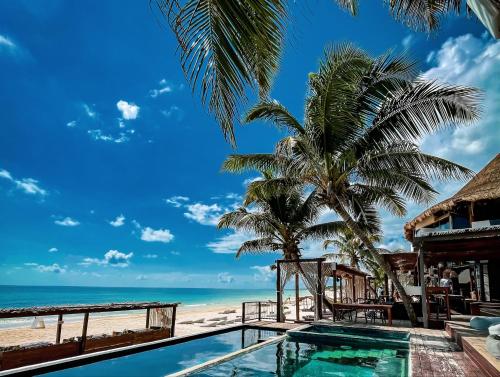
Amansala

Mi Amor Boutique Hotel-Adults Only
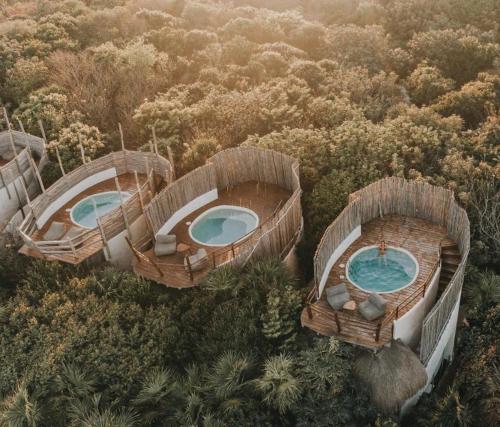
Papaya Playa Project

12 bedroom Beachfront Hacienda Tulum

Beachfront Hacienda for 24 guests in Tulum Beach

Tropicalito Villa On The Beach

Zamas Hotel

Tunich Jungle Cabañas

La Posada Del Sol Boutique Hotel Tulum
Live rates across our partner network (Booking.com, VRBO, Expedia, Hotels.com) via Stay22. Makutet may earn a commission when you book — at no extra cost to you. Prices update in real time and may vary before booking.
When to come
Planning your Tulum trip
There is no bad time to visit — only cheaper and cooler.
November–April
Sun and low humidity make these months ideal for beach and ruins visits. Expect clearer skies, calmer seas and the busiest visitor numbers around December–January.
May–June
Temperatures rise and afternoon storms begin to appear with more frequency. Crowds ease and accommodation options widen, but book popular cenote tours in advance.
September–October
This is the peak of the hurricane season and the wettest period of the year. Heavy rains can disrupt outdoor plans and transport; check weather advisories if travelling then.
What else do I need for my trip?
Everything else for your trip

Flights to Tulum
Find the best flights to Tulum.
Explore
Accommodation in Tulum
Discover the best hotels and resorts in Tulum.
Explore
Airport Transfers
Arrange transport between Tulum Airport and your accommodation.
Explore
Car Hire
Explore Tulum and surrounding regions with a rental vehicle.
Explore
Travel Insurance
Protect your trip before travelling to Mexico.
Explore
eSIM & Connectivity
Stay connected throughout your visit to Tulum.
ExploreWhat do I need before travelling?
What you need before you go
Budget in Tulum
- ·Daily budgets vary: budget travellers can use ADO buses ($15) and street food; mid-range private shuttles cost $70-$130; luxury VIP transfers reach $300. Using Mexican Pesos (MXN) is essential for better exchange rates. Carry small bills for markets and local transport in Mexico.
Getting around Tulum
- ·Getting around Tulum is best done by renting a bicycle (approx. 150 MXN/day) or using taxis, as there is no Uber. Colectivos (shared vans) are a budget-friendly way to reach nearby sites like Coba for 60-80 MXN. Tulum is served by Cancún International Airport (CUN) — primary international airport serving Tulum, approx. 118 km / 1.5–2 hours by car.
Safety in Tulum
- ·Tulum is generally safe, but travellers should avoid walking alone at night in Tulum Pueblo and keep valuables out of sight. Use the national emergency number 911 if needed and be cautious of petty theft in crowded areas. Keep emergency numbers and your accommodation address handy.
Connectivity in Tulum
- ·Reliable connectivity is available through local SIM cards or eSIMs from providers like Telcel. Most hotels and cafes in the Pueblo and Beach Zone offer WiFi, though signals can be spotty in remote jungle areas. The timezone in Tulum is America/Cancun (UTC−05:00) — Quintana Roo does not observe daylight saving time.
Weather & when to visit Tulum
- ·The best time to visit is the dry season from November to April. The wet season (June to October) brings higher humidity, mosquitoes, and potential hurricanes; pack biodegradable repellent and light layers.
Arrival & airport transfer in Tulum
- ·From Cancun Airport (CUN), options include ADO buses (approx. $15-$25 USD, 2 hours), private shuttles (starting at $69 USD), or taxis (approx. $100+). The new Tulum Airport (TQO) also offers private transfers and shuttles to the Hotel Zone.
Good to Know
Tulum FAQs
Final inspiration
Go and see for yourself
Tulum does not demand a checklist. Its most stubborn pleasures are simple: a cliff-top view at the hour the sun flattens into sea, a clear cenote where you can see your reflections float, a local kitchen that remembers the taste of lime and smoke. Those moments compound into a sense of place that is tactile rather than televised.
Leave room for the small contradictions — archaeological stones and modern hamacas, conservation signs and bustling beachfront strips — and let them shape how you move through the town. The most honest souvenirs from Tulum are the memories that survive quiet mornings and slow walks, not the accumulation of photographs alone.
See It Through A Creator's Eyes
Want to discover Tulum through people who have actually experienced it?
Explore Tulum through the stories, photos, and perspectives of travel creators who have been there.
Find Creators Who Have Been to Tulum