Rose-Red City
Petra
Rose-red ancient city carved into cliffs
What makes this place famous?
Images that explain Petra
Photography first. Words second.
The Siq (Entrance Gorge)
A façade that reads like a city's heartbeat.
Royal Tombs (Urn, Silk, Corinthian)
A slit of cooled sandstone singing ancient footsteps.
Qasr al-Bint (Great Temple)
Tombs stacked like chapters in a cliff-book.
Introduction
Petra, at a glance
Petra presents itself in a quartet of unforgettable images: the narrow, ribboned cleft of the Siq; the rose-red façade of Al Khazneh carved into a cliff; the theatre hewn into stone; and terraces and tombs stacked like a city grown out of rock. These photographs are not souvenirs but chapters of a single story — of people who shaped a landscape and a landscape that in turn shaped them.
Why visit? Because Petra is not only a place to see but a place that asks you to slow down and read its surfaces. The stone records trade routes, hydraulic cunning and funerary rites across two millennia; the light here refracts in a thousand subtle ochres. For travelers interested in culture, history and the tactile satisfaction of discovery, Petra is a landscape that rewards attention rather than haste.
Why should I come?
Why visit Petra?
What shouldn't I miss? Walk the narrow Siq to the Treasury, climb to the Urn Tomb, and cross from the Royal Tombs to the Monastery: a day of icons, three days of discovery, a week of immersion. The place rewards slow movement, sudden winds that rattle cliff faces, and the tactile grain of carved rock under palm calluses. Come ready to register scale.
Country
Jordan
Currency
Jordanian Dinar
Language
Arabic (official); English widely used in tourism
Airport
King Hussein International Airport (AQJ), Aqaba (nearest major international airport to Petra; ~2–2.5 hour drive)
Time Zone
Asia/Amman (UTC+3)
Best Time
Mar–May
What shouldn’t I miss?
Petra's must-see sights

Little Petra (Siq al‑Barid)
Little Petra is a nearby Nabataean outpost of cut facades and rock-cut rooms where traders once paused outside the main city. Walk its narrow lanes, listen for wind through carved doorways, and taste licorice‑sweet Bedouin tea at a shaded stall. Spend a morning; an afternoon; a day — it extends Petra's story.
View Details
High Place of Sacrifice
The High Place of Sacrifice crowns Petra with cliff-top altars and panoramic views of the basin below; pilgrims left votive stones here for centuries. Feel wind-blown dust on your lips, hear bone-dry pebbles shift underfoot, and follow worn steps to the sum. Dawn; noon; dusk — each hour rewrites the light.
View Details
Nabataean Theatre
Carved into the hillside, the Nabataean Theatre once seated thousands beneath open sky; its tiers still carry the echoes of public life. Listen for the hollow thud of footsteps on ancient stone and the distant lowing of goats in terraces. An hour; an afternoon; a return visit — the theatre rewards repeat listening.
View Details
Petra Museum
The Petra Museum gathers finds from excavations: pottery, inscriptions and sculpted reliefs that explain Nabataean life beyond the façades. Smell the paper of conservation labs, touch digital displays, and trace pottery rims with your eyes. An hour; two hours; half a day — the museum deepens context.
View Details
Wadi Musa Viewpoints
Lookouts around Wadi Musa give you panoramas of Petra's amphitheatre of cliffs and village roofs; local shepherds sometimes lead you to hidden ledges. Feel the sun's warmth on your cheek, hear distant donkeys, and breathe air scented with thyme. A quick stop; a golden-hour climb; an evening pause.
View DetailsDid You Know?
A city of small surprises
The facts that change the way you see it.
An engineered oasis
The Nabataeans were expert hydraulic engineers: they built dams, cisterns, channels and a sophisticated water-collection system that turned a desert gorge into a viable, year-round urban centre capable of sustaining agriculture and long-distance trade.
A city forgotten by the West
Though continuously inhabited in various forms, Petra was unknown to modern European scholarship until 1812, when the Swiss explorer Johann Ludwig Burckhardt visited it disguised as an Arab and documented its ruins for the first time.
What experiences can I book?
Keep exploring Petra
Tap an attraction to open Makutet Experiences, filtered for Petra.
What do locals know?
Practical insight from people who've lived it
Wadi Musa
Wadi Musa is the modern town at Petra's doorstep, hosting hotels, bakeries and the main visitor centre; stay in town for evening meals, buy water before the site, and listen for mosque calls over stone roofs. Insist on local directions, because winding streets are rarely signposted, and end your day with warm flatbread and coffee for atmosphere.
Mansaf
Mansaf is Jordan's national dish of lamb cooked in fermented jameed yogurt on a rice bed, traditionally served for celebrations in Petra-area gatherings; try it in Wadi Musa restaurants, taste the tang of jameed, and eat with your hands if offered. Try mansaf, because it frames Jordanian hospitality, and finish with mint tea for a cooling note.
Wadi Musa Souq
The Wadi Musa souq is the town market where locals trade produce, textiles and souvenirs close to Petra's entrance; bargain politely, smell za'atar at spice stalls, and listen to vendors' barters at midday. Haggle gently, because prices start high for tourists, and take away the smell of cumin on your clothes as an edible souvenir.
Little Petra (Al‑Beidha)
Little Petra, Al‑Beidha, is a smaller Nabataean site a few kilometres north of the main city with rock-cut houses and frescoed chambers offering quieter exploration; walk the canyon, touch painted plaster remnants, and hear the small gullies carry wind differently than the main Siq. Visit Little Petra, because it puts Petra's daily life in scale, and savour the quiet.
Al-Khubtha Ridge
Perched above the Treasury, Al-Khubtha Ridge rewards the curious with a cinematic sweep of red sandstone and canyon light. Feel granular sandstone grit underfoot and catch the canyon breeze carrying the dry, mineral tang of Petra’s stone — a sensory postcard best savoured as the sun slants low and the carvings glow.
Siq Tea Corners
Tucked into side recesses of the Siq, small Bedouin tea corners offer a soft, human pause amid the monumentality: the sweet steam of cardamom tea, the low murmur of trade, and the scent of wood smoke. When offered a cup of cardamom tea, accept it, as refusal can close a friendly conversation and these exchanges reveal local warmth.
Monastery High Trail (back route)
A tougher, quieter approach to Al-Deir threads up the High Trail, where steep, sun-baked steps and wind-worn ledges open onto one of Petra’s grandest panoramas. Take the 800 steep steps, because the view rewards the effort, and notice the echoing clack of sandals against stone as a soundtrack to the ascent.
Byzantine Church Mosaic Terrace
Hidden near the lower plateaus, the Byzantine Church’s excavated mosaics offer a cool, reflective pause after canyon walks: the tesserae are cool to the touch and pigeons whisper overhead. Slip into the mosaic chamber, to feel its sheltered calm beneath Petra’s midday heat, and admire floor patterns that whisper of the city’s layered past.
Book it
The moments worth booking ahead
Curiosity becomes a plan. These are the experiences that turn a wish list into a date in your calendar.
Petra by Night
Petra by Night creates a lantern-lit procession to the Treasury with local music and Bedouin candlelight, an atmospheric cultural moment that benefits from advance booking.
Monastery at sunrise
A pre-dawn hike to the Monastery offers cool air, empty terraces and dramatic light on the facade, a timed experience best arranged beforehand to align with first light.
Guided archaeology tour
A licensed guide explains Nabataean water systems and rock-carved architecture in depth, turning ruins into narratives that are worth reserving in advance for continuity.
Little Petra visit
A combined tour of Little Petra and local Bedouin tea sessions places smaller frescoed chambers in context and rewards a booked guide's local knowledge.
The story of Petra
How Petra came to be
Petra’s origins lie with the Nabataeans, an Arabian people who, from around the 4th century BCE, transformed a natural crossroads into a capital city. Positioned between tributary routes for incense, spices and textiles, Petra prospered as a mercantile hub. The Nabataeans combined caravan commerce with an exceptional mastery of stone-carving, carving monumental tombs and facades directly into the sandstone cliffs that ring the Wadi Musa valley.
By the 1st century BCE and into the early centuries CE Petra had acquired its most iconic works, including the 45-metre-high Al Khazneh and an urban plan of streets, temples and necropolises. The city’s prosperity depended as much on its water systems as on its markets — a network of dams, channels and cisterns so effective that it supported dense settlement in an otherwise arid environment. In 106 CE Rome formally annexed Nabataea, folding Petra into the empire’s eastern provinces and introducing new architectural and administrative layers.
Petra’s decline was gradual: shifts in trade routes, the economic reorientation of the Roman and Byzantine worlds, and a catastrophic earthquake in 363 CE contributed to depopulation and the disrepair of monumental structures. Over subsequent centuries the site remained in use in diminished form by local inhabitants but receded from wider notice until the early 19th century. Recognition as an archaeological and cultural treasure culminated in UNESCO World Heritage inscription in 1985, securing Petra’s status as a place where human ingenuity and the geology of the region are in continuous, visible conversation.
Where should I stay?
Where to stay in Petra
Curated stays chosen to suit every kind of traveller.

Mövenpick Resort Petra
First-timers · photographers · romantics
There is no bad time to stay — pick the one that suits your trip; the rest is logistics. Mövenpick Resort Petra sits a short walk above the site entrance, offering modern rooms, a terrace view of the valley, and a restaurant serving local mezze and mint tea. Feel cool tiled floors underfoot after a day of walking, hear distant mosque calls at dawn, and choose rooms with valley views for sunset. Close; comfortable; convenient.
Check availability
Old Village Hotel Petra
Budget-conscious · walkers · food-curious
There is no bad time to stay — choose what fits your budget and mood; the rest is logistics. Old Village Hotel offers rooftop terraces and compact rooms in Wadi Musa, a short stroll from local bakeries where you can taste warm flatbread. Hear morning trade from nearby lanes, feel the stone-cool corridor underfoot, and use hotel desks to arrange a guide or shuttle. Central; affordable; authentic.
Check availability
Petra Guest House
Budget travellers · early risers · planners
There is no bad time to stay — pick a welcoming base and the rest unfolds. Petra Guest House sits in Wadi Musa with simple rooms, a terrace for evening tea, and staff who help book tours and transfers. Smell evening coffee on the rooftop, hear local laughter from courtyard tables, and request an early breakfast if you plan a dawn entry. Simple; social; serviceable.
Check availability
Petra Palace Hotel
Families and long-stay travellers
There is no bad time to stay — match the hotel's character to your trip; the rest is logistics. Petra Palace Hotel provides mid-range rooms, a pool for hot afternoons and an on-site desk for booking entry tickets and transport. Feel the cool splash after hiking, hear the clink of tea glasses at dusk, and use reception to arrange a guided itinerary. Relaxed; family-friendly; practical.
Check availabilityWhy this destination?
Why Petra, and not somewhere else
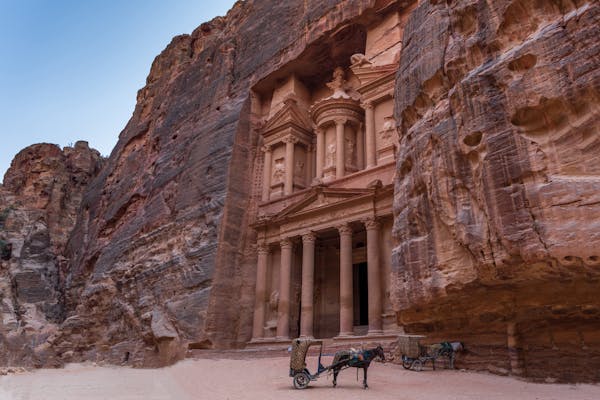
The first signature moment in Petra is the approach through the Siq, that narrow fissure in the mountain that channels you like a narrative. For about 1.2 kilometres the path alternates between shade and sudden, pinnacled light; the walls, worn by wind and centuries of hands, display bands of ochre, pink and deep maroon. Footsteps become attenuated here; the gorge reduces the city to an unfolding view, controlled and cinematic, so that when the canyon opens and the Treasury comes into sight the effect is not simply visual but almost corporeal.
Al Khazneh itself, often called the Treasury, is a study in scale and detail. Carved directly from the living rock in the early first century CE and standing approximately 45 metres high, its façade combines Hellenistic motifs with local techniques. Much of what we see is funerary: tomb architecture scaled up into public display. Standing before it, you register both the enormous labour required to remove and shape stone and the Nabataeans’ skill in harmonizing cut architecture with a dramatic natural setting.
This moment is not only about a single building but about the way Petra deploys sightlines and movement. The Siq funnels expectation; light and shadow animate carved cornices; walkways and staircases reveal terraces and theatres, tombs and house façades, each receding into the cliffs. The city resists being read in a single glance. To appreciate Petra is to accept that it is a palimpsest: layers of trade, ritual and daily life, overwritten and yet legible to those who take the time to look closely.
And so the lasting impression is tactile as much as visual — the grain of the sandstone under a palm, the cool of a shadowed niche, the way a carved relief softens under centuries of wind and sand. Petra is a city made of stone and of work, a place where geology and human ambition converge. When you finally turn away from the Treasury and the gorge closes behind you, the memory is not merely of a photograph but of an experience that sits in time: a quiet, rose-red monument to craft and movement. It is the kind of place that, once visited, quietly reorders what you think you know about permanence.
Can I book somewhere to stay?
Where to stay in Petra
Live rates across Booking.com, Agoda, VRBO and Hotels.com — compare in one search, no extra cost to you.
Popular destinations
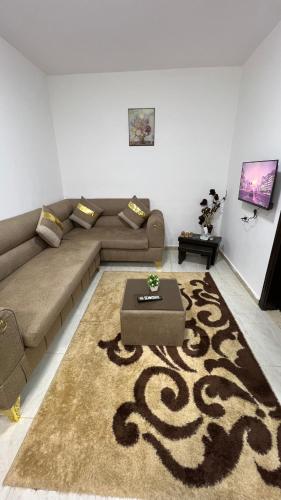
Blue Bird House

Idris home

Petra Olive House

Petra Rose Apartment
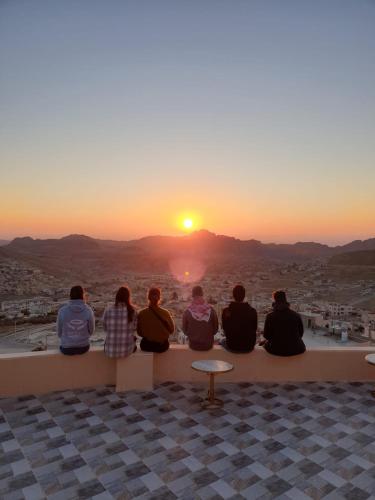
Cozy House

Petra Hills House

Village chalet

اهلا وسهلا

Hamza apartment
Live rates across our partner network (Booking.com, VRBO, Expedia, Hotels.com) via Stay22. Makutet may earn a commission when you book — at no extra cost to you. Prices update in real time and may vary before booking.
When to come
Planning your Petra trip
There is no bad time to visit — only cheaper and cooler.
March–April
Spring brings comfortable temperatures and blooming wadis; days suit long walks through the Siq and up to the monastery without the extremes of summer heat.
October–November
Autumn offers clear skies and soft evening light on the rose-red cliffs, ideal for photography and extended explorations of outlying tombs and trails.
July–August
Summer can be very hot and dry, with peak temperatures that make long daytime routes tiring; travel early or late in the day and plan water and shade breaks.
What else do I need for my trip?
Everything else for your trip

Flights to Petra: Amman & Aqaba gateways
Choose flights into Amman or Aqaba and plan onward travel to Petra, where red sandstone cliffs frame carved façades.
Explore
Where to stay in Petra: hotels, guesthouses & camps
From boutique hotels in Wadi Musa to desert camps near the Siq, Petra accommodations balance tradition, views and tactile stone surroundings.
Explore
Airport & city transfers in Petra: arrival options
Reliable transfers from Queen Alia or Aqaba terminals to Wadi Musa, smoothing arrival into Petra with measured pace and local knowledge.
Explore
Travel insurance for Petra: coverage suggestions
Policies covering medical evacuation, delay and archaeological tours offer calm certainty for travel around Petra’s rugged landscapes and ancient routes.
Explore
eSIM & connectivity for Petra
Regional eSIMs and local SIM options provide data for maps and research, essential for navigation and context while exploring Petra’s vast site.
ExploreWhat do I need before travelling?
What you need before you go
Daily ticket costs and budget tips
- ·Buy your Petra entry ticket at the official visitor centre, and consider multi-day passes if you plan to explore longer, because single-day visits rarely capture nearby Little Petra and local museums; bring Egyptian or Jordanian dinars in small notes for small vendors, and expect mid-range room rates in Wadi Musa with quieter guesthouses at the edges for evening calm.
Getting to Petra and local transit
- ·Arrive by car or shared taxi from Amman or Aqaba, allow about three hours from Amman for direct travel, and use registered taxis or hotel transfers for predictable fares, because public buses are infrequent; inside Petra, walk or hire an official donkey/horse for short stretches, and carry comfortable shoes for long, uneven trails with warm dust in the air.
Safety on trails and in canyons
- ·Keep to marked paths and avoid cliff edges when exploring tomb terraces, because some routes are steep and loose; carry water, wear a sun hat, and be cautious on donkey paths, and if a storm appears, seek lower, sheltered ground where the Siq channels sudden runoff, with the dry air of the desert quickly turning to an audible, rushing threat.
Mobile data and connectivity
- ·Buy a local SIM in Wadi Musa if you need reliable data, because roaming can be expensive and coverage inside deep sections of the Siq is patchy; download offline maps before entering Petra and keep a power bank handy, and enjoy pockets of reception as a link back to town life.
When to go: seasons, light and crowds
- ·Plan visits around Petra’s daily rhythm: early morning and late afternoon give soft, oblique light that sculpts the rose-red façades and thins the crowds. Time your visit for those hours, because angled sun reveals carved details and cools the walk. Wear a wide-brim hat, because the exposed sandstone reflects heat, and move slowly through the Siq, because its cool draft and echoing footsteps make details sing. Expect brisk desert nights and bracing midday glare by day, a contrast that rewards flexible pacing and makes the canyon feel like a private theatre at dusk.
Health, water and emergency basics for Petra
- ·Hydration and simple first aid shape safe Petra days: sip water frequently, because the dry Wadi heat clings to your throat and deserts dehydrate faster than you notice. Carry 1.5–2L per half day, plus electrolyte tablets for longer routes, because stores inside the site are sparse and sun exposure is direct. Pack a small blister kit and basic first-aid items, and leave written allergy/medication notes at your hotel, so staff can assist quickly. Note that urgent-care facilities are in nearby Wadi Musa, a short taxi ride from the site, because on-site care is limited; travel insurance with evacuation cover is advisable. Keep a calm head and practical kit, and you’ll trade heat stress for a well-earned sense of adventure when the canyon exhales at sunset.
Good to Know
Petra FAQs
Final inspiration
Go and see for yourself
To stand in Petra is to listen to a city that speaks in weathered stone. The carved facades, stepped terraces and narrow passes are not museum pieces but parts of an inhabited landscape whose histories are layered, contradictory and humanly intimate.
Leave Petra with the sense of having visited a place that resists quick definitions. Its signatures are tangible — the sand and the echo, the polishing of a carved lintel — and they reward the kind of slow attention that turns a visit into an abiding memory.
See It Through A Creator's Eyes
Want to discover Petra through people who have actually experienced it?
Explore Petra through the stories, photos, and perspectives of travel creators who have been there.
Find Creators Who Have Been to Petra