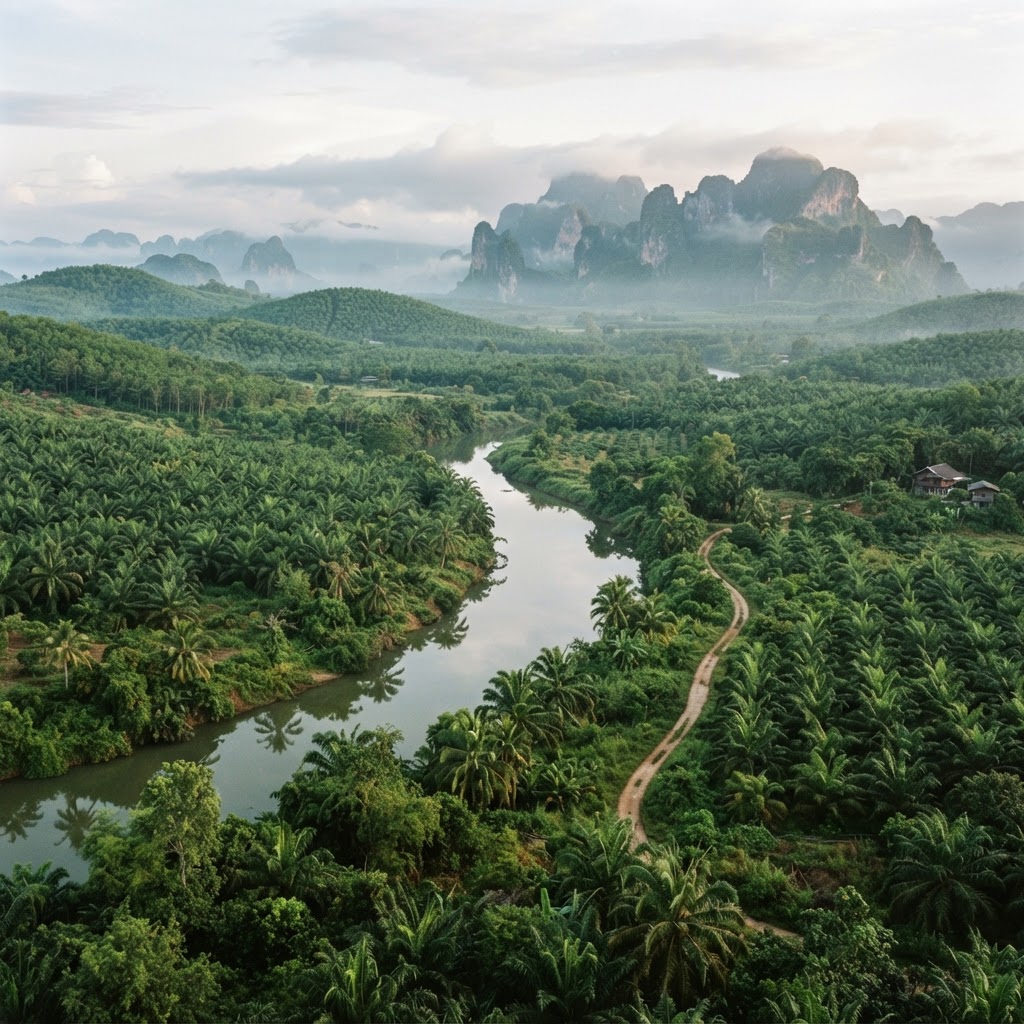
Khiri Rat Nikhom
What makes this place famous?
Images that explain Khiri Rat Nikhom
Photography first. Words second.

Limestone Ridge Viewpoint
Horizons folded like maps, patience rewarded

Rubber Plantation Trails
Dawn smells of rubber sap and patient earth

Khiri Rat Nikhom Market
Steam, spice, and village gossip braided together

Stilt Villages and Hill Temples
Wooden thresholds hold generational calendars and prayers
Introduction
Khiri Rat Nikhom, at a glance
?Why should I come? Khiri Rat Nikhom is an inland counterpoint to Surat Thani's island postcard: a district of low hills, village markets and planted rows of rubber and oil palm that hum in the afternoon heat. Walk its byways and you hear roosters at dawn, the low murmur of market bargaining, and the rasp of trucks carrying fruit; you smell frying banana and the citrus topnote of morning limes. Three days for an outline, a week for a proper thread, a month for the heart of its rhythms — and each return tightens the sense of place. Green.
Why should I come?
Why visit Khiri Rat Nikhom?
Why should I visit? Because Khiri Rat Nikhom offers a compact, sensory-rich version of southern Thailand: limestone faces that throw back your boat's wake, markets where tamarind tang and roasted fish puncture the air, and jungle tracks whose undergrowth hums with insects. Choose a day to skim the reservoir, a week to map hidden waterfalls, a month to learn vendors' names and the sound of rain on palm-thatched roofs. The town rewards slow listening, curious appetites and wet-soled walks; come curious, come open, come ready to fall for Khiri Rat Nikhom. It will become the place you measure every other city against.
Country
Thailand
Currency
THB (฿)
Language
Thai
Time Zone
GMT+7
What shouldn’t I miss?
Khiri Rat Nikhom's must-see sights

Ratchaprapha Reservoir (Cheow Lan Lake)
A sweeping reservoir of emerald water threaded with limestone karsts; the cool mist of Cheow Lan Lake rises around longtail boats and the quiet slap of water against hulls fills the air.
View Details
Khlong Saeng Wildlife Sanctuary
A protected lowland forest and river corridor where gibbon calls and hornbill cries punctuate the canopy; walking trails reveal wildlife-rich streams and shadowed, humid understory.
View Details
Khiri Rat Nikhom Waterfalls and Pools
A cluster of forested falls and plunge pools fed by seasonal streams; feel the cool spray on your skin and breathe the earthy scent of monsoon-soaked leaf litter beside each cascade.
View Details
Riverside Boat Villages and Timber Jetties
Scattered riverside settlements and working jetties where longtails and sampans tie up; the gentle clink of ropes and the river's warm breath at dawn reveal everyday life along the water.
View Details
Fruit Orchards and Rural Scenic Routes
Patchwork orchards and country lanes produce mango, durian and rambutan in season; the ripe sweetness from local fruit stalls perfumes the air as you cycle past rows of trees.
View DetailsDid You Know?
A city of small surprises
The facts that change the way you see it.
?What should I know first?
Khiri Rat Nikhom is an amphoe of Surat Thani province in southern Thailand, an administrative district whose villages feed the province with rubber, oil palm and seasonal fruit; a district that keeps the province supplied, quietly essential.
?What will surprise me at market?
Dawn markets here open before sunrise and trade in langsat, durian and citrus, a commerce run by family networks and measured by smell and touch rather than by brand — a marketplace of hands and scents, a neighbourhood economy as a lesson in abundance.
What experiences can I book?
Keep exploring Khiri Rat Nikhom
Tap an attraction to open Makutet Experiences, filtered for Khiri Rat Nikhom.
What do locals know?
Practical insight from people who've lived it
Khiri Rat Nikhom town
The district centre of Khiri Rat Nikhom in Surat Thani province, a compact market-and-administration hub where rubber trucks and pickup vans shape the morning rhythm and where the salty tang of roadside fish stalls often hangs in the air.
Kaeng tai pla (southern fish curry)
Kaeng tai pla is a deeply flavored southern Thai curry commonly found in Khiri Rat Nikhom, its pungent fermented-fish aroma anchored to riverside stalls and served with crisp vegetables so the first spicy mouthful and the shrimp-paste scent tell the story of local estuary ingredients.
Khiri Rat Nikhom morning market
A weekday morning market in the district offers piles of local produce, rubber-worker lunches and the metallic clink of scales, with the sizzling sound of woks and the earthy scent of freshly cut turmeric anchoring the sensory scene for early shoppers.
Wat Khiri Rat Nikhom (local temple)
Wat Khiri Rat Nikhom is a local Buddhist temple where daily chants and the soft rustle of sarongs mark community life, and where the resinous smoke of incense and the low bell tone create a calm sensory counterpoint to the busy provincial roads.
Pepper and rubber-farm landscapes
Surrounding Khiri Rat Nikhom are working pepper and rubber plantations where the earthy scent of pepper vines and latex-dry air is part of the landscape, offering low-key agritourism experiences that reveal how harvest seasons shape local routines and flavours.
Ban Wang Pla Riverside Cluster
A tucked-away stitch of wooden jetties and ferrying stalls where river smoke curls from grilled pla chon and fishermen mend nets in the shade. The afternoon light gilds pepper vines nearby and the river breeze brings a faint salt-of-the-earth tang — perfect for lingering over roadside kha nom and iced coffee. Head here late afternoon for the glow and local snacks, and hop a motorcycle taxi, since the narrow riverside lanes are unsuitable for cars.
Pepper‑Farm Coffee Trail
Punctuate a dusty morning with a slow ride along pepper-vined fences and compact coffee plots where the aroma of fresh roast mingles with damp earth after a tropical shower. Local families roast small batches on wood-fired pans and offer tasting pours with a side of plantation gossip and the leathery scent of pepper leaves. Visit a family roastery, so you can taste single-origin cups and hear the farmer’s method up close.
Kiri Ridge Sunrise Overlook
A modest ridge above the tambon that rewards an early rise with a sweeping dawn panorama across rubber and pepper mosaics; cicadas trill from the lower groves and rooster calls punctuate the cool air as mist lifts from the valleys. The scene is intimate rather than dramatic, ideal for slow photography and a thermos of local coffee. Climb the short path before sunrise, because the panorama softens quickly as haze burns off.
Book it
The moments worth booking ahead
Curiosity becomes a plan. These are the experiences that turn a wish list into a date in your calendar.
Overnight floating bungalows
The floating bungalows on Cheow Lan Lake (Ratchaprapha Dam) have very limited rooms and unique morning boat transfers, so book ahead to secure a stay.
Guided Cheow Lan boat tour
Guided longtail boat tours around Cheow Lan's limestone islands and hidden caves often sell out, so reserve in advance to access the best grottoes and viewpoints.
Kayak the karst lagoons
Morning guided kayak trips between the lake's towering karst islands let you explore quiet coves and caves that require advance bookings for equipment and guides.
Dawn Khao Sok wildlife trek
Book a dawn trek into Khao Sok rainforest from Khiri Rat Nikhom to increase your chances of seeing gibbons, hornbills and rare flora with an experienced guide.
The story of Khiri Rat Nikhom
How Khiri Rat Nikhom came to be
?What histories shaped these hills? The inland valleys that make up Khiri Rat Nikhom have been sites of settlement for generations, villages clustered along streams that feed larger rivers across Surat Thani. Administratively the district sits within a provincial story of inland agriculture and coastal trade; its lanes grew from footpaths connecting temple, ricefield and market. Colonial-era maps and modern provincial planning both brushed this terrain, but the lived archive is kitchen smoke, the sound of threshing, and elders naming the old borders. Over the twentieth century smallholders shifted crops as markets changed — shifting from subsistence rice to rubber and oil palm, layering plantation rhythms over older patterns of swidden and wet-rice. The trade in rubber tapped global demand, while roadside stalls kept local fruit on the move; the air registered the change in the scent of sap and in the cadence of labour. Listen for the hollow clack of latex tins at first light, the scent that tells of tapping and resin and harvest. But climb a village temple on a low hill at dawn, or drift the district's stream at sunset, and the old village is still there, evergreen.
Where should I stay?
Where to stay in Khiri Rat Nikhom
Curated stays chosen to suit every kind of traveller.

Khiri Rat Riverside Guesthouse
Slow-travelers · families · foodies
Pick the one that suits your trip; the rest is logistics. A tidy cluster of family-run rooms on the riverbank that feel custom-made for slow mornings — tea steam, coconut-scented breezes from nearby orchards and the distant murmur of village songthaews. Expect shaded verandas, hearty simple breakfasts and a compact choice of rooms: an abundance of quiet corners in a small, friendly grouping that makes exploring the district effortless.
Check availability
Hilltop Eco Resort
Nature-lovers · hikers · couples
Perched above the district's green folds, this small eco-resort pairs raised wooden villas with wide views of limestone hills. Nights are scored by the metallic chirr of cicadas over rice paddies and the deep, humid breath of the surrounding jungle; morning light filters through tamarind and rubber trees. Facilities lean low-impact — solar lighting, a plunge pool and farm-to-table meals — offering the feeling of abundance: lots of space and a curated handful of comforts.
Check availability
Rubber-Plantation Homestay
Cultural-curious · solo travelers · budget
Stay with a local family on a working plantation for an intimate, grounded slice of district life. Mornings are punctuated by the soft click of rubber-tapping and the warm, earthy smell of sun-warmed soil; dinners centre on recipes handed down within the household. Rooms are simple but authentic — plenty of local story and hands-on experiences in a compact footprint where neighbours feel like an extended welcome.
Check availability
Boutique Baan Villa
Romantics · photographers · honeymooners
A handful of renovated Thai-style villas arranged around a tropical garden and private plunge pools — polished wood, linen breezes and small details that reward slow attention. Evenings bring the perfume of night-blooming jasmine and the soft clink of iced drinks on shaded terraces; inside, local teak and woven textiles ground the rooms in place. Ideal if you want privacy without losing the warm familiarity of village rhythms.
Check availabilityWhy this destination?
Why Khiri Rat Nikhom, and not somewhere else
?What single memory will define my visit? On a clear morning take the road that threads between rubber stands and small homesteads: the air is warm, the rubber-tapper's knife rings from a nearby tree, and the market at the next village is already steaming with fried rice and coffee. Pause for a mango the vendor peels with nimble fingers, taste the tight sweetness and the dust of ground chili that someone offers on the side; listen to the low, communal laughter as children shoulder past baskets of fruits. Three moments — a dawn market, a mid-morning walk, an evening riverside pause — stack into a single memory that keeps giving. Later that same day climb the rise behind the village temple where the wind carries a distant chorus from another community and the roof tiles send back light. The hillside path is warm underfoot; cicadas make a metallic hum and the breeze carries a citrus tang from orchard trees below. Sit on a broad stone and let the place’s cadence settle into you: the measured murmur of engines on a distant road, the clack of a vendor’s scales, the tactile warmth of sun-baked steps. Let the final hour be simple: a boat along the district stream as twilight narrows, the river surface smelling of mud and green leaves, the boat's wood rubbing softly against rope. Triadic time here holds — an hour to arrive, a day to begin, a life to carry its echo — and the comparison you make afterward will be honest. Become the place you measure every other landscape against.
Can I book somewhere to stay?
Where to stay in Khiri Rat Nikhom
Live rates across Booking.com, Agoda, VRBO and Hotels.com — compare in one search, no extra cost to you.
Popular destinations

Caligo Resort
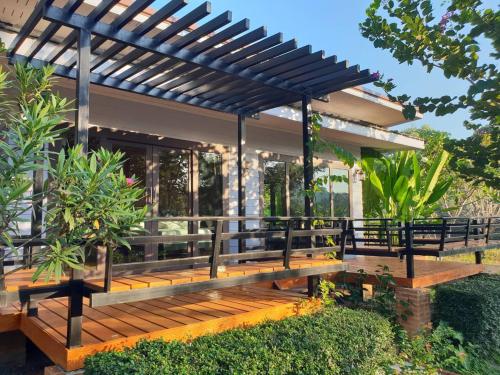
Baan Suan Hill Resort

คุ้มกะลาหัวฟาร์มสเตย์ (Khumkalahua Farmstay)

ภูริรักษ์ โฮมสเตย์
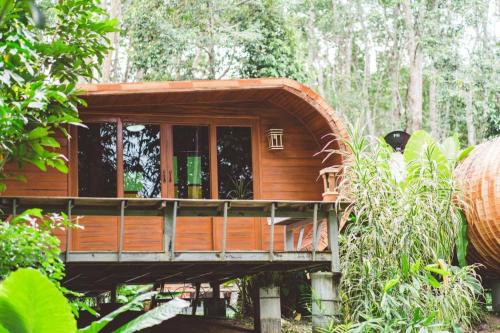
River View Resort At Chaewlan
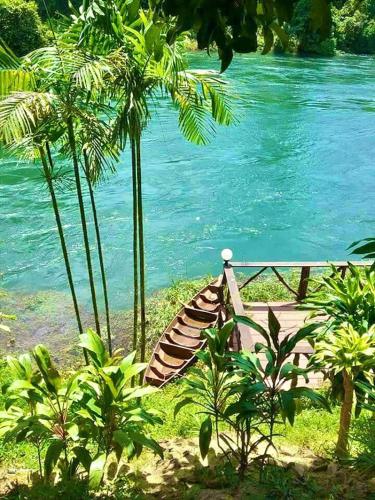
Baan Pak Rim Kuaen Resort
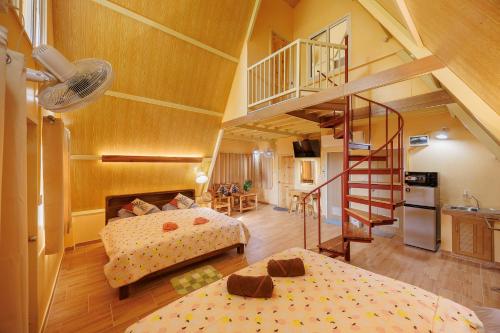
Baandin Chiewlarn
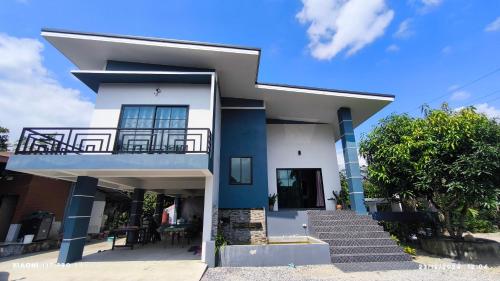
Rai Eingpu
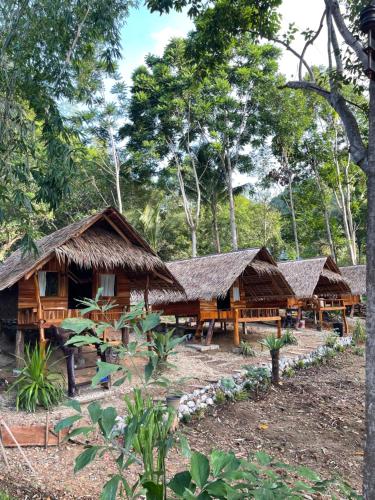
Khao Phang Camping
Live rates across our partner network (Booking.com, VRBO, Expedia, Hotels.com) via Stay22. Makutet may earn a commission when you book — at no extra cost to you. Prices update in real time and may vary before booking.
When to come
Planning your Khiri Rat Nikhom trip
There is no bad time to visit — only cheaper and cooler.
Nov–Feb
Curiosity becomes a plan. These are the months when inland Surat Thani cools and the heat eases, making dirt roads and market mornings comfortable for walking and for boat-side pauses. There is no bad time to visit — choose cooler months for longer days, and carry a light sunhat, because the sun can still be bright; bring a refillable water bottle and a flexible mood.
Mar–Apr
There is steady reward in early heat, but expect stronger mid-afternoon sun and occasional blue haze over the hills; plan activity for mornings and late afternoons, and pack light cotton layers, because shade becomes precious. Pace your days around market hours and river breezes, and leave room for a slow late lunch under a tamarind tree.
May–Oct
There is generous rainfall rather than absence; rains make routes muddier and waterfalls louder, and travel shifts to creek-side listening rather than long overland drives, so bring a light rain shell, because downpours arrive suddenly and shift the day's plans. Accept the wet as atmosphere and read the season by the fragrance of wet earth and banana leaves.
What else do I need for my trip?
Everything else for your trip


What do I need before travelling?
What you need before you go
Budget in Khiri Rat Nikhom
- ·Khiri Rat Nikhom offers a range of options for every budget, from affordable street food and local guesthouses to luxury hotels and fine dining. As a general guide for Thailand, plan for mid-range spending if you want comfort without splurging, and always carry small bills for markets and local transport.
Getting around Khiri Rat Nikhom
- ·Khiri Rat Nikhom is well-connected by public transport. Within the city, use a mix of taxis, rideshares, and public transit. Plan your routes in advance for efficiency.
Safety in Khiri Rat Nikhom
- ·Khiri Rat Nikhom is generally safe for travellers who exercise standard precautions. Keep valuables secure, stay aware of your surroundings, and avoid poorly lit areas at night. Register with your embassy before travelling to Thailand. Keep emergency numbers and your accommodation address handy.
Connectivity in Khiri Rat Nikhom
- ·Free Wi-Fi is available in most hotels, cafes, and public spaces. For reliable data, purchase a local SIM card or eSIM on arrival — Thailand has good mobile coverage in urban areas.
healthcare and medical services in Khiri Rat Nikhom
- ·A clear-eyed primer on local care: Khiri Rat Nikhom’s district clinic handles routine care and minor emergencies, while serious cases travel to Surat Thani, and you should carry travel insurance, because transfers can take an hour or more. Expect the antiseptic tang at the small hospital and pharmacists who speak enough Thai for medicine, so pack prescriptions with Thai names, and travel with calm confidence under the humid, insect-chorus nights.
seasonal packing and clothing for Khiri Rat Nikhom
- ·Pack with the region’s moods in mind: light, breathable cotton and quick-dry layers for hot seasons, and a light rain shell for the monsoon months, as sudden downpours come with the damp, earthy smell of the rainforest around Khiri Rat Nikhom’s limestone hills. Bring sturdy shoes for village roads and temples, because some paths are slippery after rain, and arrive ready to fold into the slow rural rhythm.
Good to Know
Khiri Rat Nikhom FAQs
Final inspiration
Go and see for yourself
?What will I carry home from here? Khiri Rat Nikhom rewards attention with accumulative pleasures: a market scent that lingers, a hilltop chant at dawn, a roadside seller who remembers your coffee order on your second visit. Three days will give you an appetite, a week will make you acquainted, a month will let the rhythms settle; it repays slow noticing with a reservoir of small, private discoveries. Come curious, come slow, come ready to fall into it.
See It Through A Creator's Eyes
Want to discover Khiri Rat Nikhom through people who have actually experienced it?
Explore Khiri Rat Nikhom through the stories, photos, and perspectives of travel creators who have been there.
Find Creators Who Have Been to Khiri Rat Nikhom