
Saigon
Ho Chi Minh City
Vietnam's energetic southern capital
What makes this place famous?
Images that explain Ho Chi Minh City
Photography first. Words second.

Saigon Notre-Dame Basilica
A French heartbeat in a tropical, bustling city

Saigon Central Post Office
Voices of postcards, clocks and colonial elbows

Ben Thanh Market
A thunder of trade, spice, and daily bargains

Reunification Palace (Independence Palace)
Where waited histories re-enter the city's present
Introduction
Ho Chi Minh City, at a glance
Ho Chi Minh City wears its contradictions lightly: narrow alleys that smell of simmering broth open suddenly onto wide boulevards planted with flamboyant flame trees; clatter and throttle from millions of motors thread past colonial stone façades and neon towers. The city’s four signature images—the shadowed arc of Notre-Dame Cathedral, the bustling canopy of Bến Thành Market, the slow sweep of the Saigon River, and the cascading neon of Nguyễn Huệ at night—are not mere postcards but overlapping frames of a constantly remade urban life.
Why visit? Because this is a city that keeps reintroducing itself. Once a Khmer outpost, later the mercantile hub of French Cochinchina, then the focal point of 20th-century conflicts and 21st-century commerce, Ho Chi Minh City presents history and appetite in equal measure. It’s a place where coffee is an art form, where the public and private mix on sidewalk stools, and where the pace of change is part of the landscape you come to understand by walking its districts rather than rushing through them.
Why should I come?
Why visit Ho Chi Minh City?
What makes this place worth the trip? Come for the layered street food, layered histories, layered rhythms: French-era boulevards, wartime museums, and street-side kitchens that serve breakfast through midnight. You'll hear the sizzle of bánh xèo and smell lemongrass in soups while crossing from skyscraper glass to tiled pagoda courtyards within minutes. Come hungry, come curious, come ready to notice the motif.
Country
Vietnam
Currency
Vietnamese đồng (₫)
Language
Vietnamese
Airport
Tan Son Nhat International Airport (SGN)
Time Zone
UTC+07:00 (Indochina Time, ICT)
Best Time
December–April
What shouldn’t I miss?
Ho Chi Minh City's must-see sights

War Remnants Museum
A stark museum documenting the Vietnam War through photographs, military hardware and testimonies; exhibits chart wartime realities and international reactions to conflict.
View Details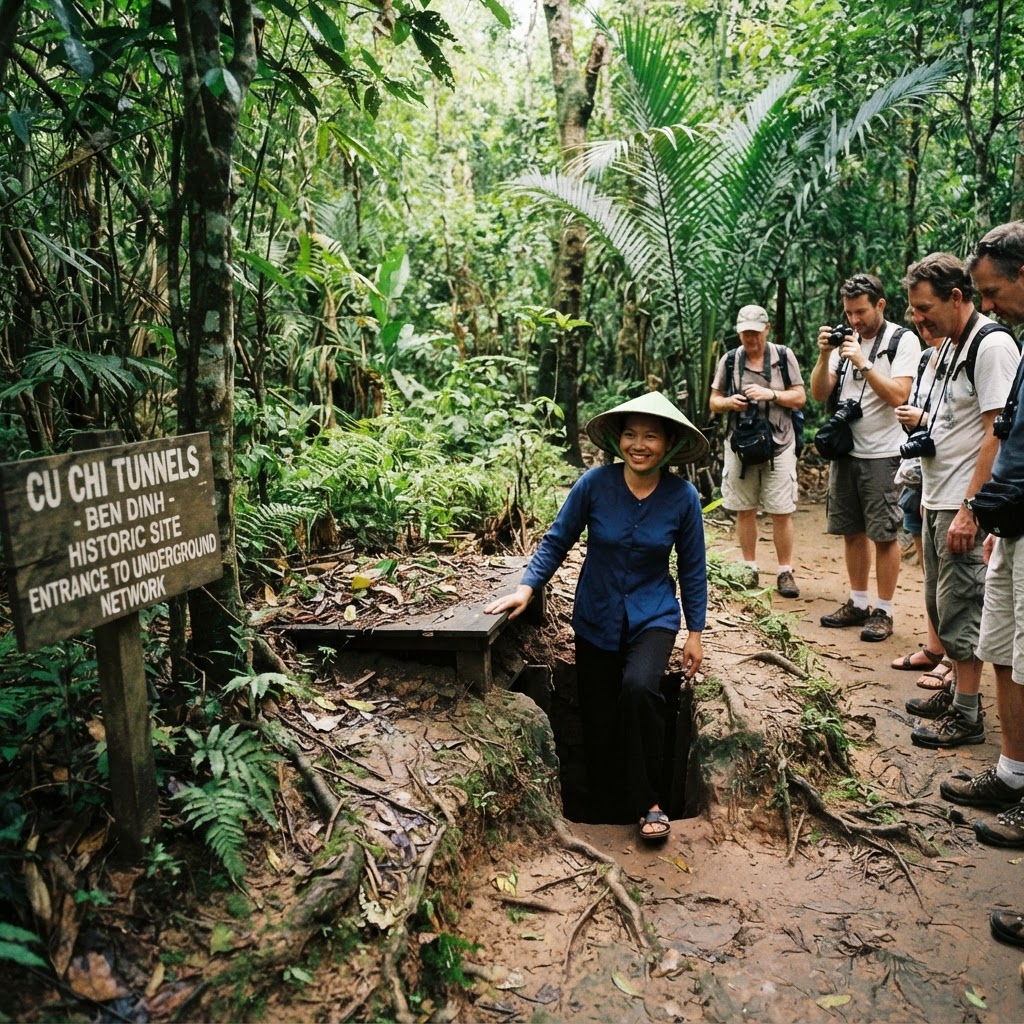
Cu Chi Tunnels
Extensive underground tunnels northwest of the city used during the Vietnam War; guided visits show trapdoors, hidden kitchens, and the claustrophobic scale of guerrilla life.
View Details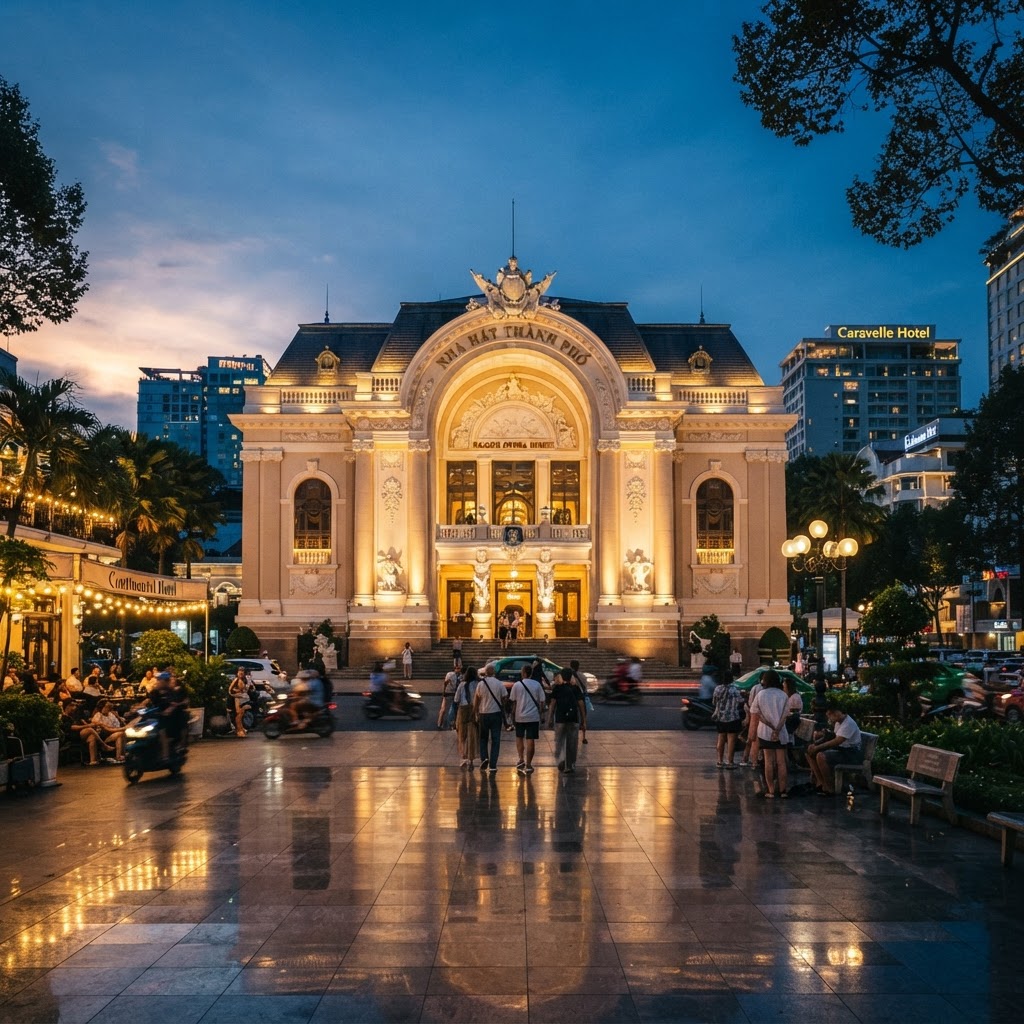
Saigon Opera House (Municipal Theatre)
A restored French colonial theatre in District 1 hosting ballet, opera and contemporary performances beneath ornate Belle Époque interiors and chandeliers.
View Details
Jade Emperor Pagoda (Ngoc Hoang Pagoda)
A Chinese-Vietnamese Taoist temple known for dense incense smoke, carved wood altars and shrines to the Jade Emperor and sea deities, tucked into a busy Saigon lane.
View Details
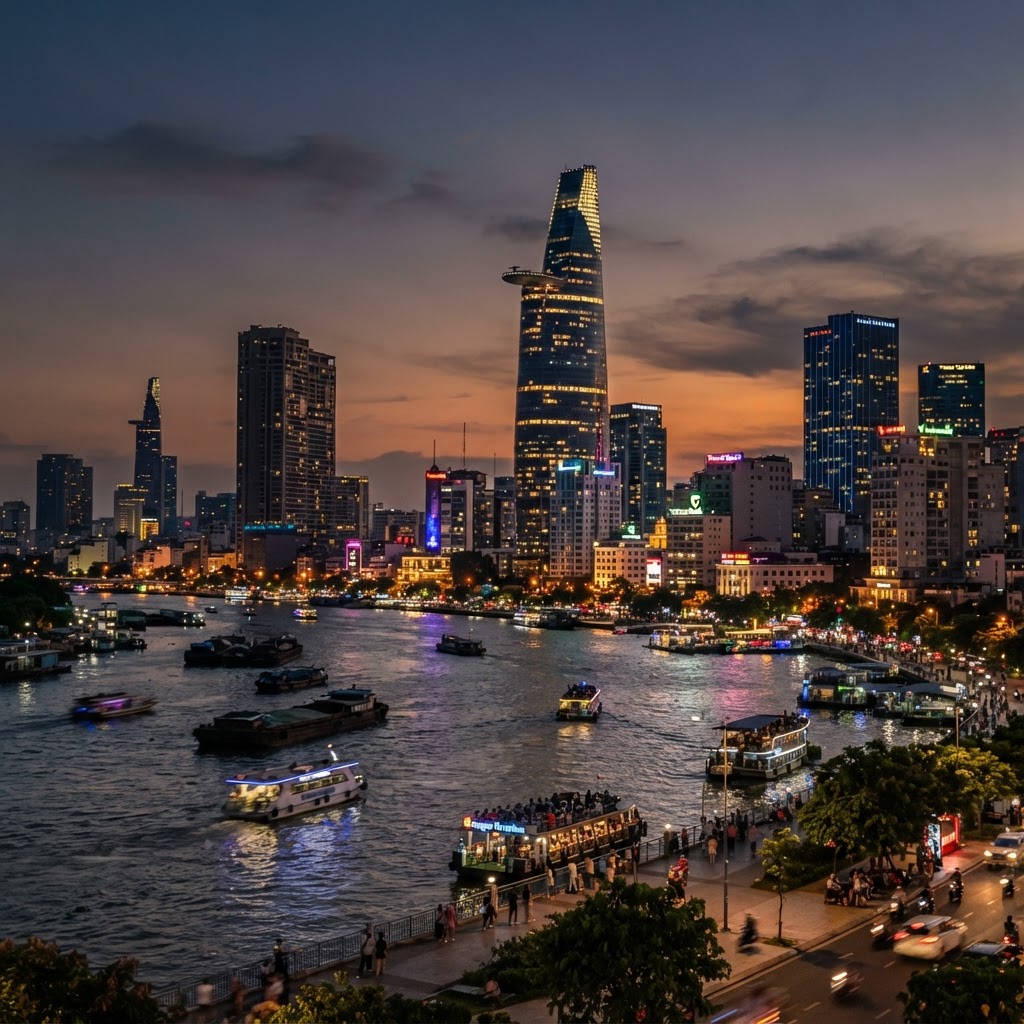
Bitexco Financial Tower (observation deck)
A 262-metre skyscraper with a popular observation deck offering panoramic views across the Saigon skyline and a distinctive helipad silhouette.
View DetailsDid You Know?
A city of small surprises
The facts that change the way you see it.
Two names, one city
Officially renamed Ho Chi Minh City in 1976 after the end of the Vietnam War, the city is still widely called "Sài Gòn" by locals and in everyday speech — a historic name that persists across addresses, businesses and conversation.
A post office with a story
Saigon Central Post Office, completed in the early 1890s and designed by French architect Alfred Foulhoux, still operates as a functioning post office and stands as a preserved example of French colonial architecture in the heart of the city.
What experiences can I book?
Keep exploring Ho Chi Minh City
Tap an attraction to open Makutet Experiences, filtered for Ho Chi Minh City.
What do locals know?
Practical insight from people who've lived it
District 1
District 1 is the city's administrative and tourist core, containing colonial boulevards, the opera house and the central business district alongside alleys of cafés and street vendors; expect constant pedestrian and scooter activity and many late-night food options.
Bánh mì Huỳnh Hoa
Bánh mì Huỳnh Hoa is a famous street sandwich shop in District 1 known for crisp baguettes, generous pâté and pickled vegetables; lines are common and the savoury, slightly sweet filling and crunchy crust define the Saigon bánh mì style.
Bến Thành Market
Bến Thành Market is a large central market selling textiles, souvenirs and prepared food; mornings are busiest for produce and cooked breakfasts, while evenings open more stalls selling grilled meats and sweets, and the building is a landmark of Saigon commerce.
Bùi Viện Street
Bùi Viện is a compact nightlife strip in District 1 with bars, street stalls and music that runs late; expect loud, international clientele, neon signage and many scooter rides in and out, making it a lively night option for social eating and drinks.
Cholon Backstreets (Ho Chi Minh’s Chinatown)
An intoxicating tangle of laneways where incense coils and dried herbs perfume the air around long-standing apothecary stalls — wander the Chợ Lớn alleys, to discover tiny temples and street-side banh bao vendors while the clack of abacus beads and Cantonese radio form the soundtrack of this Chinese-Vietnamese quarter.
Võ Văn Kiệt Riverside Cycleway
Sunset unfurls along the Saigon River on this broad riverside ribbon where sampans cut a soft wake and vendors grill seafood beside the promenade — rent a bicycle, to glide past container cranes and park joggers while the tang of fish sauce and charcoal hangs lightly in the humid air, a reminder that the river is both industry and leisure.
Tân Định Church & Pastel Lanes
A photogenic pocket centered on the candy-pink Tân Định Church, where French colonial facades hide narrow cafés and bakeries; pause at a sidewalk bakery, to taste warm bánh mì and the bitter-sweet drip of cà phê sữa đá while chatter and the clink of ceramic cups give this tasteful neighbourhood a lived-in, aromatic charm.
Hồ Thị Kỷ Flower Market (Night Blooms)
A nocturnal profusion of blooms and vocal vendors, where heady jasmine and marigold bouquets crowd motorbikes at dawn and dusk — visit after dusk, to see wholesale stacks of lotus and tết offerings while the dense scent of flowers and the whisper of tissue paper create a sensory portrait of Saigon’s floral economy.
Book it
The moments worth booking ahead
Curiosity becomes a plan. These are the experiences that turn a wish list into a date in your calendar.
Cu Chi Tunnels tour
A guided Cu Chi Tunnels tour gives historical context and access to preserved tunnel networks, with knowledgeable guides explaining wartime tactics and local stories.
Mekong Delta day trip
A Mekong Delta boat day visits floating markets and riverside villages, offering boat rides and local food that are logistically eased by an organised transfer.
Saigon River dinner cruise
A Saigon River dinner cruise pairs skyline views with Vietnamese cuisine and live music, turning a riverside evening into a relaxed, transport-included experience.
Street-food walking tour
A guided street-food walking tour introduces trusted stalls and local dishes, letting you sample safely while learning about regional flavours and cooking methods.
The story of Ho Chi Minh City
How Ho Chi Minh City came to be
Long before it acquired the names Sài Gòn or Ho Chi Minh City, the low-lying waterways of the Mekong delta hosted small Khmer settlements and seasonal Khmer trading posts. The swampy fringes of the river attracted fishermen and rice cultivators; over centuries, trading routes and migration reshaped the landscape. By the 17th century, Vietnamese settlers moved southward under the Nguyễn lords, establishing fortified communities and commercial hubs that would form the kernel of the later city.
In the 19th century the French colonized southern Vietnam and turned the town into a key port for Cochinchina. Wide boulevards, administrative blocks and Catholic churches rose alongside merchant houses; infrastructure projects and riverfront quays reoriented the settlement toward global trade. The result is still visible: the cathedral’s twin towers, the arched interior of the Central Post Office, and the layered street plan where narrow alleys open onto broad colonial squares.
The 20th century altered Saigon’s trajectory again. It became a political and military fulcrum during the Vietnam War; the 1975 tank entry into the Independence Palace marked the end of the conflict and precipitated the city’s official renaming in 1976. The subsequent decades brought socialist planning and later, from the 1986 Doi Moi reforms onward, a rapid economic revival. Markets and motorbikes multiplied, mid-century villas found new lives as cafés, and the city’s energy leaned into entrepreneurship, street food culture and an increasingly globalized skyline—yet always with the sediments of earlier eras visible beneath the surface.
Where should I stay?
Where to stay in Ho Chi Minh City
Curated stays chosen to suit every kind of traveller.
District 1 (Central Saigon)
First-timers · food lovers · nightlife seekers
The city's commercial heart with hotels, restaurants and nightlife; walking distance to museums, colonial landmarks and major transport links for first-time visitors.
Check availability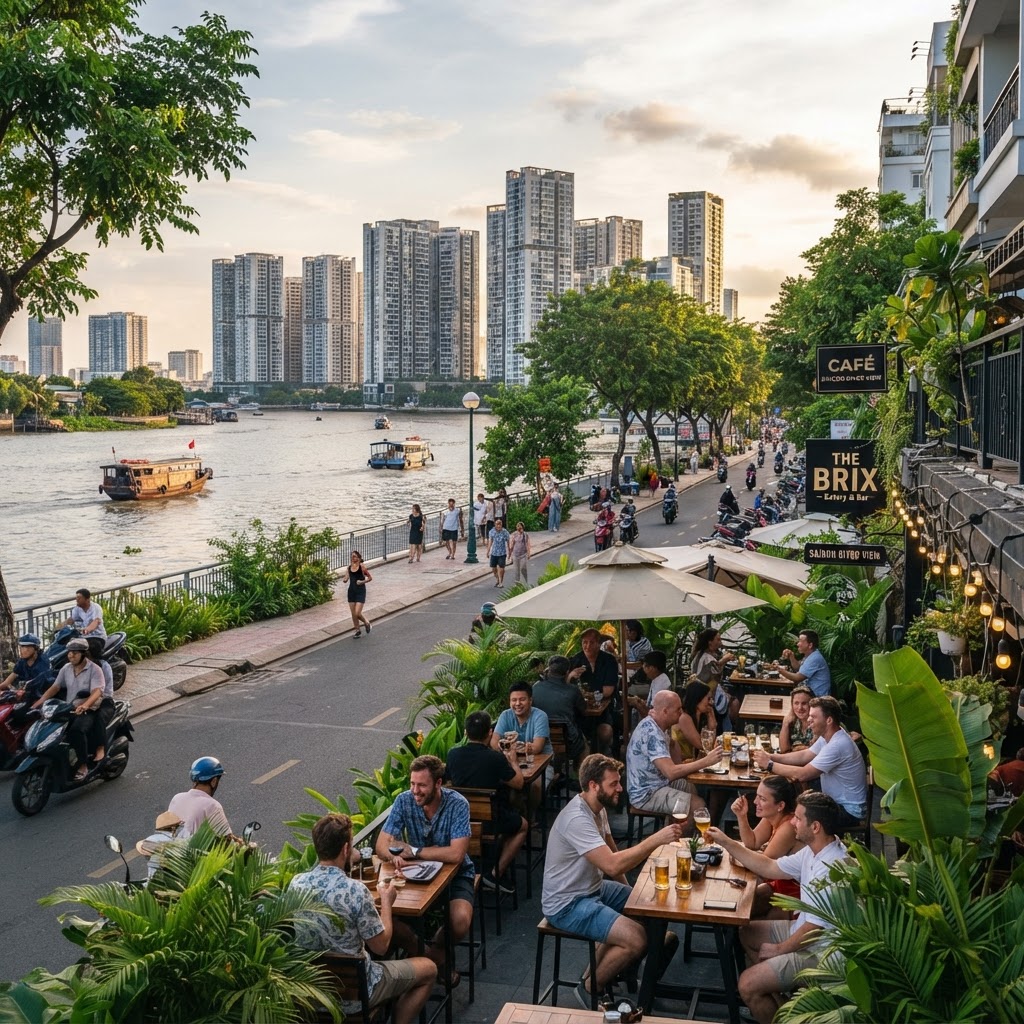
Thao Dien (District 2)
Families · long-stay travellers · expats
An expat-oriented enclave across the river with leafy streets, serviced apartments and cafes; favoured by families and longer-stay travellers seeking quieter space.
Check availability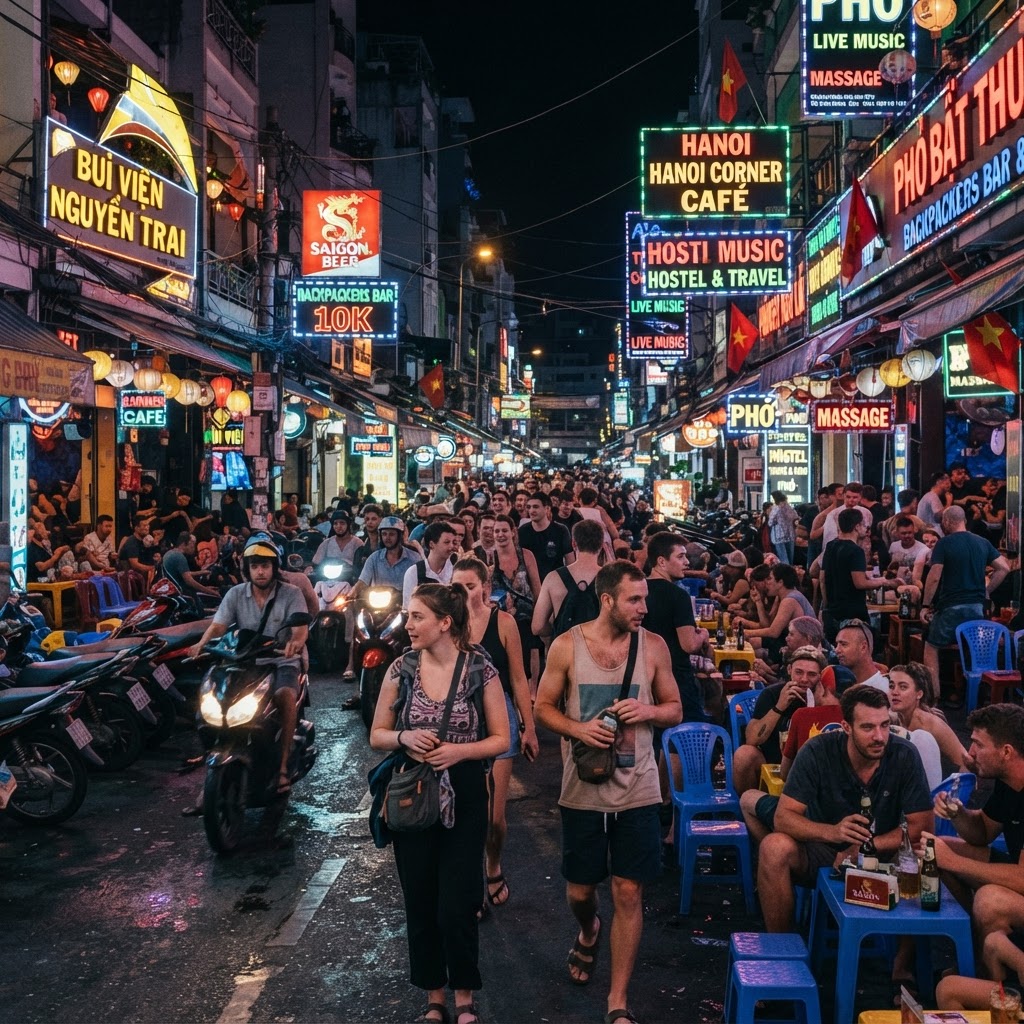
Pham Ngu Lao backpacker area
Backpackers · budget travellers · night owls
A compact budget hub of guesthouses, street food and travel desks around Bùi Viện; ideal for economy travellers and those chasing late-night energy and cheap logistics.
Check availability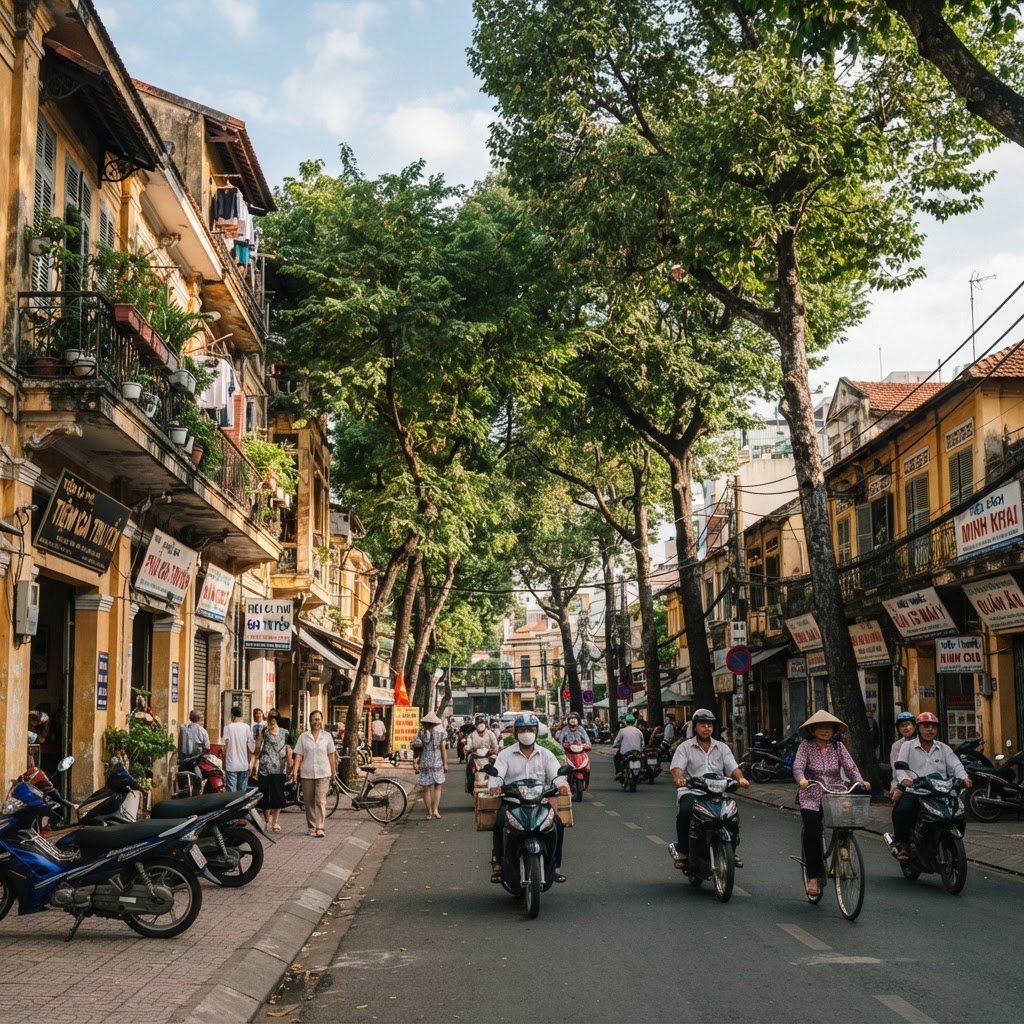
District 3
Photographers · couples · relaxed explorers
A quieter central district known for tree‑lined streets, boutique hotels and local coffee shops; close to landmarks but with a calmer, residential atmosphere for slower stays.
Check availabilityWhy this destination?
Why Ho Chi Minh City, and not somewhere else
The Signature Moment happens before the tourist maps open: just after dawn, when District 1 still wears a cool gray and the city is loosening its shoulders. Walk from the Quai along the Saigon River toward Bến Nghé and you’ll find vendors arranging greens and herbs, boat crews tending nets, and, tucked under an awning, a woman stirring a simmering pot of broth. The sound is quotidian — the drop of bowls, the slosh of a ladle — but in those minutes the city feels handmade. Ordering a bowl of phở from a street cook is an education in economy and taste: thin rice noodles, beef broth clarified by long simmering, sprouts piled on the side, a lime split open. Around you, students and motorbike couriers move in small choreographies; a taxi idles, the driver checking messages on a small screen. It’s a city in motion, but this hour shows how motion is composed of countless small, deliberate acts.
Midday offers a different kind of intimacy. Move inland to the Central Post Office and Notre-Dame Cathedral Basilica to see the colonial layer of Saigon: stamped metalwork, vaulted windows, and a clock face that has kept time since the 19th century. Cross the square and slip into alleys where Chinese shophouses lean close together; in Cholon, incense curls around carved beams and market alleys sell dried seafood and medicinal herbs. The juxtaposition is everywhere—French stone across from Chinese tile, sandstone villas whose gates hide family-run cafés where condensation beads on glasses of cà phê sữa đá. Each of these scenes pinpoints the city’s long habit of absorbing difference.
Evening is when the city arranges its light. Nguyễn Huệ walking street and the riverfront illuminate with LED washes, families stroll beneath banyan trees, and temporary clusters of hawkers set up skewers and sweet treats. Find a rooftop—there are modest, local terraces as well as high-rise bars—and watch the motorbikes flow like a silver tide through avenues, their headlights a living lattice. The soundscape changes too: daytime engines flatten into nighttime throb, live bands emerge in hidden courtyards, and conversations unspool into laughter. You’ll taste the city in sticky rice, in grilled fish, in the salted, sweet balance of street desserts bought from a vendor who has been in the same spot for decades.
The full moment comes when you realize Ho Chi Minh City is not a single story but an ongoing conversation between past and present, between formal institutions and the improvisations of daily life. It’s in the way a French façade shelters a scooter repair shop, in the temple steps where teenagers share iced coffee, in the market stall where an old woman still counts notes by hand. If you let the city compress into a single image, choose the slow, concrete detail: a steaming bowl placed on a plastic stool at dawn, surrounded by strangers who for a while become a small, transient community. That sitting — brief, ordinary and unmistakably the city’s own — is the lasting impression you carry away.
Can I book somewhere to stay?
Where to stay in Ho Chi Minh City
Live rates across Booking.com, Agoda, VRBO and Hotels.com — compare in one search, no extra cost to you.
Popular destinations

Khách sạn SAKÊ Tiền Giang
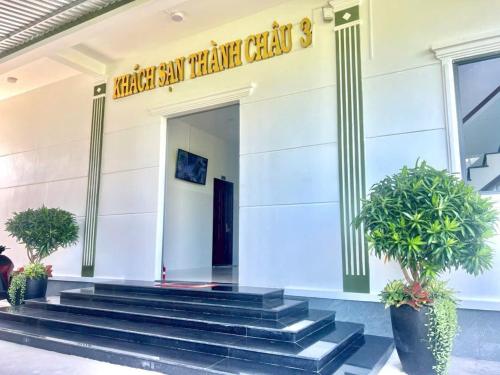
Khách sạn Thành Châu 3
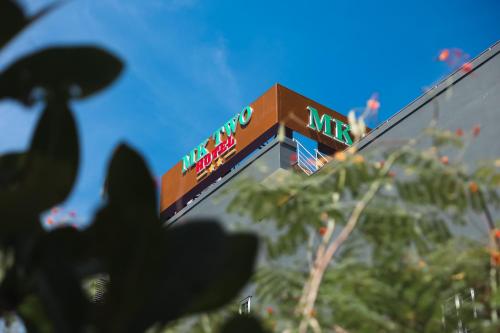
MK Two Hotel
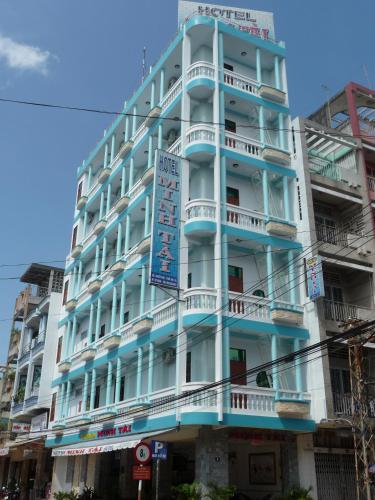
Minh Tai Hotel

Song Tien Hotel

Cuu Long Hotel
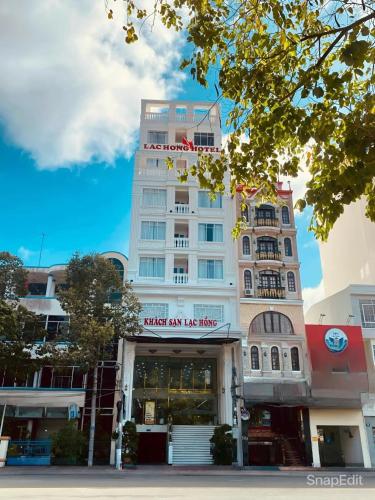
Khách Sạn Lạc Hồng Mỹ Tho - Lac Hong My Tho Hotel
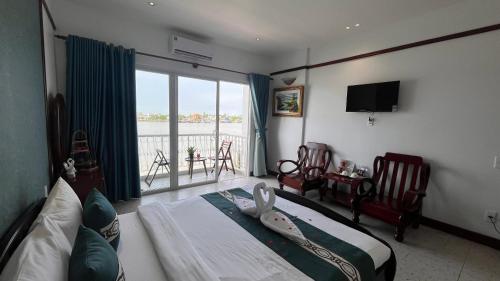
Chuong Duong Hotel

Gems Hotel 2
Live rates across our partner network (Booking.com, VRBO, Expedia, Hotels.com) via Stay22. Makutet may earn a commission when you book — at no extra cost to you. Prices update in real time and may vary before booking.
When to come
Planning your Ho Chi Minh City trip
There is no bad time to visit — only cheaper and cooler.
December–April
Clearer skies and lower humidity make this the most comfortable period for walking tours, riverfront evenings and rooftop views. Temperatures are warm but more predictable.
May & November
Transitional months can bring sudden showers and high humidity. Expect fewer tourist crowds and still-strong street food scenes, but pack light rain gear.
June–September
Heavy, often sudden afternoon downpours are common and some low-lying streets flood briefly. If you travel now, plan indoor alternatives and flexible timetables.
What else do I need for my trip?
Everything else for your trip

Flights to Ho Chi Minh City
Find the best flights to Ho Chi Minh City.
Explore
Accommodation in Ho Chi Minh City
Discover the best hotels and resorts in Ho Chi Minh City.
Explore
Airport Transfers
Arrange transport between Ho Chi Minh City Airport and your accommodation.
Explore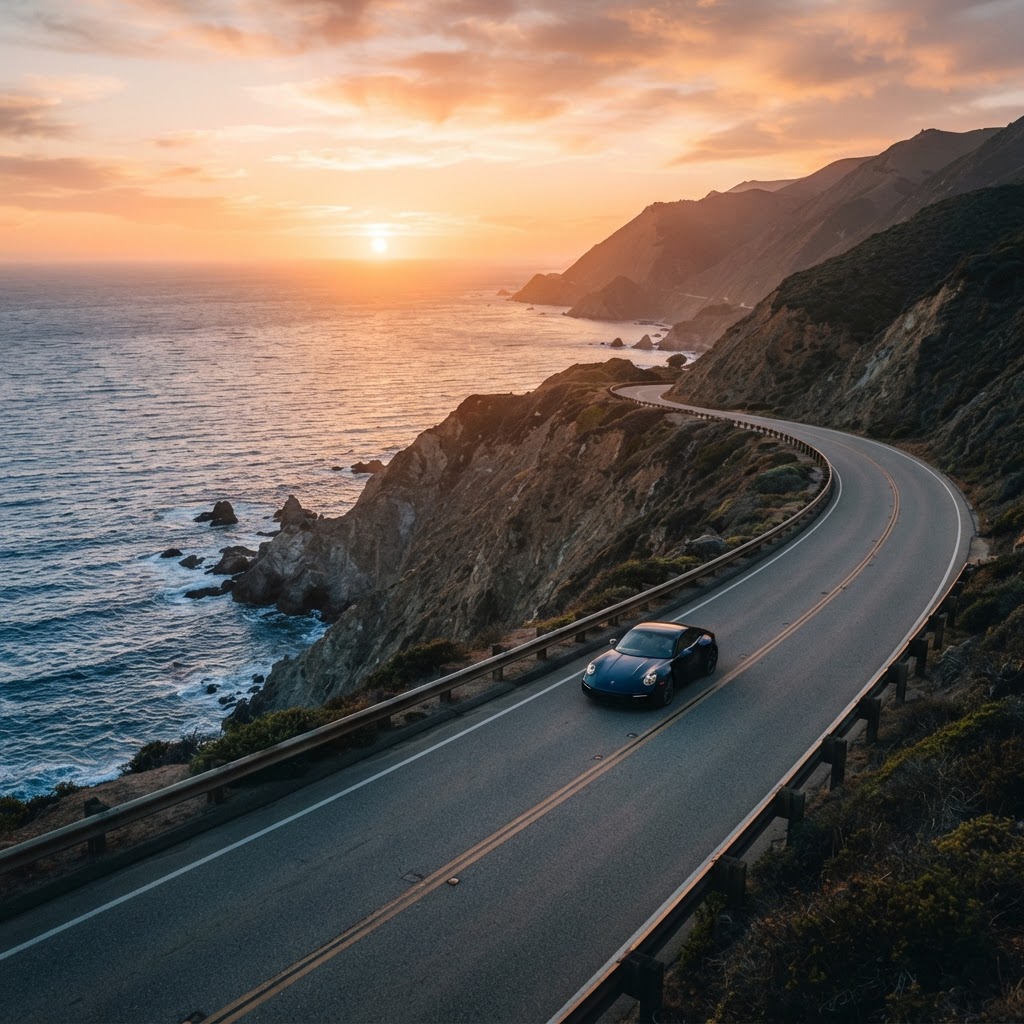
Car Hire
Explore Ho Chi Minh City and surrounding regions with a rental vehicle.
Explore
Travel Insurance
Protect your trip before travelling to Vietnam.
Explore
eSIM & Connectivity
Stay connected throughout your visit to Ho Chi Minh City.
ExploreWhat do I need before travelling?
What you need before you go
Budget tips
- ·Carry small change and coins, to make street purchases quicker and avoid awkward haggling; choose street food stalls for lower prices and big flavours, and keep an extra day or two in your budget for transport and unexpected meals, with the city's vibrant street life as your backdrop.
Getting around
- ·Use Grab or Bolt motorbike taxis for quick solo trips, or insist on metered taxis, to control cost and route; learn to cross streets with steady pace and eye contact, and ride with helmet straps fastened for heat and wind comfort.
Safety basics
- ·Keep a photocopy of passport and don’t flaunt valuables, to reduce petty-theft risk; avoid unlit backstreets at night and use hotel safes where available, and note that most issues are small and manageable with basic caution and awareness.
Connectivity
- ·Buy a local SIM on arrival, and pick providers like Viettel or Mobifone for wider coverage; many cafés and hotels offer free Wi‑Fi but a local data plan keeps maps and ride apps reliable, leaving your schedule unfolding smoothly under Saigon skies.
Ho Chi Minh City: Weather rhythms & packing
- ·Ho Chi Minh City swings between furnace-hot, humid days and sudden tropical downpours; the humid air often carries the sweet bite of cà phê sữa đá and a faint tang of fish sauce as you move between markets. Pack breathable cottons and a compact umbrella, to stay comfortable during surprise showers, and carry a light rain shell, to dodge monsoon bursts while you explore motorbike-packed boulevards. Expect intense sun from late morning to mid-afternoon and dramatic cloudbursts in the wet season, so plan daytime walking around shade and rooftop cafés, and end every day with a flexible mood tuned to the city’s sizzling tempo.
Emergency contacts & medical care in Ho Chi Minh City
- ·Keep a short list of local emergency contacts: 115 for ambulance, 113 for police and 114 for fire, plus the names of nearby hospitals such as Cho Ray Hospital and FV Hospital, which handle serious trauma and expat care respectively. Save those numbers in your phone, because network hiccups in narrow alleys can make a quick call harder than expected, and carry travel insurance details and a photocopy of your passport, to speed up admissions or prescriptions. Expect efficient clinics for routine needs and large public wards with an antiseptic tang when emergencies arrive, so keep calm papers in order and a steady voice to cut through the bustle.
Good to Know
Ho Chi Minh City FAQs
Final inspiration
Go and see for yourself
To travel Ho Chi Minh City is to accept a certain kind of intimacy: with aromas, with the honk and rhythm of traffic, with markets that trade in both commodities and gossip. The city rewards patience; a corner coffee stall, a shady park bench, or a slow ferry down the Saigon River will repay a quiet hour.
Stay curious about layers—colonial stone beside lacquered shop fronts, revolutionary history beside new high-rises—and let the city’s textures accumulate. Leave time for unplanned detours; the easiest pleasures here are often the ones you discover by following your feet and listening to the city’s recurring cadences.
See It Through A Creator's Eyes
Want to discover Ho Chi Minh City through people who have actually experienced it?
Explore Ho Chi Minh City through the stories, photos, and perspectives of travel creators who have been there.
Find Creators Who Have Been to Ho Chi Minh City