
Athens of the North
Edinburgh
What makes this place famous?
Images that explain Edinburgh
Photography first. Words second.

Edinburgh Castle
Granite throne where city history argues with sky

Royal Mile
Cobble whispers stitch monarchy to everyday commerce

Arthur's Seat
Summit's wind rearranges perspective and priorities

Forth Bridge
Forth's salt breath on iron ribs
Introduction
Edinburgh, at a glance
Why should I come?
Edinburgh arrives as a city of edges: the volcanic crest of Castle Rock, the steep spine of the Royal Mile, the intimate alleys that fold away from the main streets. Walk its slopes morning to evening and you hear a layered soundtrack — a distant pipe drone, market stall chatter, the scrape of boots on cobbles — and you taste it too, from a bakery's warm oat loaf to the peat whisper in a dram. Three days, a week, a month: each scale offers new intimacy, each scale returns a different city.
Stone.
Why should I come?
Why visit Edinburgh?
What makes this place famous? Come curious, come hungry, come ready to be astonished. Edinburgh was built as a fortress, then a capital of ideas: it stood through sieges and parliaments, fostered Enlightenment laboratories and medical breakthroughs, and reinvented itself in the bright, crowded summers of book fairs and art festivals. The cemeteries once rang with Latin sermons; the taverns later hummed with radical pamphlets; the streets now host shows and street-food stalls that exhale the sweet, nutty scent of shortbread and the smoky trace of whisky. In its layers you taste time — bells, peat, and the clack of a tram — folded into everyday life. But climb Arthur’s Seat at dawn, or trace the closes at dusk, and feel the cobbled pulse.
Country
Uk
What shouldn’t I miss?
Edinburgh's must-see sights

National Museum of Scotland
A sweeping museum of Scottish history, science and world cultures; the Grand Gallery’s high vault amplifies the hush of visitors and the clack of display labels, and its trove of artifacts feels ever-expanding across floors.
View Details
Calton Hill and Monuments
A compact hill of neoclassical monuments including the Nelson Monument and National Monument, offering wide city panoramas; wind whistles around the Nelson Monument and the skyline rewards wanderers with an abundance of viewpoints.
View Details
Palace of Holyroodhouse
The official royal residence in Scotland at the foot of the Royal Mile; stately rooms, ruined abbey and landscaped courts sit beside Holyrood Park, whose scented gardens and parkland breezes give the palace a measured calm.
View Details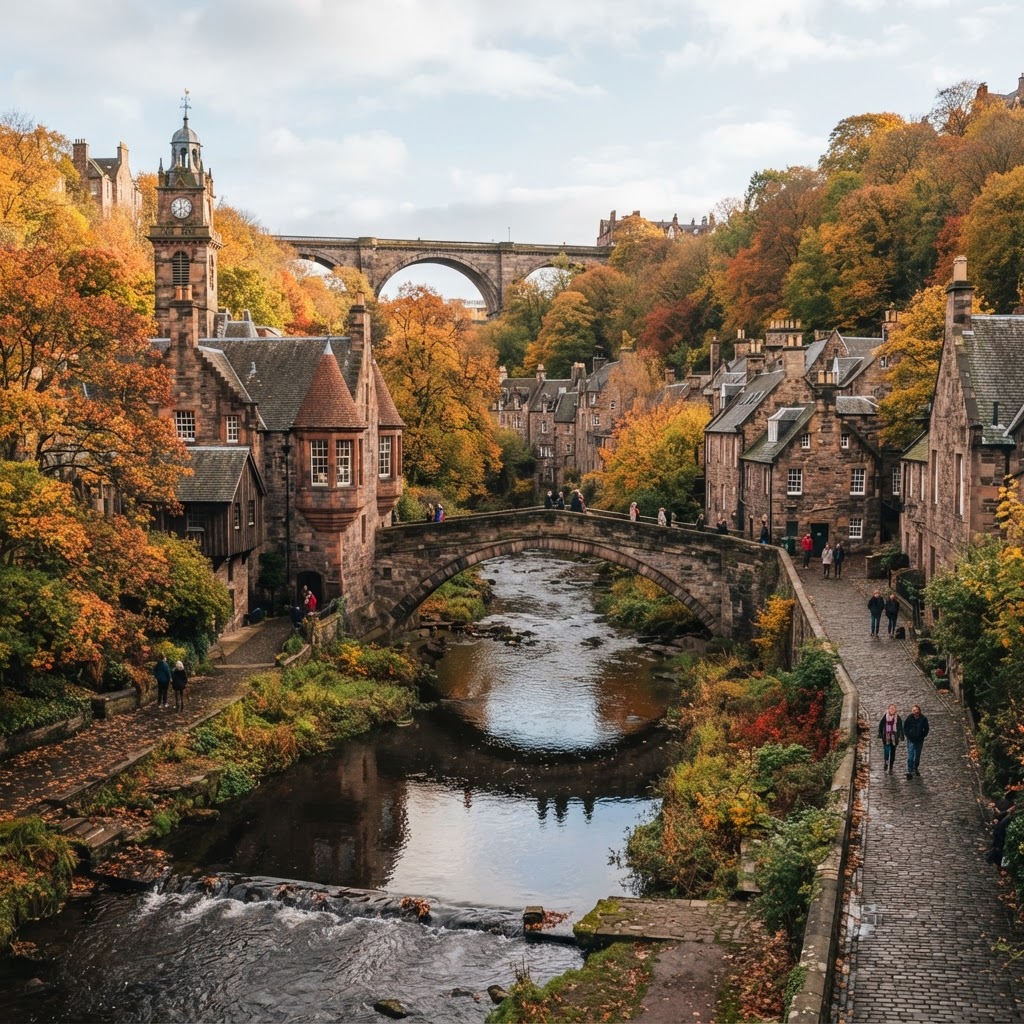
Dean Village and the Water of Leith
A tranquil cluster of historic mill buildings and cobbled lanes along the Water of Leith; you’ll hear the whisper of the Water of Leith beneath the arches and find an unexpectedly generous pocket of calm within the city.
View Details
Royal Botanic Garden Edinburgh
A world-class living collection of plants with glasshouses, rock gardens and sweeping lawns; the humid air of the Victorian glasshouses carries floral perfumes and the gardens present an abundance of species to explore.
View Details
Scott Monument
A dramatic Gothic tower on Princes Street commemorating Sir Walter Scott; inside, the narrow spiral stairs bring the city’s sounds into a focused hush and the elevated views reward those who climb with layered vistas of Edinburgh.
View DetailsDid You Know?
A city of small surprises
The facts that change the way you see it.
What surprising detail should I know?
Edinburgh's Old and New Towns are a single UNESCO World Heritage site, recognised in 1995 for their exceptional urban planning and surviving medieval fabric, an unusual pairing of centuries that tells a continuous story; a living city of layered eras.
What unusual fact will make me listen?
The world’s first public fire brigade was founded in Edinburgh in 1824, a municipal response that grew from the city’s dense closes and wooden tenements into a model for safety elsewhere; a civic idea that became a civic habit.
What experiences can I book?
Keep exploring Edinburgh
Tap an attraction to open Makutet Experiences, filtered for Edinburgh.
What do locals know?
Practical insight from people who've lived it
Stockbridge
Leafy conservation district north of the New Town, Stockbridge is known for independent boutiques, relaxed cafés and a convivial Sunday market atmosphere.
Oink (hog roast)
Small counter on Victoria Street famous for hog roast rolls, Oink serves pulled pork with crisp crackling and a smoky-sweet glaze that defines a street-food taste of Edinburgh.
Stockbridge Market (Sunday)
Weekend market by the Water of Leith where the scent of baking and fresh coffee mingles with artisan stalls offering cheeses, breads and locally made crafts.
Dean Village
Secluded historic cluster on the Water of Leith, Dean Village features cobbled lanes and mill remnants where the soft trickle of the Water of Leith underscores tranquil riverside strolls.
The Shore (Leith)
A maritime ribbon where converted warehouses keep the clank of ropes and the salt tang of the Firth of Forth close to heart; think briny breezes, flaky haddock aromas and a parade of independent pubs and seafood counters that suggest there’s always more harbour-side discovery than a single evening can hold.
Grassmarket & Old Town Backstreets
This historic market square and its neighbouring alleys buzz with theatre chatter and pub warmth, where the peat-smoke perfume in old bars mingles with the echo of boots on cobbles; it’s a cinematic slice of Old Town energy, with castle views and unexpected courtyards that reveal themselves like a well-kept secret.
The Meadows & Bruntsfield
A green lung where student laughter and dog-walkers’ calls meet the soft scent of mown grass in summer; Bruntsfield’s tree-lined lanes add boutique cafés and bakeries whose yeasty aromas float into the park, creating a relaxed local rhythm and endless possibilities for languid afternoons.
Book it
The moments worth booking ahead
Curiosity becomes a plan. These are the experiences that turn a wish list into a date in your calendar.
Edinburgh Castle entry
Prebooked timed entry avoids long queues and guarantees access to the Crown Jewels, battlements and One O'Clock Gun viewing during busy summer months.
Edinburgh Military Tattoo
Book months ahead for the August Edinburgh Military Tattoo to secure Castle esplanade seats for the dramatic piping, international performers and limited-capacity evening shows.
Royal Yacht Britannia
Timed tickets to the Royal Yacht Britannia are limited; booking ahead guarantees a guided audio tour and unhurried access to the Queen's former state apartments at Ocean Terminal.
Highlands & Loch Ness day trip
Popular full-day tours to the Highlands and Loch Ness sell out quickly, so reserve in advance to lock in transport, a knowledgeable guide and time at highlights like Glencoe and Urquhart Castle.
The story of Edinburgh
How Edinburgh came to be
How did this place begin?
Edinburgh's story is welded to rock and to sea: a prehistoric hill fired by volcanic action became a defensible perch; Celtic, Norse and Anglo-Norman influences braided, and the medieval burgh stitched timber and later stone tenements into narrow closes. The royal presence established a court and a legal culture that shaped street patterns, while merchants and craftsmen carved lanes from the slope. You can still hear the cadence of those eras in the measured voice of the law courts and the clatter of porters on the pier, a sonic archive of trade and governance.
From the 18th century, the city extended across the Nor Loch to planned Georgian avenues, the New Town conceived as an enlightened counterpoint to the dense Old Town. Architects set up long sightlines, squares and terraces in elegant stone; eventually, the intellectual life of the Enlightenment — thinkers, printers, and societies — made Edinburgh a small capital of ideas. The city glowed in gaslight and ink: printshops, debating clubs, and lecture rooms filled with the smell of leather and inks and the rustle of paper, all of which fed an economy of words and public argument.
But climb Arthur's Seat at dawn, or walk the Royal Mile at dusk, and the old closes answer you in the present: enter them, breathe the peat and the sea wind, listen to bell and pipe, and imagine how lives layered onto the rock — stones.
Where should I stay?
Where to stay in Edinburgh
Curated stays chosen to suit every kind of traveller.
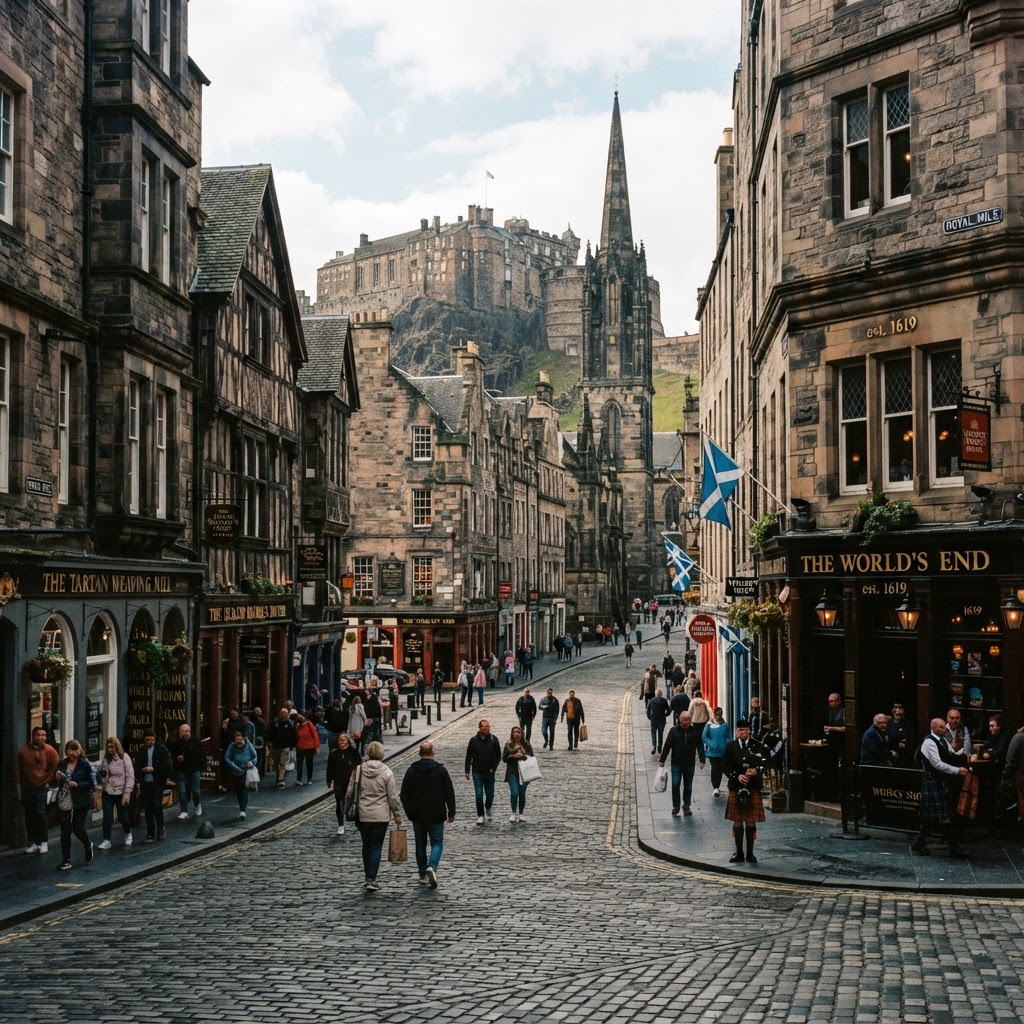
The Balmoral
Luxury seekers · romantics · Royal Mile strollers
Pick the one that suits your trip; the rest is logistics. Grand, clock-towered luxury on Princes Street with doorstep access to the Royal Mile — ideal if you want a polished base for museums and evening theatre. Expect the distant chime of Waverley Station and the occasional drift of peat smoke from a Royal Mile pub; staff, concierge and crisp Scottish breakfast menus undersign a very British comfort. With more ways to be spoiled than you’ll fit into a long weekend, it’s the classic choice for anniversaries and first-time visits.
Check availability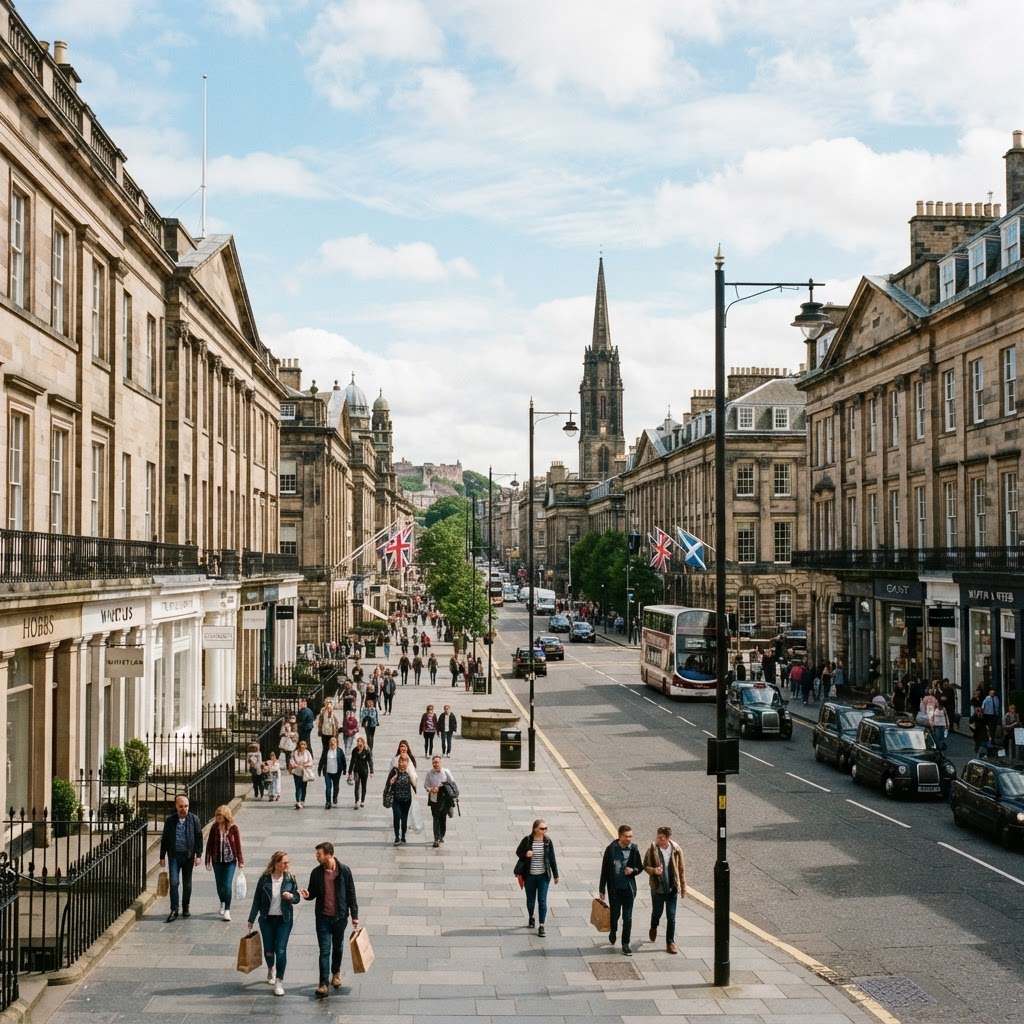
Kimpton Charlotte Square Hotel
Design-minded · shoppers · longer stays
A polished Georgian townhouse in New Town with modern design details and a living-room lobby that doubles as an all-day social space. Wake to the rustle of plane trees in Charlotte Square and the faint, comforting aroma of freshly baked pastries in the hotel's restaurant; this is the stay for neighbourhood wandering, long breakfasts and late-night cocktails. Plenty of rooms and suite styles make it easy to match pace and party size without compromise.
Check availability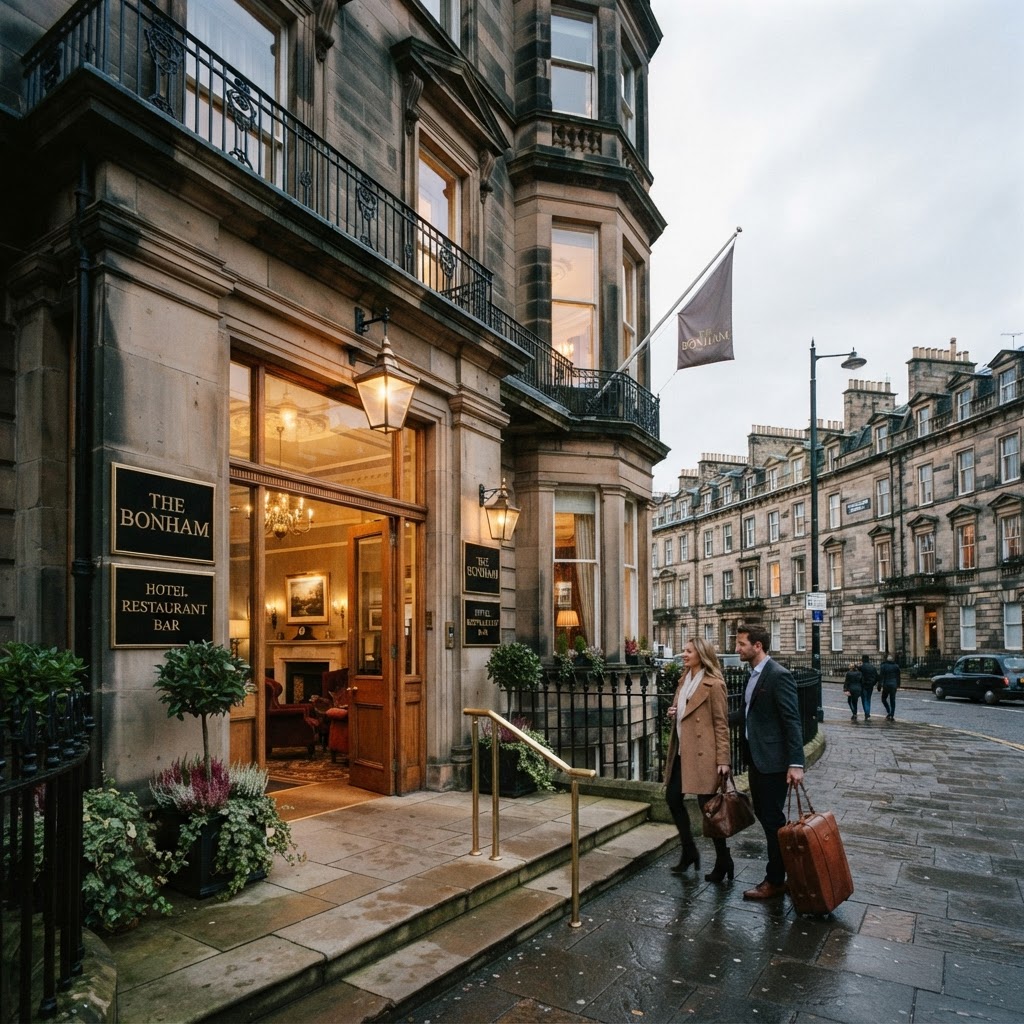
The Bonham Hotel
Couples · food lovers · peaceful sleepers
A refined West End townhouse hotel tucked between Dean Village and the galleries — think wood panelling, tartan throws and a quietly confident bar. Mornings here bring the murmur of the Water of Leith and the tactile comfort of thick wool underfoot in cooler months; it’s a serene counterpoint to the busier streets, with plenty of character-packed rooms for couples or solo explorers who prize neighbourhood cafés and intimate dining.
Check availability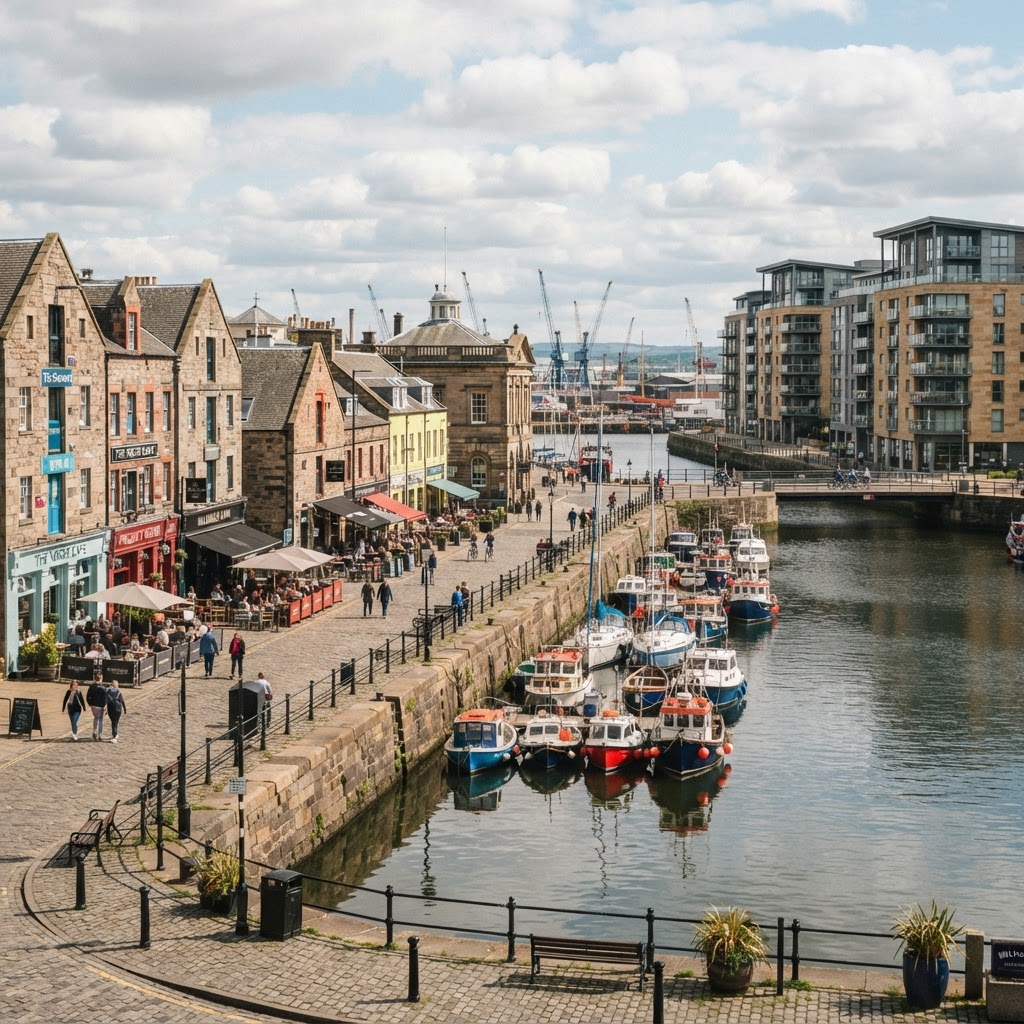
Leith Shore Apartments
Families · groups · food-and-ferry fans
Self-catering flats on Leith's waterfront that let you live like a local, from seafood suppers to morning walks along The Shore. Hear the thrum of ferry horns and the tang of sea air on blustery days; kitchens, separate living areas and generous layouts mean you can spread out — ideal for families or groups who prefer to set their own rhythm. There are more ways to sample local restaurants and pubs than you’ll have nights to try them, so stay flexible and savour the options.
Check availabilityWhy this destination?
Why Edinburgh, and not somewhere else
What single experience will define my visit?
Walk from the Castle esplanade down the Royal Mile at late-afternoon light and let the city compress and expand around you: tourist voices, a bell strike, the whisper of a nearby tannery, and then a tucked stair that smells faintly of peat and bread. The route folds through time — fortress to court to shopfront — and the cobbles underfoot keep a record in rhythm. Three hours, an afternoon, a weekend: each scale gives you an altered story, each pace rewrites the same stones; you will feel the city move in your feet and hear it answer in pipes and church bells.
Pause in a stone-close bakery for a warm oat scone and a cup of brewed coffee; taste the burn of a distilled spirit later at a corner bar and let its finish recall the geology underfoot. Let the wind from the Firth strike your face as you crest a hill, feel the cool bite and the salt on the air, and note how each sensory shard — scent of burning coal, the scrape of tram rails, the soft hush of a library — stitches private maps. Commit a small ritual: a single hill climb at dawn, a single dram at dusk, a single bookshop visit at noon; those three acts will become your personal liturgy of the place.
Do not seek a tidy outline, but allow the city to gather you into its rhythms: morning markets that scent the air with cinnamon and smoked fish, afternoons thick with museum voices, evenings that trade light for lamp and whisky-bar warmth. Let your itinerary be generous with time and unresolving by design, because abundance here is a practice: three visits, five visits, ten visits — the city keeps offering more to learn, and you will keep returning because it keeps revealing.
Become the place you measure every other city against.
Can I book somewhere to stay?
Where to stay in Edinburgh
Live rates across Booking.com, Agoda, VRBO and Hotels.com — compare in one search, no extra cost to you.
Popular destinations
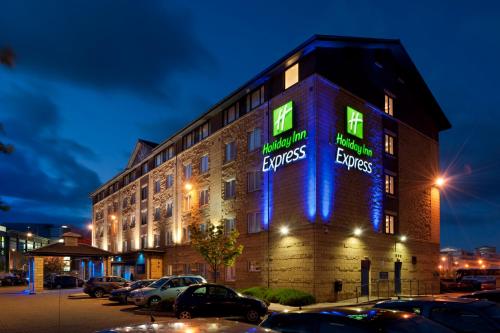
Holiday Inn Express Edinburgh - Leith Waterfront, An Ihg Hotel
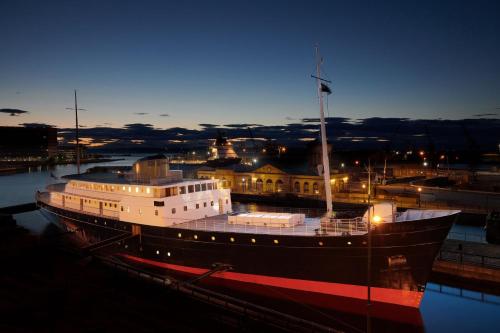
Fingal Hotel

Ocean Mist Leith

Malmaison Edinburgh

Grand Leith Luxe Jacuzzi & Cinema Room

Spacious, sunny Leith apartment
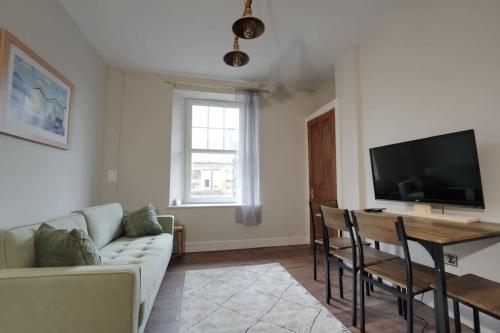
Stylish Top-Floor Flat - Leith

Spacious Ground-Floor Leith apartment Sleeps 6

Arthur St Rooms
Live rates across our partner network (Booking.com, VRBO, Expedia, Hotels.com) via Stay22. Makutet may earn a commission when you book — at no extra cost to you. Prices update in real time and may vary before booking.
When to come
Planning your Edinburgh trip
There is no bad time to visit — only cheaper and cooler.
May–September
Curiosity becomes a plan. These are the months of long light and festival noise, when the city loosens its schedule and outdoor stages appear; there is no bad time to visit — only different crowds and brighter days. Book outdoor shows and hill walks with flexibility, because sudden showers and warm spells will both arrive, and carry a light rain shell and a curious appetite for street food and late cafés.
April, October
There is no bad time to visit — only cooler, moodier weather; pick the month that suits your wish for brisk walks or atmospheric streets. Pack layers, because spring and autumn trade warmth for wind within an hour, and plan indoor rituals too: museum hours, a whisky tasting, a bakery stop. Carry a small umbrella and an appetite for snug taverns and quiet closes where the city's texture deepens.
November–March
There is no bad time to visit — only a colder register and different light; accept the season as part of the city's character. Embrace shorter days with focused itineraries, and dress in thermal layers and a windproof, because the Firth's breeze finds every seam. Seek warming breads, boiling broths, and smoky whisky rooms; the greyness sharpens details and rewards the patient walker with a private city mood.
What else do I need for my trip?
Everything else for your trip


What do I need before travelling?
What you need before you go
Budget in Edinburgh
- ·Edinburgh is a mid-to-high cost destination. Budget travelers should expect £40-£60/day for hostels and basic food. Mid-range travelers typically spend £150-£200/day for hotels and dining. Luxury travel can easily exceed £300/day. Currency is the British Pound (GBP). Carry small bills for markets and local transport in UK.
Getting around Edinburgh
- ·Edinburgh is a highly walkable city, especially within the Old and New Towns. Public transit is managed by Lothian Buses, which operates an extensive network of buses and the tram line. Contactless payment (bank cards, Apple Pay, Google Pay) is accepted on all buses and trams.
Safety in Edinburgh
- ·Edinburgh is generally very safe for tourists. Standard precautions apply: be mindful of pickpockets in crowded tourist areas like the Royal Mile, and exercise normal caution when walking alone at night. Emergency services can be reached by dialing 999. Keep emergency numbers and your accommodation address handy.
Connectivity in Edinburgh
- ·Travelers can easily purchase local SIM cards from major UK providers like EE, O2, or Vodafone. eSIM options (such as Airalo or Holafly) are widely available for international visitors. Free public WiFi is common in cafes, hotels, and public buildings throughout the city center.
Weather & when to visit Edinburgh
- ·Edinburgh experiences mild but unpredictable weather. Winters (Jan-Feb) are coldest with averages around 1.5°C. Summers are popular but can be cool and rainy; packing layers and waterproof clothing is essential year-round regardless of the season.
Arrival & airport transfer in Edinburgh
- ·Travelers can reach the city center from Edinburgh Airport via the Edinburgh Tram (£9.50 return) or the Airlink 100 Express Bus (£8 return), both taking approximately 30 minutes. Taxis and private transfers are available, typically costing between £25 and £40 depending on traffic and destination.
Good to Know
Edinburgh FAQs
Final inspiration
Go and see for yourself
What should I carry home in memory?
Edinburgh offers returns rather than conclusions: a skyline that keeps rewriting itself as you climb and descend, a literature that enters conversation at any table, and neighbourhoods that reward slow repetition. You leave with a handful of tastes — a salty sea edge, a peat-smoky dram, a bakery's oat crumb — and with the sound of a pipe that seems to recall a street you walked an hour ago. Three days won't be enough. A week won't be enough. Edinburgh never is — that is its gift.
Curiosity becomes a plan. Why should I return?
See It Through A Creator's Eyes
Want to discover Edinburgh through people who have actually experienced it?
Explore Edinburgh through the stories, photos, and perspectives of travel creators who have been there.
Find Creators Who Have Been to Edinburgh