
nature
Victoria Falls
A major waterfall located on the Zambezi River on the border between Zimbabwe and Zambia, known for its significant width and vertical drop.

africa
Between the Zambezi and Limpopo, a high plateau opens into eastern highlands and lower country. Zimbabwe’s character is written in these changes of land, and in the long presence of places such as Great Zimbabwe and Harare.
The country
The country
Zimbabwe is a landlocked country in Southern Africa, set between the Zambezi and Limpopo rivers. Across its high interior plateau, the Highveld gives way to the Lowveld Basin, while the Manicaland Eastern Highlands and Midlands Province add further changes of elevation and character. Its geography is central to understanding a country whose identity places range from Victoria Falls and Great Zimbabwe to Harare and Hwange National Park.
Why visit
Zimbabwe rewards travel that follows the land rather than a single headline. The country occupies a high plateau between the Zambezi and Limpopo rivers, with the Highveld Plateau, Lowveld Basin and Manicaland Eastern Highlands offering distinct settings within one inland journey. The scale of the plateau gives the interior a different character from the river margins; its contrasts are part of the experience, not merely distances between stops. The country’s story is also unusually present in its named places. Great Zimbabwe connects a journey to a substantial historic inheritance, while Harare offers an urban counterpoint. At the edges of the national picture, Victoria Falls and the broad landscapes associated with Hwange National Park, Mana Pools National Park, Matobo Hills and Lake Kariba suggest how varied the country’s encounters with water, wildlife and land can be. Bulawayo adds another point of orientation. These places should not be treated as interchangeable attractions: they belong to different parts of a country shaped by river boundaries, plateau country and highland terrain. A visit suits travellers willing to make room for those changes and to plan around the distances between them. Zimbabwe is not a coastal itinerary or a collection of nearby urban stops; it is a way to read Southern Africa through an inland landscape and its layered heritage. The reward lies in noticing how the terrain shifts, how history and contemporary life sit alongside one another, and how a journey between the Zambezi and Limpopo can hold several distinct versions of the country.
What it feels like
The atmosphere shifts with the land: open plateau country, the lower and warmer character of the Lowveld Basin, and the cooler elevations of the Manicaland Eastern Highlands. River landscapes at Victoria Falls and Lake Kariba sit alongside the historic presence of Great Zimbabwe and the urban life of Harare and Bulawayo. Zimbabwe feels inland in its scale and orientation, with travel shaped by changes of terrain and the distance between regions.
Who it suits
Zimbabwe suits travellers interested in geography, heritage and wildlife who are comfortable building a journey across a large inland country. It is especially rewarding for those who want to combine places with markedly different characters—from Harare and Great Zimbabwe to the river landscapes of Victoria Falls and Lake Kariba—rather than concentrate on a single city or resort.
How to get here
Live fares into Zimbabwe across hundreds of airlines, compared in one search. Book directly with the airline or agent — Makutet never adds a fee.
Live fares to Zimbabwe across hundreds of airlines. Book directly with the airline or agent — no extra cost to you.
Embedded flight search uses TravelPayouts cookies and tracking. Enable partner search to load it here, or continue directly on the partner site.
The external partner link includes Makutet's affiliate marker; confirm your route, dates and passengers there. No booking is made on Makutet.
Live search and booking run on the TravelPayouts partner engine. Fares update in real time and may vary before booking. Any prices shown elsewhere on Makutet are monitored observations, not live quotes.
Identity
The places that define the country rather than merely sit inside it.
nature
A major waterfall located on the Zambezi River on the border between Zimbabwe and Zambia, known for its significant width and vertical drop.

history
A ruined city in the southeastern hills of the country which served as the capital of the Kingdom of Zimbabwe during the Late Iron Age.

urban
The capital and most populous city of Zimbabwe, serving as the primary financial, commercial, and communications hub of the nation.

park
The largest natural reserve in Zimbabwe located in the western part of the country, supporting a diverse population of African wildlife.
Imagery


Discover

park
A wildlife conservation area in northern Zimbabwe along the lower Zambezi River, recognized as a UNESCO World Heritage site.

geology
An area of granite kopjes and wooded valleys in southern Zimbabwe featuring extensive ancient rock art sites and distinct geological formations.

urban
The second largest city in Zimbabwe, noted for its wide streets and colonial-era architecture located in the southwestern region.

water
The world's largest man-made reservoir by volume, located on the border between Zimbabwe and Zambia, created by the damming of the Zambezi River.
Stay
The bases that actually change the trip.

Safari camp
Choose a safari camp serving Hwange National Park when wildlife drives are the main purpose of the visit. Reaching camp commonly means a long road transfer or a pre-arranged air connection, followed by guided outings rather than independent driving; dry-season stays suit game viewing, and beds and vehicle places should be reserved ahead.
wildlife watchers · comfort-seeking travellers

Wilderness camp
A wilderness camp serving Mana Pools National Park suits travellers prepared for remote access and a stay organised around guided activities. Road journeys take time and conditions affect access, so confirm transfers, park arrangements and activity availability before booking; the drier months are the usual window for canoeing and walking outings.
adventure travellers · nature observers

Country lodge
A lodge in the Manicaland Eastern Highlands makes a useful base for walking and exploring upland scenery, with cooler conditions than the Lowveld. Plan for a road transfer and check the distance from the lodge to the walks you want; the drier, cooler part of the year is more comfortable for time outdoors.
walkers · slower-paced travellers

Lakeside lodge
A lodge serving Lake Kariba is a practical choice for travellers who want boat time without changing accommodation each night. Allow for a lengthy road transfer to the lakeshore and confirm that cruises and transfers are arranged locally; a dry-season visit generally offers more dependable conditions for time on the water.
boat-cruise travellers · couples
Where to stay
Live rates across Booking.com, Agoda, VRBO and Expedia for Zimbabwe. Compare the areas above, then check what a night actually costs.
Popular destinations
Live rates across Booking.com, Agoda, VRBO and Expedia for Zimbabwe — no extra cost to you.


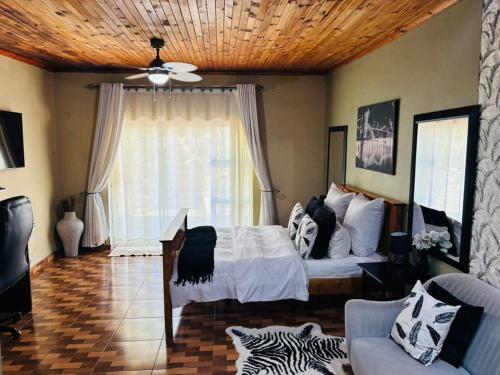
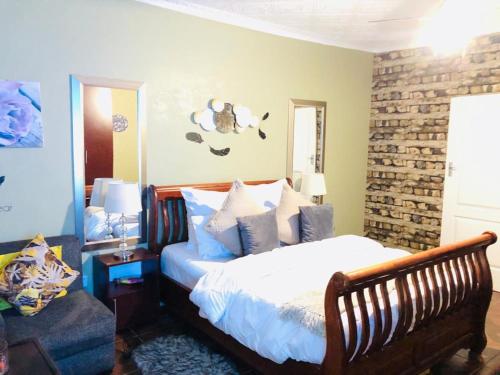
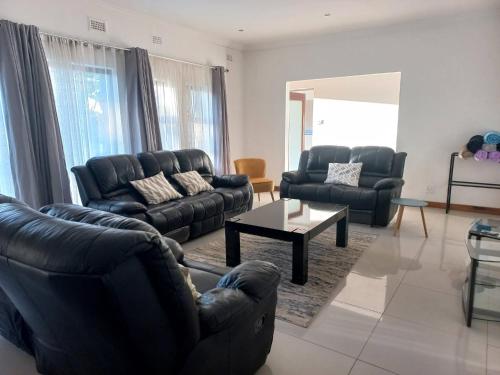
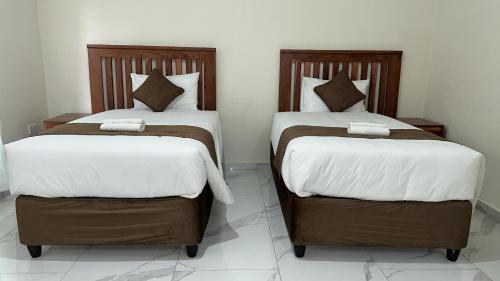


Live rates across our partner network (Booking.com, VRBO, Expedia, Hotels.com) via Stay22. Makutet may earn a commission when you book — at no extra cost to you. Prices update in real time and may vary before booking.
Experience

Wildlife drive
Start from Hwange National Park for a guided half-day or full-day drive in a safari vehicle, with time on quieter tracks as well as wildlife-viewing areas. Dry-season conditions generally make wildlife easier to spot; arrange the guide, vehicle and park entry ahead, particularly for peak-season dates.
wildlife watchers · photographers

Canoeing
A guided canoe outing from Mana Pools National Park is a full-day river experience, with the pace and route shaped by water conditions and wildlife activity. It is most practical in the drier months; reserve a qualified guide, permits and transport to the park well ahead, as access is remote and seasonal.
active travellers · experienced paddlers

Guided walking
Use the Manicaland Eastern Highlands as a base for a guided day walk across upland terrain, allowing time for uneven paths, changing weather and a return transfer. The cooler, drier months are generally more comfortable for walking; agree the route and transport with a local guide before setting out.
walkers · landscape photographers

Boat cruise
Arrange a late-afternoon boat cruise on Lake Kariba, allowing several hours on the water and time to return before dark. The dry season is usually the clearest period for a settled outing; book the boat, transfers and any overnight stay together in advance, since lakeside access can involve a long road journey.
slow travellers · couples
Things to do
What Makutet's Zimbabwe research recommends, and where the tours that cover it can actually be booked.
Editorial recommendations from Makutet's Zimbabwe research. Tickets and tours are searched on GetYourGuide.
Guided wildlife drive on the Hwange plains
Start from Hwange National Park for a guided half-day or full-day drive in a safari vehicle, with time on quieter tracks as well as wildlife-viewing areas. Dry-season conditions generally make wildlife easier to spot; arrange the guide, vehicle and park entry ahead, particularly for peak-season dates.
Canoe day on the Zambezi at Mana Pools
A guided canoe outing from Mana Pools National Park is a full-day river experience, with the pace and route shaped by water conditions and wildlife activity. It is most practical in the drier months; reserve a qualified guide, permits and transport to the park well ahead, as access is remote and seasonal.
Highlands walking day in Manicaland
Use the Manicaland Eastern Highlands as a base for a guided day walk across upland terrain, allowing time for uneven paths, changing weather and a return transfer. The cooler, drier months are generally more comfortable for walking; agree the route and transport with a local guide before setting out.
Lake Kariba sunset cruise
Arrange a late-afternoon boat cruise on Lake Kariba, allowing several hours on the water and time to return before dark. The dry season is usually the clearest period for a settled outing; book the boat, transfers and any overnight stay together in advance, since lakeside access can involve a long road journey.
Mana Pools National Park
A wildlife conservation area in northern Zimbabwe along the lower Zambezi River, recognized as a UNESCO World Heritage site.
Matobo Hills
An area of granite kopjes and wooded valleys in southern Zimbabwe featuring extensive ancient rock art sites and distinct geological formations.
Activity cards are editorial — Makutet is not selling these specific experiences. The partner search opens GetYourGuide for Zimbabwe, where availability and price are theirs.
Understand
The context that turns a visit into an understanding.

macro_region
This central belt comprises the highest elevation areas of the country exceeding 1200 meters above sea level and contains the majority of urban centers.

macro_region
These lower altitude regions are found in the south and extreme north of the country, characterized by warmer temperatures and diverse savanna ecosystems.

sub_region
A mountainous region running along the eastern border with Mozambique featuring steep slopes and cooler temperate climate conditions.

sub_region
A central interior region serving as a transition zone between the northern and southern agricultural and industrial sectors of the country.

Food
Sadza, a firm maize meal, is commonly eaten with relish such as vegetables or meat. It is served as a central part of a meal rather than a side dish; follow the host’s lead at a shared table and ask whether food is eaten by hand or with cutlery.

Food tradition
Mopane worms are a recognised Zimbabwean food, often dried or cooked with seasoning and served as a savoury dish. They are not available everywhere or in every season, so ask locally what is being served rather than expecting them on every menu.

Drink
Maheu is a traditional fermented maize drink, usually filling and mildly tangy. It is encountered as a locally made refreshment rather than a standard item at every dining venue; ask about its preparation and whether it is served chilled.

Custom
In Zimbabwe, a greeting before a request is an important everyday courtesy. Take a moment to greet the person you are addressing, particularly in shops, at a lodge or when meeting a guide; a measured, respectful opening makes practical exchanges more natural.

Urban character
Harare is the country’s capital and a useful place to encounter Zimbabwean urban life alongside the country’s plateau setting. Allow time for road transfers across the city rather than treating it as a compact walking centre, and ask locally about the best way to reach the neighbourhood or venue you have in mind.
When to go
May–August
Dry winter
Generally dry, with cool nights
September–October
Late dry season
Hotter and increasingly dry
November–March
Rainy summer
Warm days and seasonal rain
April
Seasonal transition
Rains ease; landscapes remain green
Practical
Money, transport, connectivity and the details that matter on the ground.
budget
Zimbabwe uses the Zimbabwe Gold (ZiG), alongside foreign currencies used in everyday transactions. Card acceptance is uneven, so carry a modest amount of usable cash for smaller purchases and rural stops; confirm payment arrangements before travelling. Safari stays and transfers around Hwange National Park and Victoria Falls can account for a substantial share of a trip’s spending, while independent travel across the Highveld Plateau involves different transport and access costs.
transport
Zimbabwe drives on the left. Long journeys connect widely spaced places across the plateau, so allow substantial travel time between Harare, Bulawayo, Victoria Falls and Hwange National Park. For remote areas such as Mana Pools National Park, arrange the onward transfer with your accommodation or operator in advance; do not assume public transport will take you to a lodge or park entrance.
safety
Plan road journeys in daylight where possible and check current local advice before setting out, particularly for long drives between regions. Keep valuables discreet in busy urban areas such as Harare and Bulawayo, and use accommodation-arranged transport where practical. Ask your host about local conditions and emergency procedures before travelling into remote areas such as Mana Pools National Park.
connectivity
Mobile coverage and data access are less dependable outside urban centres, so download maps and keep important bookings available offline before leaving Harare or Bulawayo. Check roaming or local SIM options on arrival and confirm coverage with your accommodation, especially in remote areas. Zimbabwe uses plug types D and G; bring a suitable adaptor and keep essential devices charged during long transfers.
seasonal weather
Zimbabwe has a rainy season broadly from November to March and a dry season from April to October. Rains can make some rural roads slower or harder to use, while the dry months generally bring clearer travel conditions and cooler nights, especially on the Highveld Plateau and in the Eastern Highlands. In the Lowveld, expect hotter conditions; pack for both daytime heat and cooler evenings when travelling across regions.
accessibility and mobility
Travellers with reduced mobility should plan access directly with each provider: Zimbabwe’s transport, pavements and accommodation stock are not consistently adapted, and uneven surfaces, steps and unpaved approaches are common obstacles. Long road transfers can be tiring, while rural terrain around Hwange National Park and the Eastern Highlands may limit wheelchair and pushchair access. Request step-free rooms, vehicle assistance and realistic walking requirements before confirming a stay or activity.
Getting around
Airport transfers, rail, buses, ferries and car hire for Zimbabwe — arranged before you fly, priced by the supplier.
Stay connected
Install an eSIM before you fly and you are online the moment you land in Zimbabwe — no roaming charges, no shop queue at the airport.
Moments
Zimbabwe’s story is shaped by its position on the high plateau between the Zambezi and Limpopo rivers, and by the contrasts between that elevated interior and the Lowveld Basin. Its landscapes are not a single scene: the Eastern Highlands, broad plateau and river country each give the journey a different scale and character. The country’s heritage and present-day life are best approached with attention to both place and history.
The signature moment
At first light in the Manicaland Eastern Highlands, the air is cool against the face and the folds of the high country emerge gradually from the dimness. A breeze moves through the grasses; birdsong carries across the slopes, while the distant ridgelines shift from shadow towards muted green. There is no need to hurry the morning. The ground feels firm and cool underfoot, and the clean, damp scent of the uplands gives way to warmer air as the sun rises. This is a quiet scene, but it holds a larger truth about Zimbabwe: the country is not only the river boundaries that frame it or the broad plateau that carries its interior. Its character lies in changes of elevation and climate, in the passage from the Highveld Plateau towards the Lowveld Basin, and in the close coexistence of natural settings with places marked by human history. Standing among the eastern highlands, the traveller senses that variety in the air and the land itself.
The story behind it
Zimbabwe’s heritage is visible in the relationship between its landscapes and the communities that have shaped them. Great Zimbabwe gives the country a defining architectural and historical presence; its stone remains invite attention to a long, complex past rather than a simplified origin story. The country’s modern history, like that of the wider region, includes colonial rule, contested authority and the difficult legacies those histories leave. A measured account should make room for those realities alongside the continuing significance of Zimbabwean places and cultural life, without treating the past as settled or reducing it to a single narrative.
Before you go
Zimbabwe rewards a journey made with room for contrasts: the high plateau and the Lowveld Basin, the Eastern Highlands and the river country between the Zambezi and Limpopo. Let the landscape set the pace, and give its historical places the attention they deserve. A thoughtful itinerary need not try to encompass everything. Moving between regions with time to observe their differences offers a more grounded sense of the country than treating its places as a checklist.
Between two rivers
Zimbabwe is landlocked in Southern Africa, positioned between the Zambezi and Limpopo rivers, with a high plateau stretching across the continent’s interior.
More than plateau
The country’s named regions span markedly different settings, from the Highveld Plateau and Lowveld Basin to the Manicaland Eastern Highlands and Midlands Province.
May–August
Dry-season travel
The dry winter months generally bring lower rainfall and comfortable daytime conditions across much of Zimbabwe. Pack for cold nights on the Highveld Plateau and allow for cooler mornings in the Manicaland Eastern Highlands.
September–October
Hot, late dry season
Conditions often become very hot towards the end of the dry season, especially in lower-lying country such as the Lowveld Basin. Plan outdoor activity for cooler hours, carry water and expect less green growth before the rains arrive.
November–March
Rainy summer
Summer brings the main rains, with warm temperatures, afternoon storms and greener landscapes. Build flexibility into journeys between regions: wet-weather conditions can make some rural routes slower, and outdoor plans may need to shift around showers.
FAQ
The rainy season broadly runs from November to March; rain can slow journeys on rural roads.
Zimbabwe uses the Zimbabwe Gold (ZiG), alongside foreign currencies used in everyday transactions. Confirm accepted payment methods and carry cash for places where cards are not accepted.
No. Coverage can be limited outside urban areas, so save maps and essential booking details offline before travelling.
It requires advance planning: pavements, transport and accommodation are not consistently adapted, and rural terrain can be difficult to navigate.
Vehicles drive on the left. Allow time for long journeys between regions and check rural road conditions before setting out.
Yes. Confirm onward transport with your accommodation or operator, particularly for remote stays where public transport may not reach.
Before you go
The last thing most travellers forget — and the disclosure that applies to every partner link on this page.
Booking and rate checks run on the partner's own site; prices and availability are theirs and can change. Some links are affiliate links and Makutet may earn a commission at no extra cost to you. See our affiliate disclosure.
Makutet builds a day-by-day itinerary around the places above — then keeps it updated as you travel.
Country guide: /country/zimbabwe
Your assessment works without optional tracking. Necessary storage keeps your trip and privacy choice. Embedded flight search includes TravelPayouts tracking; ordinary partner links remain available if you decline.
Cookie policy · Privacy policy. Reopen Cookie settings to change your choice. Supplier-site cookies are controlled by that supplier.