
urban center
Asunción
The national capital and primary political and financial center located on the eastern bank of the Paraguay River.

americas
Between the Paraguay and Paraná rivers, Paraguay is a landlocked country shaped by river corridors, distinct eastern and western regions, and a layered cultural inheritance. Its identity is encountered in Asunción, in the Jesuit missions, and across landscapes that range from forest to wetlands and dry frontier country.
The country
The country
At the heart of South America, Paraguay occupies the land between the Paraguay and Paraná rivers. Its geography gives the country a strong east–west contrast: the Oriental Region, the Occidental Region and the broad spaces of Boquerón Department frame a journey that is as much about rivers, distance and cultural memory as about individual sights.
Why visit
Paraguay rewards travellers who want to understand a country through the relationship between its landscape and its lived history. Landlocked between the Paraguay and Paraná rivers, it is not organised around a coast or a chain of islands; movement instead follows river corridors and the routes between the country’s eastern and western regions. That geography is visible in the contrast between the Oriental Region and the expansive Occidental Region, and in the wetlands of Pantanal Paraguayo, the forests of Mbaracayú Forest Nature Reserve and Ybycuí National Park, and the open reaches of Defensores del Chaco National Park. The country’s character also emerges through places where different histories meet. Asunción is the natural point of orientation, while the Jesuit Missions of La Santísima Trinidad de Paraná offer a tangible encounter with a complex religious and colonial heritage. Itaipú Dam adds a distinctly modern landmark to this setting; Encarnación gives the traveller another eastern reference point. These are not interchangeable stops, but different ways into a country whose identity cannot be reduced to one landscape or one historical account. A visit here suits a measured itinerary. Time spent moving between regions matters, and the rewards are often in noticing how river, forest, wetland and settlement shape daily life. Paraguay is best approached with curiosity rather than a checklist: a country of substantial natural variety and layered history, where the journey itself helps explain the place.
What it feels like
In Asunción, urban life gives way to the scale of rivers and inland distances. Across the Oriental Region, forest and settled landscapes sit alongside places of historical significance; farther west, the open spaces of the Occidental Region and Boquerón Department make the country feel broader and quieter. Wetland country at Pantanal Paraguayo and the wooded settings of Mbaracayú and Ybycuí bring a different sensory register: water, foliage, heat and changing light. The result is an atmosphere that feels grounded and unhurried, with cultural memory present beside the natural landscape.
Who it suits
Paraguay suits independent travellers with an interest in South American geography, cultural history and nature, especially those comfortable planning around inland distances rather than a single resort base. It is a good fit for visitors who will give Asunción time, make room for the Jesuit Missions of La Santísima Trinidad de Paraná, and choose a smaller number of natural areas such as Pantanal Paraguayo, Mbaracayú Forest Nature Reserve or Defensores del Chaco National Park rather than trying to cover the country at speed.
How to get here
Live fares into Paraguay across hundreds of airlines, compared in one search. Book directly with the airline or agent — Makutet never adds a fee.
Live fares to Paraguay across hundreds of airlines. Book directly with the airline or agent — no extra cost to you.
Embedded flight search uses TravelPayouts cookies and tracking. Enable partner search to load it here, or continue directly on the partner site.
The external partner link includes Makutet's affiliate marker; confirm your route, dates and passengers there. No booking is made on Makutet.
Live search and booking run on the TravelPayouts partner engine. Fares update in real time and may vary before booking. Any prices shown elsewhere on Makutet are monitored observations, not live quotes.
Identity
The places that define the country rather than merely sit inside it.
urban center
The national capital and primary political and financial center located on the eastern bank of the Paraguay River.

infrastructure
A massive binational hydroelectric power plant located on the Paraná River along the border with Brazil.

wetland
A diverse wetland ecosystem shared with Brazil and Bolivia, noted for high levels of biodiversity.

history
A UNESCO World Heritage site featuring ruins of 17th and 18th-century Jesuit mission settlements.
Imagery


Discover

nature reserve
A large protected area of Atlantic Forest providing habitat for various endangered species.

national park
A park known for its tropical forest, diverse hiking trails, and several waterfalls.

urban tourism
A significant southern city on the Paraná River, known for its river beaches and cultural events.

national park
The largest national park in the country, encompassing a significant portion of the dry Chaco scrubland.
Stay
The bases that actually change the trip.

City hotel or guesthouse
A base in Asunción makes urban services and onward arrangements easiest to reach, but it is not a substitute for transport into the country's more remote regions. Choose this for a city-focused visit or as a first and last night; confirm air conditioning and step-free access directly, especially for summer travel.
first-time visitors · independent travellers

Guesthouse
Staying in Encarnación gives a practical base for exploring the south and arranging a visit to the Jesuit Missions of La Santísima Trinidad de Paraná. Allow time for the onward journey and organise transport before setting out; verify seasonal services and accessibility with the property rather than assuming standard facilities.
heritage travellers · slower-paced visitors

Nature lodge
A nature-oriented stay near Mbaracayú Forest Nature Reserve means prioritising access arrangements over urban convenience. Confirm the route, transfers, meals and any guided access with the accommodation before travelling; remote positioning can make independent arrival and last-minute changes difficult, particularly in wet conditions.
nature travellers · birdwatchers

Rural lodge or guesthouse
A rural accommodation base in Boquerón Department offers a different rhythm from Asunción, with longer overland transfers and fewer nearby services to plan around. Arrange transport and confirm food, water and accessibility provision directly with the property; dry-season travel is generally easier to organise than journeys during heavy summer rain.
regional explorers · self-reliant travellers
Where to stay
Live rates across Booking.com, Agoda, VRBO and Expedia for Paraguay. Compare the areas above, then check what a night actually costs.
Popular destinations
Live rates across Booking.com, Agoda, VRBO and Expedia for Paraguay — no extra cost to you.


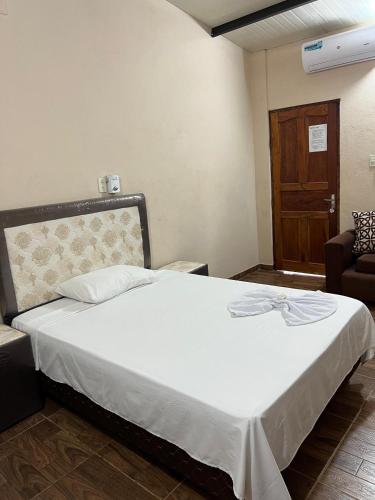


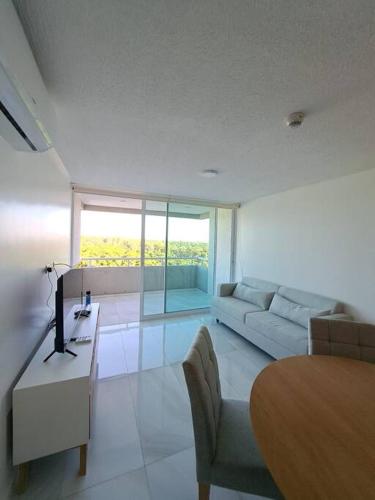
Live rates across our partner network (Booking.com, VRBO, Expedia, Hotels.com) via Stay22. Makutet may earn a commission when you book — at no extra cost to you. Prices update in real time and may vary before booking.
Experience

Guided city walk
Start in Asunción for a half-day guided city walk, allowing time to explore its streets and pause as needed. Arrange a guide and meeting point before arrival; confirm the route and operating arrangements, particularly for visits during the hotter summer months.
culture-focused travellers · easy-paced explorers

Guided infrastructure visit
Use a guided visit to Itaipú Dam as a focused half-day outing, with the dam as the starting point and main subject. Check the current visitor programme and reserve a place ahead; access, tour length and seasonal availability depend on the operator and should be confirmed before travel.
engineering enthusiasts · curious travellers

Heritage day trip
Set out from the Jesuit Missions of La Santísima Trinidad de Paraná for a guided visit that gives the site context beyond a brief stop. Allow a substantial part of the day for travel and exploration, and arrange transport and a guide in advance, especially in the wetter summer season.
history enthusiasts · heritage travellers

Nature and wildlife
Plan a guided nature outing in Pantanal Paraguayo, where the experience depends on local conditions and access rather than a fixed urban itinerary. Ask an operator to confirm duration, transport, seasonal conditions and what to bring; reserve guiding and any necessary access ahead of travel.
wildlife watchers · photographers
Things to do
What Makutet's Paraguay research recommends, and where the tours that cover it can actually be booked.
Editorial recommendations from Makutet's Paraguay research. Tickets and tours are searched on GetYourGuide.
Guided walk through Asunción
Start in Asunción for a half-day guided city walk, allowing time to explore its streets and pause as needed. Arrange a guide and meeting point before arrival; confirm the route and operating arrangements, particularly for visits during the hotter summer months.
Itaipú Dam visit
Use a guided visit to Itaipú Dam as a focused half-day outing, with the dam as the starting point and main subject. Check the current visitor programme and reserve a place ahead; access, tour length and seasonal availability depend on the operator and should be confirmed before travel.
Jesuit Missions guided day
Set out from the Jesuit Missions of La Santísima Trinidad de Paraná for a guided visit that gives the site context beyond a brief stop. Allow a substantial part of the day for travel and exploration, and arrange transport and a guide in advance, especially in the wetter summer season.
Pantanal Paraguayo wildlife outing
Plan a guided nature outing in Pantanal Paraguayo, where the experience depends on local conditions and access rather than a fixed urban itinerary. Ask an operator to confirm duration, transport, seasonal conditions and what to bring; reserve guiding and any necessary access ahead of travel.
Mbaracayú Forest Nature Reserve
A large protected area of Atlantic Forest providing habitat for various endangered species.
Ybycuí National Park
A park known for its tropical forest, diverse hiking trails, and several waterfalls.
Activity cards are editorial — Makutet is not selling these specific experiences. The partner search opens GetYourGuide for Paraguay, where availability and price are theirs.
Understand
The context that turns a visit into an understanding.

macro_region
This region lies east of the Paraguay River and contains the majority of the country's population and arable land.

macro_region
Also known as the Gran Chaco, this sparsely populated region constitutes the western two-thirds of the country's land area.

sub_region
The capital city and surrounding urban districts located along the Paraguay River in the Oriental Region.

sub_region
A vast administrative division in the semi-arid northern section of the Chaco region.

Food
Despite its name, sopa paraguaya is a baked corn-based dish rather than a broth. Look for it as a substantial accompaniment at meals in Asunción and beyond; its firm texture makes it a useful introduction to the country's corn-led cooking.

Street food
Chipa is a ring-shaped, cheese-and-starch bread associated with Paraguayan everyday food culture. It is commonly encountered as a portable snack, especially useful when travelling between places such as Asunción and Encarnación, where meal stops may not align with an itinerary.

Drink and custom
Tereré is a cold infusion of yerba mate, well suited to Paraguay's hot weather. Sharing it is a social custom as much as a drink; accept the gourd when offered, and let the person serving manage the refill and passing rather than treating it like an individual cup of tea.

Language and culture
Guaraní is part of Paraguay's living national culture, alongside Spanish. Visitors will notice that language and identity are not confined to formal heritage sites such as the Jesuit Missions of La Santísima Trinidad de Paraná; learning a simple greeting is a respectful way to engage.
When to go
May–September
Cooler and drier
The most comfortable season for inland travel
April and October
Transition months
Useful with a flexible itinerary
November–March
Hot and wetter
Plan around heat and rain
Practical
Money, transport, connectivity and the details that matter on the ground.
Budget
The currency is the Paraguayan guaraní. Cards are more practical in larger establishments in Asunción, while cash remains important for smaller businesses, markets and travel outside major centres; carry usable cash without relying on card payment everywhere. Costs chiefly rise with private transfers, remote access in Boquerón Department or Pantanal Paraguayo, and higher-demand periods around Encarnación and the Jesuit Missions.
Transport
Paraguay is landlocked, so journeys are by road or air rather than coastal or island connections. Asunción is the main starting point for onward travel; reaching places such as Ybycuí National Park, Encarnación or Defensores del Chaco National Park takes advance route planning, and remote areas may require a private transfer or organised excursion. Vehicles drive on the right; confirm road and transfer conditions before departure.
Safety
Plan long journeys in daylight where possible and confirm transfer arrangements before heading to remote areas such as Pantanal Paraguayo or Defensores del Chaco National Park. Keep valuables discreet in busy parts of Asunción and ask accommodation staff about local conditions. Confirm the current emergency number locally before relying on it; do not assume every remote area has rapid assistance.
Connectivity
Mobile coverage is most dependable in populated areas such as Asunción and less predictable in remote regions, including Boquerón Department and nature reserves. Arrange an eSIM or local connectivity before travelling out of the city, and download maps for offline use. Paraguay uses the Paraguayan guaraní; check plug compatibility and tap-water suitability with your accommodation rather than assuming either is uniform.
Seasonal weather
Paraguay has a hot, humid summer from roughly November to March, with heavier rain that can disrupt rural roads and outdoor plans; winter, from roughly June to August, is generally cooler and drier. The shoulder months can still be changeable. For Mbaracayú Forest Nature Reserve, Ybycuí National Park or Pantanal Paraguayo, check local access close to travel and avoid building a tight schedule around wet-season road journeys.
Accessibility and mobility
Travellers with reduced mobility, wheelchair users, pushchairs and older companions should expect uneven pavements and kerbs in urban areas, limited step-free access on many local transport options, and long road transfers between regions. Nature sites such as Ybycuí National Park and Mbaracayú Forest Nature Reserve have terrain that can be difficult or unsuitable for wheels. Ask accommodation and transport providers about ramps, bathrooms, vehicle access and room thresholds before booking; do not assume accessible facilities are standard.
Getting around
Airport transfers, rail, buses, ferries and car hire for Paraguay — arranged before you fly, priced by the supplier.
Stay connected
Install an eSIM before you fly and you are online the moment you land in Paraguay — no roaming charges, no shop queue at the airport.
Moments
Paraguay is most clearly read in contrasts: river and interior, forest and wetland, eastern settlement and the far-reaching spaces of the west. Its places do not form a single, easy circuit. They ask the traveller to look at how geography directs movement, how historical sites sit within present-day landscapes, and how the country’s identity holds several scales at once.
The signature moment
Stand at the Jesuit Missions of La Santísima Trinidad de Paraná in the cooler light of late afternoon. The stonework holds the day’s warmth; long edges of shadow gather across the remains, and the open air makes small sounds seem distinct—the movement of leaves, a bird calling, footsteps crossing the ground. Look closely at the carved stone and the scale of the mission spaces, then pause long enough to feel the quiet around them. This is not a frozen stage set: it is a place where a colonial religious project remains legible in the landscape, while the lives and histories around it cannot be contained by the architecture alone. The moment widens beyond the mission. Paraguay is a country whose story is read through particular places, but never exhausted by them: through Asunción and its urban present, through rivers that frame the national map, and through the changing terrain from the Oriental Region to the broad west. Here, history and geography meet without becoming the same thing.
The story behind it
Paraguay’s heritage is neither simple nor confined to one period. The Jesuit Missions of La Santísima Trinidad de Paraná preserve a substantial religious and colonial legacy, while the country’s present identity has also been shaped by the experience of an inland nation between major rivers and by the distinct character of its regions. The missions should be approached as evidence of a particular historical project, not as a complete account of the people and histories that surrounded it. In Asunción and beyond, national life carries the inheritance of colonial institutions alongside Indigenous and other cultural traditions. A careful visit makes room for both the significance of surviving monuments and the limits of what any single site can tell.
Before you go
Let Paraguay’s distances set the pace. Begin with Asunción as an orientation point, then give the journey room to shift between the river country, the mission heritage of La Santísima Trinidad de Paraná and a landscape that may turn from forest to wetland or open western country. The most useful departure is not a crowded itinerary but a clear idea of what you want to understand. Follow one thread—river geography, cultural history or the natural contrasts between regions—and let the places you choose give it depth.
Between two rivers
Paraguay is a landlocked country positioned between the Paraguay and Paraná rivers, a geography that helps explain why river corridors matter more than a coastline in its national orientation.
Eastern and western
The country’s Stage 1 regional geography distinguishes the Oriental Region from the Occidental Region, with Boquerón Department among its named western anchors.
May–September
Cooler, drier months
The cooler, generally drier part of the year is the most comfortable period for journeys between Asunción, the Oriental Region and western landscapes. Plan longer overland legs with flexibility, as distances remain substantial.
April and October
Shoulder-season conditions
These transition months can offer a workable balance, but conditions may shift between warmer, wetter weather and the drier season. Keep plans adjustable when travelling to natural areas such as Pantanal Paraguayo or Defensores del Chaco National Park.
November–March
Hot, wetter season
Summer brings high heat and a greater likelihood of rain, which can make inland travel and time outdoors less comfortable. Choose a flexible schedule, allow for weather disruption, and avoid relying on tightly timed overland connections.
FAQ
Yes. Paraguay is landlocked in central South America, between the Paraguay and Paraná rivers.
Paraguay borders Argentina to the south and southwest, Brazil to the east and northeast, and Bolivia to the northwest.
The cooler, generally drier winter months of June to August are often easier for overland travel; summer rain from November to March can affect rural access.
It can be planned as a guided day outing, but arrange transport and guiding ahead and allow substantial time for the journey and site visit.
Yes. The Paraguayan guaraní is the currency, and cash is useful at smaller businesses and outside larger centres where card acceptance is less reliable.
Not consistently. Uneven pavements, limited step-free transport and rough terrain at nature sites mean routes and accommodation access need checking in advance.
Before you go
The last thing most travellers forget — and the disclosure that applies to every partner link on this page.
Booking and rate checks run on the partner's own site; prices and availability are theirs and can change. Some links are affiliate links and Makutet may earn a commission at no extra cost to you. See our affiliate disclosure.
Makutet builds a day-by-day itinerary around the places above — then keeps it updated as you travel.
Country guide: /country/paraguay
Your assessment works without optional tracking. Necessary storage keeps your trip and privacy choice. Embedded flight search includes TravelPayouts tracking; ordinary partner links remain available if you decline.
Cookie policy · Privacy policy. Reopen Cookie settings to change your choice. Supplier-site cookies are controlled by that supplier.