
urban
Ulaanbaatar
The capital and largest city of Mongolia, serving as the political, economic, and cultural center of the nation.

asia
Mongolia is a landlocked country of high plateaus, open steppe and the Gobi Desert, positioned between Russia and China. Its distances and changing landscapes make geography the central thread of any journey.
The country
The country
Mongolia is a landlocked country in East Asia, bordered by Russia to the north and China to the south, east and west. High plateaus, broad steppes and the Gobi Desert give the country a strong geographic character, while places from Ulaanbaatar to Lake Khovsgol and Karakorum offer distinct ways into its landscapes and history.
Why visit
Mongolia rewards travellers who want to understand a country through the scale and variety of its land. The steppe is not simply an empty interval between places: it is a defining landscape, opening into high plateaus in the west and into the dry expanses of the Gobi Desert in the south. Moving between these regions makes distance tangible and gives each change in terrain its own significance. The country’s landlocked position, between Russia and China, is part of that orientation; travel here is shaped by an interior geography rather than by a coastline or island chain. The contrasts are especially clear when a journey connects the capital with the country’s named regions and landmark places. Ulaanbaatar provides an urban point of departure; Lake Khovsgol brings the northern landscape into focus, while Altai Tavan Bogd National Park represents the mountainous west. Karakorum carries the weight of historical memory, and the Genghis Khan Statue Complex offers a conspicuous modern encounter with that inheritance. In the south, the Gobi Desert gives a different measure of openness from the green season on the steppe. These are not interchangeable stops, and the distances between them call for deliberate planning rather than a rushed checklist. Mongolia suits a traveller willing to give the landscape time: to accept long stretches between places, notice the shift from plateau to desert, and let the country’s geography and history shape the pace of the visit.
What it feels like
The impression is one of space and exposure: open steppe, high ground and desert horizons under a strongly continental sky. Ulaanbaatar offers a concentrated urban counterpoint; elsewhere, the scale of the land and the long transitions between regions are part of the experience.
Who it suits
Mongolia suits independent-minded travellers with time for long overland transitions, an interest in landscape and history, and patience for a journey whose rewards depend on moving between very different regions. It is less suited to visitors seeking a compact itinerary or a coast-focused holiday.
How to get here
Live fares into Mongolia across hundreds of airlines, compared in one search. Book directly with the airline or agent — Makutet never adds a fee.
Live fares to Mongolia across hundreds of airlines. Book directly with the airline or agent — no extra cost to you.
Embedded flight search uses TravelPayouts cookies and tracking. Enable partner search to load it here, or continue directly on the partner site.
The external partner link includes Makutet's affiliate marker; confirm your route, dates and passengers there. No booking is made on Makutet.
Live search and booking run on the TravelPayouts partner engine. Fares update in real time and may vary before booking. Any prices shown elsewhere on Makutet are monitored observations, not live quotes.
Identity
The places that define the country rather than merely sit inside it.
urban
The capital and largest city of Mongolia, serving as the political, economic, and cultural center of the nation.

desert
A large desert region spanning southern Mongolia and northern China, known for extreme temperatures and fossil discoveries.

national park
A protected area established to conserve the Przewalski's horse and the surrounding mountain steppe ecosystem.

cultural
A massive stainless steel statue of Genghis Khan on horseback located on the bank of the Tuul River.
Imagery


Discover

lake
A large freshwater rift lake located in northern Mongolia near the Russian border, known for its deep blue water.

historical
The site of the 13th-century capital of the Mongol Empire, which now features the Erdene Zuu Monastery.

national park
A remote region in western Mongolia home to the country's highest peaks, glaciers, and ancient petroglyphs.

national park
A protected area located near Ulaanbaatar, characterized by granite rock formations and alpine meadow landscapes.
Stay
The bases that actually change the trip.

Ger camp
A ger camp in the Gobi Desert offers a traditional round dwelling and a base for remote overland exploration, but access depends on a planned vehicle journey across Southern Mongolia. Choose the warmer travel season for easier touring; reserve the camp, driver and route together, as distance and limited services make spontaneous changes difficult.
culture-minded travellers · overland explorers

Rural guest stay
A rural ger stay in Western Mongolia means using a locally arranged base rather than expecting an urban hotel format: facilities may be simple, and reaching it can require a long road transfer. Summer is the most practical period for access; confirm transport, meals and facilities before departure, particularly if mobility or comfort needs are important.
independent travellers · cultural visitors

City hotel
Staying in Ulaanbaatar gives the most convenient access to city services and a practical point from which to organise journeys to the Gobi Desert, Terelj National Park or Khustain Nuruu National Park. It avoids remote-road access on arrival, but day trips still take time; book ahead during the main summer travel season.
city-based travellers · first-time visitors

Lakeside lodge or camp
Lakeside accommodation around Lake Khovsgol makes early starts and time by the water easier, but it requires a deliberate journey from the main urban base and offers fewer nearby services than Ulaanbaatar. Summer suits the conventional lakeside visit; reserve both the stay and onward transport ahead, and check facilities before committing.
slow travellers · nature lovers
Where to stay
Live rates across Booking.com, Agoda, VRBO and Expedia for Mongolia. Compare the areas above, then check what a night actually costs.
Popular destinations
Live rates across Booking.com, Agoda, VRBO and Expedia for Mongolia — no extra cost to you.


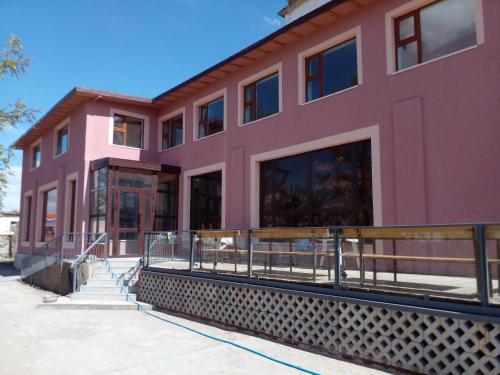


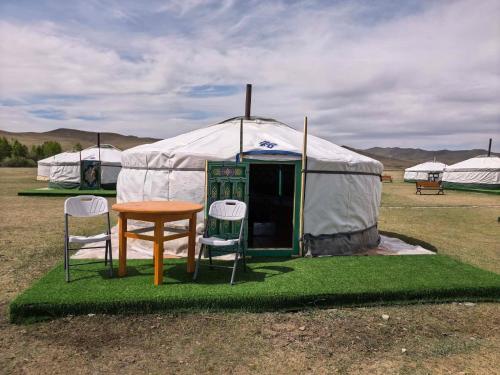

Live rates across our partner network (Booking.com, VRBO, Expedia, Hotels.com) via Stay22. Makutet may earn a commission when you book — at no extra cost to you. Prices update in real time and may vary before booking.
Experience

Guided overland journey
Arrange a multi-day guided drive from Southern Mongolia into the Gobi Desert, with long stretches between stops and basic facilities away from settlements. Travel is most practical in the warmer months; reserve a driver, vehicle, guide and any overnight arrangements ahead, especially for a route crossing remote terrain.
adventure travellers · landscape photographers

Guided walking
Use Terelj National Park as the base for a guided day on foot, adapting the route and pace to local conditions rather than assuming marked urban paths. The warmer season is the practical window; arrange transport and a guide in advance, and allow for the journey from Ulaanbaatar as well as time outdoors.
walkers · nature-focused travellers

Nature and outdoor activity
Plan a guided lakeside day from the Lake Khovsgol area, combining time on foot with local road transfers where needed. Summer offers the most workable conditions for a conventional visit; reserve transport and accommodation ahead because reaching the lake takes planning beyond a city-based excursion.
outdoor travellers · photographers

Wildlife viewing
Book a guided vehicle-based visit to Khustain Nuruu National Park, allowing time for the drive, wildlife observation and changing conditions on unsealed roads. The warmer months are generally the most practical; arrange a suitable vehicle, guide and overnight plan ahead rather than treating the park as a quick city outing.
wildlife watchers · families
Things to do
What Makutet's Mongolia research recommends, and where the tours that cover it can actually be booked.
Editorial recommendations from Makutet's Mongolia research. Tickets and tours are searched on Klook.
Guided Gobi Desert overland journey
Arrange a multi-day guided drive from Southern Mongolia into the Gobi Desert, with long stretches between stops and basic facilities away from settlements. Travel is most practical in the warmer months; reserve a driver, vehicle, guide and any overnight arrangements ahead, especially for a route crossing remote terrain.
Terelj National Park walking day
Use Terelj National Park as the base for a guided day on foot, adapting the route and pace to local conditions rather than assuming marked urban paths. The warmer season is the practical window; arrange transport and a guide in advance, and allow for the journey from Ulaanbaatar as well as time outdoors.
Lake Khovsgol lakeside exploration
Plan a guided lakeside day from the Lake Khovsgol area, combining time on foot with local road transfers where needed. Summer offers the most workable conditions for a conventional visit; reserve transport and accommodation ahead because reaching the lake takes planning beyond a city-based excursion.
Khustain Nuruu National Park wildlife drive
Book a guided vehicle-based visit to Khustain Nuruu National Park, allowing time for the drive, wildlife observation and changing conditions on unsealed roads. The warmer months are generally the most practical; arrange a suitable vehicle, guide and overnight plan ahead rather than treating the park as a quick city outing.
Lake Khovsgol
A large freshwater rift lake located in northern Mongolia near the Russian border, known for its deep blue water.
Karakorum
The site of the 13th-century capital of the Mongol Empire, which now features the Erdene Zuu Monastery.
Activity cards are editorial — Makutet is not selling these specific experiences. The partner search opens Klook for Mongolia, where availability and price are theirs.
Understand
The context that turns a visit into an understanding.

macro_region
This region is dominated by the Altai Mountains and is characterized by high elevations, glaciers, and a diverse range of ethnic groups.

macro_region
This region features the Orkhon Valley, rolling steppe landscapes, and volcanic plateaus, serving as the historical heartland of the country.

macro_region
This region encompasses the vast Gobi Desert, featuring arid plains, sand dunes, and significant paleontological sites.

sub_region
Located in the north, it contains the deep freshwater Lake Khovsgol and is surrounded by dense taiga forest and mountain ranges.

sub_region
A UNESCO World Heritage site representing the evolution of nomadic pastoral traditions and the historic seat of various empires.

Food
Buuz are steamed dumplings and khuushuur are fried meat-filled pastries, familiar parts of Mongolian everyday food. They are useful, filling choices when travelling between Ulaanbaatar and more remote regions, where meal options can be limited.

Drink and hospitality
Airag, fermented mare’s milk, is associated with the pastoral summer season; dairy foods more broadly have a central place in Mongolian hospitality. Accepting a host’s offering politely is part of the social exchange, though visitors can decline courteously if they cannot drink it.

Customs and traditions
A ger is a lived-in home as well as a familiar form of accommodation. Follow the host’s lead on where to sit and how to move through the space, and avoid treating the central stove and household objects as display pieces; customs can matter as much as the room itself.

Urban character
Ulaanbaatar is the country’s principal urban base and a practical place to arrange onward transport, supplies and guides before travelling to the Gobi Desert, Khustain Nuruu National Park or Terelj National Park. The contrast between city services and remote travel is a defining part of planning a Mongolia itinerary.
When to go
June–August
Summer
The broadest window for travel
May and September
Shoulder season
A flexible, cooler alternative
October
Autumn transition
Cooler and increasingly changeable
November–March
Winter
Severe cold
Practical
Money, transport, connectivity and the details that matter on the ground.
Budget
Mongolia’s currency is the tögrög. Cards are most useful in Ulaanbaatar and larger businesses; carry cash for rural services, small purchases and journeys in remote areas, including the Gobi Desert. A larger share of a trip’s spending can go on private vehicles, drivers, guides and remote accommodation than on city days; summer travel and long regional routes need more advance planning and can cost materially more. Tipping is not a universal obligation; check locally for guided services.
Transport
Long distances and extensive open terrain make road travel central to reaching places such as the Gobi Desert, Lake Khovsgol and Altai Tavan Bogd National Park. Arrange a suitable vehicle and driver or guided transfer before leaving Ulaanbaatar; unsealed roads, weather and distance can alter timings. Traffic drives on the right. Do not plan remote connections as if they were short city transfers.
Safety
In the Gobi Desert and other sparsely serviced regions, distance from assistance is a practical safety concern. Travel with a reliable local driver or guide, carry water and suitable clothing, and agree the route and check-in plan before departure. In Ulaanbaatar, use ordinary urban awareness and keep essentials secure; the emergency number is 102 for police and 103 for ambulance.
Connectivity
Mobile coverage is most dependable in Ulaanbaatar and less reliable as journeys reach remote parts of Western Mongolia, the Gobi Desert or Lake Khovsgol. Arrange an eSIM or local connectivity before travelling, but keep offline maps and key booking details. Mongolia uses plug types C and E; bring an adaptor, and use treated or bottled water rather than assuming tap water is safe to drink.
Seasonal weather
Mongolia has a strongly continental climate: winters are long, very cold and dry, while summers are short and can bring warm days, cooler nights and rain. June to August is the most practical period for many road journeys and outdoor visits to the Gobi Desert, Terelj National Park and Lake Khovsgol, though summer rain can affect tracks. Spring and autumn bring greater temperature swings; winter requires specialist cold-weather preparation and can make remote travel difficult.
Accessibility and mobility
Travellers with reduced mobility, wheelchair users, pushchairs and older companions should expect significant limitations outside Ulaanbaatar. Pavements can be uneven or absent, and rural journeys often involve unsealed roads, vehicle transfers and uneven ground; ger camps and remote accommodation may have steps, thresholds and limited adapted facilities. Confirm vehicle access, room layout, toilet arrangements and walking surfaces directly before booking, and build extra time into any visit to the Gobi Desert or Lake Khovsgol.
Getting around
Airport transfers, rail, buses, ferries and car hire for Mongolia — arranged before you fly, priced by the supplier.
Stay connected
Install an eSIM before you fly and you are online the moment you land in Mongolia — no roaming charges, no shop queue at the airport.
Moments
Mongolia’s story is written across distance as much as in particular places. From Ulaanbaatar to the Gobi Desert, from the Orkhon Valley to the high west, its regions bring different landscapes into view; Karakorum and the Genghis Khan Statue Complex add a historical dimension that cannot be separated from the country’s present identity.
The signature moment
At first light in the Gobi Desert, the horizon seems to have no edge. The ground takes on a muted colour as the night’s chill gives way, and the air feels dry against the face. There is little to interrupt the view: land and sky meet in a long, spare line, while the quiet makes small sounds—wind passing over the open ground, a footstep, the movement of clothing—seem unusually clear. The taste is of cool air and dust rather than a meal or a particular local dish; the defining sensation is physical exposure to the space. Stay with that first change of light instead of treating the desert as a point to cross. The scene contains something larger than the south: Mongolia asks the traveller to register distance, weather and terrain as part of the journey itself. From this open ground, the high plateaus and steppe are not distant categories but other expressions of a country whose scale sets the pace and whose landscape is never merely a backdrop.
The story behind it
Mongolia’s heritage is closely associated with the steppe and with the historical memory of Genghis Khan, whose name remains visible in the Genghis Khan Statue Complex and in the legacy attached to Karakorum. These sites invite attention to the scale of political history without reducing the country’s past to a single figure or moment. Karakorum speaks to an earlier centre of power; the modern statue complex is a contemporary interpretation of national memory. Read together, they show how history is carried through both inherited places and present-day symbols. A measured account recognises the force of this heritage while leaving room for the complexity of political change and the varied histories of Mongolia’s regions.
Before you go
A journey through Mongolia is strongest when it leaves room for the intervals: the transitions between Ulaanbaatar, the steppe and the Gobi Desert, and the time needed to feel how one region differs from another. The map is not a promise of quick connections but an invitation to travel attentively. Let Karakorum, Lake Khovsgol or the western high country provide a point of focus, rather than trying to make every landscape fit into one visit. Mongolia comes into view gradually, through its distances and the changing ground beneath them.
Landlocked horizons
Mongolia is landlocked, with Russia to the north and China to the south, east and west; its defining geography is interior, not coastal.
A varied interior
The country’s landscape includes high plateaus, vast steppes and the Gobi Desert, while Lake Khovsgol and the Orkhon Valley anchor distinct regional settings.
June–August
Summer’s broad window
Summer is generally the most workable season for seeing Mongolia’s widely separated landscapes. Plan the route around the distances between Ulaanbaatar, the Gobi Desert and places farther north or west, allowing time for overland travel.
May and September
Shoulder-season trade-offs
The shoulder months can suit travellers prepared for changeable conditions. Temperatures vary more sharply than in summer, so build flexibility into plans for the steppe, Lake Khovsgol or the Gobi Desert and pack for cool periods.
November–March
Deep winter conditions
Mongolia’s continental winter is severe, with very cold conditions that can make long journeys and extended time outdoors difficult. Choose this period only with appropriate preparation and a plan that does not depend on easy movement between distant regions.
FAQ
June to August is the most practical season for many outdoor visits and road journeys. Winters are long and very cold; spring and autumn bring more changeable temperatures.
Plan a multi-day overland journey from Ulaanbaatar with a suitable vehicle and driver or guide. Confirm the route and overnight arrangements before setting out.
No. Cards are most useful in Ulaanbaatar and larger businesses; carry cash for rural services, small purchases and remote journeys.
Do not assume tap water is safe to drink. Use treated or bottled water, especially when travelling beyond Ulaanbaatar.
Ger camps and rural stays can be simple, with limited services and uneven access. Confirm transport, facilities, meals and mobility arrangements before booking.
Access is challenging beyond Ulaanbaatar: pavements may be uneven or absent, roads can be unsealed, and remote accommodation may lack adapted facilities. Check arrangements directly before travel.
Before you go
The last thing most travellers forget — and the disclosure that applies to every partner link on this page.
Booking and rate checks run on the partner's own site; prices and availability are theirs and can change. Some links are affiliate links and Makutet may earn a commission at no extra cost to you. See our affiliate disclosure.
Makutet builds a day-by-day itinerary around the places above — then keeps it updated as you travel.
Country guide: /country/mongolia
Your assessment works without optional tracking. Necessary storage keeps your trip and privacy choice. Embedded flight search includes TravelPayouts tracking; ordinary partner links remain available if you decline.
Cookie policy · Privacy policy. Reopen Cookie settings to change your choice. Supplier-site cookies are controlled by that supplier.