
urban
Almaty
The largest city in Kazakhstan, situated in the mountainous area of the southeast, formerly the capital of the country.

asia
Kazakhstan stretches from the Caspian Sea to the Altai Mountains, with vast distances shaping every journey. Its cities, steppe, mountain lakes and desert landscapes belong to a country whose scale is part of its character.
The country
The country
The world’s largest landlocked country, Kazakhstan spans Central Asia from the Caspian Sea in the west to the Altai Mountains in the east. Its immense interior encompasses Western Kazakhstan, Central Kazakhstan, Mangystau Region and Saryarka, while Almaty and Astana offer two distinct urban starting points for understanding the country.
Why visit
Kazakhstan rewards travellers who think in landscapes rather than short distances. Its geography runs from the Caspian Sea across an immense continental interior to the Altai Mountains, and the character of a journey changes with that passage. In Mangystau Region and Western Kazakhstan, the western reaches feel open and elemental; farther inland, Central Kazakhstan and Saryarka suggest the scale of the steppe. In the east, the Altai provides a mountain counterpoint to the country’s wide plains. This is not a place to treat as a succession of nearby sights: routes need thought, and a good itinerary gives each region room to register. The contrast between Almaty and Astana makes a useful beginning. Almaty is associated with the mountain edge of the country; Astana presents a more contemporary capital setting. Beyond the cities, Charyn Canyon, Kolsai Lakes and Altyn-Emel National Park offer different ways to encounter the natural landscape, while Borovoe and Turkistan add further variety. Baikonur Cosmodrome brings a distinct technological dimension to a country often introduced through its open spaces. Together these places resist a single shorthand for Kazakhstan. A visit is most rewarding when the traveller accepts the distances, plans around the pronounced seasonal climate and gives the land itself as much attention as the itinerary. The result is an encounter with a country defined by breadth, regional difference and the meeting of settled life with vast terrain.
What it feels like
The mood is shaped by scale: long horizons, open steppe and the contrast between mountain scenery and dry western landscapes. In Almaty and Astana, city life provides a different rhythm from the quieter, more exposed settings of Saryarka, Mangystau Region and Central Kazakhstan. Seasonal extremes are part of the experience, bringing hot summers and cold winters rather than a uniformly mild climate.
Who it suits
Kazakhstan suits independent-minded travellers who are comfortable planning around long distances and changing weather. It is especially rewarding for those drawn to landscapes, regional contrasts, history, cities and the distinctive settings of places such as Charyn Canyon, Kolsai Lakes, Turkistan and Baikonur Cosmodrome.
How to get here
Live fares into Kazakhstan across hundreds of airlines, compared in one search. Book directly with the airline or agent — Makutet never adds a fee.
Live fares to Kazakhstan across hundreds of airlines. Book directly with the airline or agent — no extra cost to you.
Embedded flight search uses TravelPayouts cookies and tracking. Enable partner search to load it here, or continue directly on the partner site.
The external partner link includes Makutet's affiliate marker; confirm your route, dates and passengers there. No booking is made on Makutet.
Live search and booking run on the TravelPayouts partner engine. Fares update in real time and may vary before booking. Any prices shown elsewhere on Makutet are monitored observations, not live quotes.
Identity
The places that define the country rather than merely sit inside it.
urban
The largest city in Kazakhstan, situated in the mountainous area of the southeast, formerly the capital of the country.

urban
The capital city of Kazakhstan, known for its modern architectural projects and planned urban development in the northern steppe.

nature
A prominent natural feature resembling the Grand Canyon, located along the Charyn River near the Chinese border.

infrastructure
The world's first and largest operational space launch facility, located in the Kyzylorda Region of southern Kazakhstan.
Imagery


Discover

nature
A system of three picturesque alpine lakes located in the Northern Tian Shan mountains near the border with Kyrgyzstan.

culture
A city in southern Kazakhstan known for the Mausoleum of Khoja Ahmed Yasawi, a major historical site of religious architecture.

nature
A large protected area containing the Singing Dune, volcanic mountains, and petroglyphs within the Ili River valley.

nature
A resort region in the north often called the Switzerland of Kazakhstan, featuring granite mountains and numerous lakes.
Stay
The bases that actually change the trip.

City accommodation
Choose Almaty for an urban base with onward road-trip connections towards Charyn Canyon, Kolsai Lakes and Altyn-Emel National Park. It suits visits in any season, though winter conditions can affect excursions; allow travel time beyond the city and arrange guides or transport separately.
city explorers · excursion travellers

City accommodation
Astana is a practical urban base for a stay focused on the capital and for planning longer journeys to places such as Baikonur Cosmodrome. It is most comfortable for visitors who want city facilities, but the continental winter calls for warm clothing and weather-aware travel planning.
city visitors · business travellers

Rural guesthouse
A guesthouse base near Kolsai Lakes makes an early start for walking more practical than a return outing from Almaty. Expect a rural setting, fewer services than in a city and a road journey that needs planning; warmer months are the natural choice, and accommodation should be reserved ahead.
walkers · slow travellers

Rural accommodation
A rural guesthouse or camp-based stay in Mangystau Region suits travellers exploring its remote landscapes, but requires advance coordination of transport and overnight arrangements. Choose the milder travel season; distances and limited services mean this is less flexible than staying in Almaty or Astana.
road-trippers · landscape travellers
Where to stay
Live rates across Booking.com, Agoda, VRBO and Expedia for Kazakhstan. Compare the areas above, then check what a night actually costs.
Popular destinations
Live rates across Booking.com, Agoda, VRBO and Expedia for Kazakhstan — no extra cost to you.
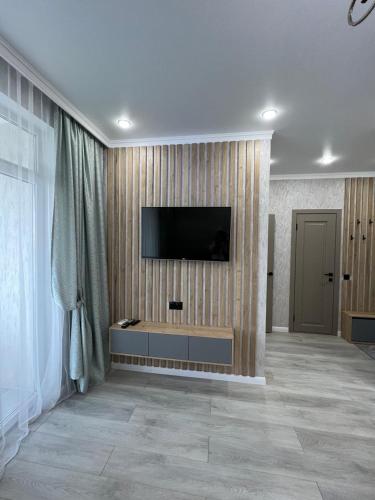


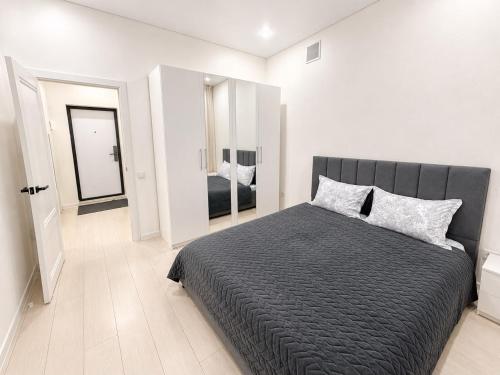


Live rates across our partner network (Booking.com, VRBO, Expedia, Hotels.com) via Stay22. Makutet may earn a commission when you book — at no extra cost to you. Prices update in real time and may vary before booking.
Experience

Guided day trip
Begin in Almaty for a full-day guided return drive to Charyn Canyon, with time on foot in the canyon. It is most practical in the warmer months; reserve transport and a guide ahead, and confirm the day’s walking conditions before setting out.
photographers · day-trip travellers

Guided outdoor excursion
Use Almaty as the starting point for a guided excursion to Kolsai Lakes, allowing a full day for the road journey and walking. The warmer season is the most suitable; arrange transport and any guiding in advance, as reaching the lakes is a substantial overland outing.
walkers · nature travellers

Guided park drive
Take a guided vehicle-based day or overnight outing from Almaty to explore Altyn-Emel National Park’s open landscapes. Warmer months are generally better suited to the drive; reserve a suitable vehicle and local guiding ahead because distances within the park make independent, unplanned access difficult.
landscape travellers · wildlife watchers

Guided specialist visit
Arrange a guided visit to Baikonur Cosmodrome from Astana or Almaty as a dedicated, multi-day itinerary rather than an independent stop. Access and visit dates require advance confirmation and reservation; do not plan the journey around an assumed launch or walk-in entry.
space enthusiasts · organised travellers
Things to do
What Makutet's Kazakhstan research recommends, and where the tours that cover it can actually be booked.
Editorial recommendations from Makutet's Kazakhstan research. Tickets and tours are searched on Klook.
Charyn Canyon guided day drive
Begin in Almaty for a full-day guided return drive to Charyn Canyon, with time on foot in the canyon. It is most practical in the warmer months; reserve transport and a guide ahead, and confirm the day’s walking conditions before setting out.
Kolsai Lakes walking excursion
Use Almaty as the starting point for a guided excursion to Kolsai Lakes, allowing a full day for the road journey and walking. The warmer season is the most suitable; arrange transport and any guiding in advance, as reaching the lakes is a substantial overland outing.
Altyn-Emel National Park wildlife and landscape drive
Take a guided vehicle-based day or overnight outing from Almaty to explore Altyn-Emel National Park’s open landscapes. Warmer months are generally better suited to the drive; reserve a suitable vehicle and local guiding ahead because distances within the park make independent, unplanned access difficult.
Baikonur Cosmodrome organised visit
Arrange a guided visit to Baikonur Cosmodrome from Astana or Almaty as a dedicated, multi-day itinerary rather than an independent stop. Access and visit dates require advance confirmation and reservation; do not plan the journey around an assumed launch or walk-in entry.
Kolsai Lakes
A system of three picturesque alpine lakes located in the Northern Tian Shan mountains near the border with Kyrgyzstan.
Turkistan
A city in southern Kazakhstan known for the Mausoleum of Khoja Ahmed Yasawi, a major historical site of religious architecture.
Activity cards are editorial — Makutet is not selling these specific experiences. The partner search opens Klook for Kazakhstan, where availability and price are theirs.
Understand
The context that turns a visit into an understanding.

macro_region
This region is dominated by the Caspian Lowland, featuring significant oil and gas reserves and access to the Caspian Sea coastline.

macro_region
An arid, elevated region characterized by the Kazakh Uplands, featuring vast steppes and historically significant mining settlements.

sub_region
Located in the southwest, this region features unique desert landscapes, canyons, and the Ustyurt Plateau near the Caspian Sea.

sub_region
A vast steppe and lake region in the central part of the country that is listed as a UNESCO World Heritage site.

Food and dining custom
Beshbarmak, a dish of meat served with flat noodles, is closely associated with Kazakh hospitality. It is often presented as a shared meal; accept the communal pace and ask about serving customs rather than treating it as a quick individual dish.

Traditional drink
Kumis is fermented mare’s milk and part of Kazakhstan’s distinctive food culture. It is a seasonal, locally rooted drink rather than a standard café beverage everywhere, so ask what is available and how it is served when visiting rural areas.

Music and tradition
The dombra, a long-necked two-stringed instrument, is central to Kazakh musical traditions. A performance offers a direct way into the country’s oral culture; listen for the instrumental storytelling style rather than expecting a formal concert format in every setting.

Urban character
Astana’s broad avenues and monumental civic setting give the capital a very different feel from Almaty. Plan time for movement between districts rather than assuming the city is best experienced as a compact walking centre, especially in winter weather.
When to go
April–June
Spring
Temperatures moderate as the landscape turns green
July–August
Summer
Warm to hot across much of the interior
September–October
Autumn
Cooling weather and a quieter seasonal feel
November–March
Winter
Cold continental conditions
Practical
Money, transport, connectivity and the details that matter on the ground.
Budget
Kazakhstan’s currency is the tenge. Cards are useful in cities such as Almaty and Astana, but carry cash for rural guesthouses, small purchases and journeys in remote areas such as Mangystau Region or around Kolsai Lakes. Transport, guided access and overnight logistics can take a larger share of the budget outside the cities; remote excursions and peak warmer-season demand may cost more than a city-based stay.
Transport
Kazakhstan’s scale makes intercity travel a central part of planning: use Almaty or Astana as a base, then allow substantial road time for Charyn Canyon, Kolsai Lakes or Altyn-Emel National Park. For remote areas, reserve a suitable vehicle or guided transfer ahead; Kazakhstan drives on the right.
Safety
For remote outings from Almaty or into Mangystau Region, travel with a planned route, reliable transport and enough supplies rather than relying on frequent services. The emergency number is 112. Tap-water quality can vary by location, so check locally and choose treated or bottled water when uncertain; tipping is not obligatory but rounding up for good service is customary.
Connectivity
Mobile coverage is strongest in Almaty and Astana and less dependable on long drives to Charyn Canyon, Kolsai Lakes or Altyn-Emel National Park. Arrange a local SIM or eSIM before leaving the cities, download maps for offline use, and carry a suitable adaptor for Kazakhstan’s Type C and Type F sockets.
Seasonal weather
Kazakhstan has strongly continental seasons: winter, especially December to February, is cold and can disrupt road outings, while summer, from June to August, brings heat in lowland and western areas. Spring and autumn are more temperate but changeable. For walking around Kolsai Lakes and driving to Charyn Canyon, plan for the warmer months and check conditions; winter suits city stays in Almaty or Astana better than remote road itineraries.
Accessibility and mobility
Travellers using wheelchairs, pushchairs or walking aids should expect uneven pavements, kerbs and limited step-free access beyond newer urban settings in Almaty and Astana. Rural roads, natural ground at Charyn Canyon and Kolsai Lakes, and remote accommodation can be difficult to navigate; confirm accessible rooms, vehicle loading and entrance arrangements directly before booking. An older companion may need extra time for long drives and frequent rest stops.
Getting around
Airport transfers, rail, buses, ferries and car hire for Kazakhstan — arranged before you fly, priced by the supplier.
Stay connected
Install an eSIM before you fly and you are online the moment you land in Kazakhstan — no roaming charges, no shop queue at the airport.
Moments
Kazakhstan is best read through contrasts that take time to cross: western landscapes opening towards the Caspian Sea, the steppe of Central Kazakhstan and Saryarka, mountain country in the east, and the urban settings of Almaty and Astana. Its story belongs as much to this geography as to its places of heritage and modern ambition.
The signature moment
At first light beside Kolsai Lakes, the water holds the pale colour of the sky, and the surrounding mountain slopes emerge gradually from the cool shadow. The air feels sharp against the face; underfoot, the ground is damp, and the quiet is broken by small movements at the water’s edge and the sounds of the morning settling in. There is time to notice the change from dark reflection to clear outline, and to feel how quickly the cold gives way as the sun reaches the shore. A warm drink tastes especially welcome in that first hour. The scene is intimate, but it belongs to a much larger country: a landscape where the eastern mountains contrast with the open plains of Saryarka, the western reaches of Mangystau Region and the distant sweep from the Caspian Sea. Kazakhstan’s defining quality is not one view but the distance between views. At Kolsai Lakes, that scale becomes tangible: still water in the foreground, high terrain around it, and the knowledge that this is only one expression of a country extending across Central Asia.
The story behind it
Kazakhstan’s heritage is inseparable from its position in Central Asia and the wide territories between the Caspian Sea and the Altai Mountains. The steppe has shaped ways of life and movement across the region, while places such as Turkistan speak to a settled cultural and religious heritage. Modern Kazakhstan also carries the legacies of difficult political and social change; these should be approached without reducing the country’s past to a single narrative of progress or hardship. Baikonur Cosmodrome points to a further chapter, in which the country’s landscape became part of a technological history with consequences beyond its borders. Today, Almaty and Astana express different dimensions of contemporary national life, set within a country whose regional breadth remains central to its identity.
Before you go
A journey through Kazakhstan need not cover every region to convey its breadth. Choose a route that gives one landscape time to unfold, then let a city or a place of heritage offer a different measure of the country. When the distances are treated as part of the experience rather than an inconvenience, Kazakhstan’s contrasts become clearer: the mountain setting of Kolsai Lakes, the steppe of Saryarka, the presence of Turkistan and the distinct urban rhythms of Almaty and Astana.
Landlocked by scale
Kazakhstan is the world’s largest landlocked country, yet its western edge reaches the Caspian Sea, while the Altai Mountains mark its far eastern landscape.
A technological landmark
Baikonur Cosmodrome is a signature place in Kazakhstan, adding a technological dimension to a country more often defined by steppe, mountains and distance.
May–June
Spring into summer
Spring warmth makes travel across Kazakhstan more comfortable than the winter extremes, while the landscape is not yet at the height of summer heat. Allow for regional differences and long overland distances.
July–August
High summer
Summer can bring substantial heat, especially away from the mountain settings. Build flexibility into days spent crossing Central Kazakhstan or Saryarka, and plan outdoor activity for cooler hours where possible.
November–March
Deep winter
Winter brings severe cold across much of this continental country, making long journeys and outdoor plans more demanding. Choose this season only with a deliberate cold-weather itinerary and appropriate preparation.
FAQ
Spring and autumn are generally milder; June to August is warmer, while December to February brings cold winter conditions.
Yes, it can be planned as a full-day guided return drive from Almaty; allow for road time and arrange transport ahead.
It is sensible to reserve transport, guiding and any rural accommodation ahead, particularly for a warmer-season visit.
Kazakhstan uses the tenge. Cards are useful in cities, while cash remains practical for rural stays and small purchases.
Plan it as an organised, pre-arranged visit; confirm access and dates in advance rather than expecting walk-in entry.
City access is variable, and uneven pavements, remote roads and natural terrain can present real obstacles; confirm step-free arrangements and transport before booking.
Before you go
The last thing most travellers forget — and the disclosure that applies to every partner link on this page.
Booking and rate checks run on the partner's own site; prices and availability are theirs and can change. Some links are affiliate links and Makutet may earn a commission at no extra cost to you. See our affiliate disclosure.
Makutet builds a day-by-day itinerary around the places above — then keeps it updated as you travel.
Country guide: /country/kazakhstan
Your assessment works without optional tracking. Necessary storage keeps your trip and privacy choice. Embedded flight search includes TravelPayouts tracking; ordinary partner links remain available if you decline.
Cookie policy · Privacy policy. Reopen Cookie settings to change your choice. Supplier-site cookies are controlled by that supplier.