
urban
Addis Ababa
The capital and largest city of Ethiopia, serving as a primary administrative and diplomatic center in Africa.

africa
Ethiopia is a land of high plateaux, surrounding lowlands and histories rooted in places such as Lalibela and Axum. The Great Rift Valley gives the country’s geography its scale; its distinct regions give a journey its shape.
The country
The country
Landlocked in the Horn of Africa, Ethiopia occupies a landscape shaped by the Great Rift Valley: a high plateau edged by lowlands, with the Ethiopian Highlands, the Semien Mountains and the Danakil Depression marking sharply different terrains. Addis Ababa, Lalibela and Axum offer distinct points of entry into a country whose geography and historic places are closely intertwined.
Why visit
Ethiopia rewards travellers who want to understand a country through the relationship between landscape, settlement and history. The Great Rift Valley helps explain its striking contrasts: high plateau and surrounding lowlands, the Ethiopian Highlands and the Danakil Depression. These are not merely changing backdrops. They shape the character of a journey, asking visitors to move between very different environments rather than imagine the country as one continuous scene. Begin with Addis Ababa as a point of orientation, then look beyond the capital to places that carry different kinds of meaning. Lalibela and Axum bring history and religious heritage into focus; Gondar and Harar Jugol extend that encounter through other distinctive historic settings. The Blue Nile Falls and Lake Tana draw attention back to water and terrain, while the Semien Mountains and Bale Mountains offer a highland perspective. Each place makes more sense alongside the wider geography around it. Ethiopia is not a coast-to-coast itinerary: it is landlocked, bordered by Djibouti, Eritrea, Kenya, Somalia, South Sudan and Sudan. That setting is part of the country’s character, as is the contrast between plateau and lowland. A considered visit leaves room for transitions—between altitude, region and the built and natural worlds—rather than trying to collect names quickly. For travellers prepared to plan around distance and varied terrain, Ethiopia offers a journey with substance: one in which the places visited continually sharpen an understanding of the country as a whole.
What it feels like
In Addis Ababa, the experience is urban; elsewhere, the mood shifts with the terrain, from the elevated landscapes of the Ethiopian Highlands and Semien Mountains to the stark lowland character of the Danakil Depression. Historic places such as Lalibela and Axum bring a sense of deep cultural and religious continuity into that changing geography. The overall impression is one of contrasts held close together: high and low, inhabited and remote, contemporary city and long-established heritage.
Who it suits
Ethiopia suits curious, culturally minded travellers who value historic places and dramatic changes of terrain, and who are comfortable planning a journey around a landlocked country with highlands, lowlands and significant distances. It is especially rewarding for visitors willing to give places such as Lalibela, Axum, Lake Tana and the Semien Mountains time rather than treating them as quick stops.
How to get here
Live fares into Ethiopia across hundreds of airlines, compared in one search. Book directly with the airline or agent — Makutet never adds a fee.
Live fares to Ethiopia across hundreds of airlines. Book directly with the airline or agent — no extra cost to you.
Embedded flight search uses TravelPayouts cookies and tracking. Enable partner search to load it here, or continue directly on the partner site.
The external partner link includes Makutet's affiliate marker; confirm your route, dates and passengers there. No booking is made on Makutet.
Live search and booking run on the TravelPayouts partner engine. Fares update in real time and may vary before booking. Any prices shown elsewhere on Makutet are monitored observations, not live quotes.
Identity
The places that define the country rather than merely sit inside it.
urban
The capital and largest city of Ethiopia, serving as a primary administrative and diplomatic center in Africa.

heritage
A town in northern Ethiopia famous for its monolithic rock-hewn churches dating back to the 12th and 13th centuries.

heritage
An ancient city in the north that served as the capital of the Aksumite Empire and contains historic stelae fields.

waterfalls
A significant waterfall on the Blue Nile river located in the Amhara region, often referred to as Tis Abay.
Imagery


Discover

national park
A mountain range in southeastern Ethiopia hosting diverse ecosystems, including the Harenna Forest and afro-alpine moorlands.

heritage
A historic city in the north known for the Fasil Ghebbi fortress compound, a collection of royal castles from the 17th century.

urban
A fortified historic town in eastern Ethiopia known for its traditional houses and numerous mosques dating back to the 16th century.

lakes
The largest lake in Ethiopia and the source of the Blue Nile, featuring several islands with historic monasteries.
Stay
The bases that actually change the trip.

City accommodation
Choose a city base in Addis Ababa for the widest practical access to onward transport and services. Reaching it is simplest by arranged transfer; allow time for city traffic, and book ahead in busier travel periods rather than assuming a room will be available on arrival.
first-time visitors · independent travellers

Highland lodge
A lodge or guesthouse in the Ethiopian Highlands puts walking country within reach, but usually requires a planned road transfer and more time than a city stay. It suits the drier walking season; confirm meals, transport and the exact access arrangements before committing to remote nights.
walkers · landscape travellers

Mountain guesthouse
Staying near the Semien Mountains can reduce repeated road journeys before and after a trek, though access still needs to be arranged and services may be simpler than in Addis Ababa. Choose it for a walking-focused visit, check seasonal road conditions, and reserve rooms alongside guide and transport plans.
trekkers · nature travellers

Lakeside guesthouse
A guesthouse near Lake Tana makes early boat departures more practical than travelling in from a distant base. The stay is best planned around settled, drier weather; agree boat access and transfers before arrival, since being beside the lake does not by itself secure a departure.
slow travellers · bird and boat enthusiasts
Where to stay
Live rates across Booking.com, Agoda, VRBO and Expedia for Ethiopia. Compare the areas above, then check what a night actually costs.
Popular destinations
Live rates across Booking.com, Agoda, VRBO and Expedia for Ethiopia — no extra cost to you.

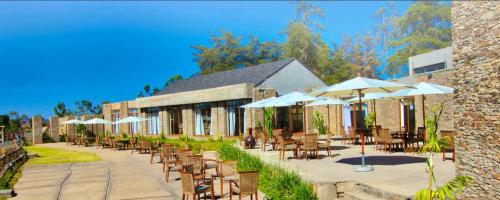

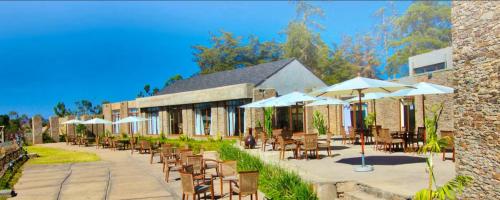





Live rates across our partner network (Booking.com, VRBO, Expedia, Hotels.com) via Stay22. Makutet may earn a commission when you book — at no extra cost to you. Prices update in real time and may vary before booking.
Experience

Guided walking
Arrange a guided full-day walk in the Ethiopian Highlands, with the route and pace agreed in advance to suit the terrain. The drier months are generally more practical for walking; reserve a guide and transport ahead, especially if travelling in the wetter season.
active travellers · landscape photographers

Trekking
Set aside several days for a guided trek in the Semien Mountains, allowing time for acclimatisation, walking and transport to the trail area. Conditions are usually more reliable in the drier months; arrange a guide, any required local support and accommodation before setting out.
experienced walkers · nature travellers

Boat excursion
Take a locally arranged boat excursion on Lake Tana, using the lake as the focus of a half- or full-day outing from its accessible shore. Confirm the departure point, boat arrangements and any stops in advance; calmer, drier weather generally makes time on the water easier to plan.
slow travellers · photographers

Guided day trip
Plan a guided day trip to Blue Nile Falls, with road transfers and time for walking at the falls included in the day. Ask locally about access and current conditions before departure, and reserve transport and a guide ahead rather than relying on a walk-up arrangement.
culture and landscape travellers · families
Things to do
What Makutet's Ethiopia research recommends, and where the tours that cover it can actually be booked.
Editorial recommendations from Makutet's Ethiopia research. Tickets and tours are searched on GetYourGuide.
Highland walking day from the Ethiopian Highlands
Arrange a guided full-day walk in the Ethiopian Highlands, with the route and pace agreed in advance to suit the terrain. The drier months are generally more practical for walking; reserve a guide and transport ahead, especially if travelling in the wetter season.
Semien Mountains guided trekking
Set aside several days for a guided trek in the Semien Mountains, allowing time for acclimatisation, walking and transport to the trail area. Conditions are usually more reliable in the drier months; arrange a guide, any required local support and accommodation before setting out.
Lake Tana boat excursion
Take a locally arranged boat excursion on Lake Tana, using the lake as the focus of a half- or full-day outing from its accessible shore. Confirm the departure point, boat arrangements and any stops in advance; calmer, drier weather generally makes time on the water easier to plan.
Blue Nile Falls guided day trip
Plan a guided day trip to Blue Nile Falls, with road transfers and time for walking at the falls included in the day. Ask locally about access and current conditions before departure, and reserve transport and a guide ahead rather than relying on a walk-up arrangement.
Bale Mountains
A mountain range in southeastern Ethiopia hosting diverse ecosystems, including the Harenna Forest and afro-alpine moorlands.
Gondar
A historic city in the north known for the Fasil Ghebbi fortress compound, a collection of royal castles from the 17th century.
Activity cards are editorial — Makutet is not selling these specific experiences. The partner search opens GetYourGuide for Ethiopia, where availability and price are theirs.
Understand
The context that turns a visit into an understanding.

macro_region
A vast mountainous region covering the central part of the country, featuring peaks reaching over 4,000 meters in elevation.

macro_region
Arid and semi-arid plains surrounding the central massif, primarily located in the east, south, and west of the country.

sub_region
A high-altitude range in the north known for deep precipices and unique alpine flora and fauna.

sub_region
A geological depression in the Afar region characterized by salt flats, volcanic activity, and extremely high surface temperatures.

Food culture
Injera, the soft fermented flatbread, is served as both plate and accompaniment, with stews arranged for sharing. Eating from a common platter is a familiar social custom; follow the host’s lead and use the right hand when taking a portion.

Coffee tradition
Coffee is prepared and served as a social ritual, not simply a quick drink: roasting, brewing and pouring are part of the occasion. Accepting an invitation offers a way to spend time with a household or host, especially after a day exploring Addis Ababa or the highlands.

Drinks
Tej is a traditional honey wine whose character varies with its preparation. It is a distinctive choice when offered alongside a meal or gathering; ask how it is served and whether it is sweet or dry rather than expecting a standardised style.

Religious custom
Lalibela is a place of active religious significance as well as a destination. Dress modestly, keep voices low around worship, and ask before photographing people or ceremonies; a respectful visit allows room for the rhythms of prayer rather than treating the setting as scenery.

Neighbourhood character
Harar Jugol is best understood on foot through its compact, closely woven street character. Give way in narrow passages, keep the visit unhurried and take local guidance on when and where photography is appropriate; the neighbourhood is lived-in, not a set built for visitors.
When to go
October–February
Drier season
A generally favourable period for travel
March–May
Transition season
Conditions can become less settled
June–September
Main rainy season
Rain can complicate overland journeys
Practical
Money, transport, connectivity and the details that matter on the ground.
budget
The currency is the Ethiopian birr. Card acceptance is uneven, so carry cash for smaller purchases and for places where card payment is unavailable; confirm payment arrangements before travelling beyond Addis Ababa. Spending commonly goes on transport between the highlands and lowlands, guided visits to places such as Lalibela or Axum, and accommodation. Access to remote areas such as the Danakil Depression can require more planning and support than a city stay.
transport
Road journeys connect Addis Ababa with the Ethiopian Highlands and other regions, but distances and mountain terrain can make overland travel slow. For visits to Lalibela, Axum or the Blue Nile Falls, plan transfers and local transport in advance rather than assuming a short drive between sights. Confirm road conditions and arrangements with a local operator before setting out, especially for journeys into the lowlands.
safety
Conditions vary between Addis Ababa, the Ethiopian Highlands and remote lowland areas, so check current official travel advice and local conditions before travelling. Arrange reliable local guidance and transport for visits to the Danakil Depression or Semien Mountains, and keep plans flexible where terrain or road access may affect a journey. Ethiopia's emergency number is 911.
connectivity
Mobile coverage and data access can be less dependable away from Addis Ababa and larger towns. Arrange an eSIM or local connectivity option before leaving the city, and keep offline maps and essential booking details available for journeys to Lalibela, Lake Tana or the Ethiopian Lowlands. Do not rely on continuous signal in remote areas.
seasonal weather
Ethiopia has a pronounced rainy season, generally from June to September, and a drier period from October to May; rain and local conditions vary with altitude and region. The highlands can be cool, especially at elevation, while lowland areas are hotter. Rain can slow road travel and make some routes harder to use, so allow flexibility for visits to the Ethiopian Highlands, Semien Mountains and Danakil Depression.
accessibility and mobility
Travellers with reduced mobility, wheelchair users, pushchairs and older companions should expect uneven access in much of Ethiopia. Steep or rough terrain around the Ethiopian Highlands, Lalibela and the Semien Mountains, limited step-free pavements, and variable vehicle and accommodation access can make independent movement difficult. Confirm accessible transport, entrances and room arrangements directly before booking; allow extra time for transfers and avoid assuming that rural sites are wheelchair-accessible.
Getting around
Airport transfers, rail, buses, ferries and car hire for Ethiopia — arranged before you fly, priced by the supplier.
Stay connected
Install an eSIM before you fly and you are online the moment you land in Ethiopia — no roaming charges, no shop queue at the airport.
Moments
Ethiopia’s story is shaped by contrasts of elevation and exposure: the Ethiopian Highlands rise above broad lowlands, while the Great Rift Valley runs through a landlocked country in the Horn of Africa. Its places are not a single itinerary but a set of distinct settings, from Addis Ababa and Lalibela to the Semien Mountains and Danakil Depression.
The signature moment
At first light in the Ethiopian Highlands, the air feels cool against the skin and the plateau opens in long folds of land. The quiet is interrupted by wind moving over the high ground; below, lowlands gather in softer, hazier bands. There is no coast to draw the eye outward: the view is held instead by height, distance and the changing edge of the Great Rift Valley. A simple local meal, when available, makes the pause tangible—warm food, the scent of coffee, a moment to sit rather than press on. From here the country’s contrasts become legible without needing to be explained: plateau and lowland, exposure and shelter, a route that rises and falls rather than following a shoreline. The scene contains Ethiopia in miniature, not because it stands for every region, but because its geography makes difference visible. The Semien Mountains, the Danakil Depression and the Blue Nile Falls belong to the same national frame, yet each asks the traveller to meet a different scale of landscape.
The story behind it
Ethiopia’s heritage is carried through places associated with different forms of settlement, belief and authority. Axum and Lalibela give the country’s story a deep architectural and religious dimension; Gondar and Harar Jugol add other historic urban settings. These inheritances sit within a present geography of highlands, rift and lowlands, rather than belonging to one uniform landscape. A measured account must also allow for difficult chapters and contested experiences in the country’s past, without reducing them to a single founding story or claiming that one place can represent every community. The named sites offer points of entry into a long, layered national history, not a complete account of it.
Before you go
Let the journey take its measure from the land itself. Addis Ababa, Lalibela and Axum offer distinct points of orientation; Lake Tana, Bale Mountains and Gondar lead into other settings, each worth approaching on its own terms. A visit need not resolve Ethiopia into one story. Allow room for the shifts between high plateau and lowland, and for the quiet intervals between named places. What remains is a more attentive sense of how geography and heritage meet.
A land of contrasts
Ethiopia is landlocked in the Horn of Africa, yet its geography ranges from the high plateau of the Ethiopian Highlands to the lowlands and the Danakil Depression.
Rift Valley setting
The Great Rift Valley runs through Ethiopia, whose regional landscapes include the Ethiopian Highlands, the Ethiopian Lowlands and the Semien Mountains.
October–February
Generally drier conditions
The drier months generally make movement through the Ethiopian Highlands and between places such as Addis Ababa, Lalibela and Gondar more straightforward. Conditions vary by elevation, so plan for cooler highland mornings.
March–May
Shoulder-season variation
This transition period can bring more variable weather, particularly as the rains approach. Keep flexibility in plans linking the highlands with the Ethiopian Lowlands, and check local conditions before setting out.
June–September
Main rainy season
The main rains can make travel slower, especially on routes through elevated and rural areas. Build in extra time for journeys to places such as the Semien Mountains or Lake Tana, and confirm access conditions locally.
FAQ
Rain generally falls from June to September, though conditions vary by region and altitude.
Yes. Ethiopia is a landlocked nation in the Horn of Africa, positioned within the Great Rift Valley.
The currency is the Ethiopian birr. Carry cash because card acceptance is not consistent everywhere.
Not everywhere. Coverage can be less dependable away from Addis Ababa and larger towns; keep essential details available offline.
Uneven terrain, steep routes and limited step-free access can be obstacles. Confirm transport and accommodation access before booking.
The Ethiopian Highlands are elevated, while the lowlands are generally hotter; weather and travel conditions vary across the country.
Before you go
The last thing most travellers forget — and the disclosure that applies to every partner link on this page.
Booking and rate checks run on the partner's own site; prices and availability are theirs and can change. Some links are affiliate links and Makutet may earn a commission at no extra cost to you. See our affiliate disclosure.
Makutet builds a day-by-day itinerary around the places above — then keeps it updated as you travel.
Country guide: /country/ethiopia
Your assessment works without optional tracking. Necessary storage keeps your trip and privacy choice. Embedded flight search includes TravelPayouts tracking; ordinary partner links remain available if you decline.
Cookie policy · Privacy policy. Reopen Cookie settings to change your choice. Supplier-site cookies are controlled by that supplier.