
National Park
Galapagos Islands
An isolated volcanic archipelago known for high levels of endemism and significant biological diversity.

americas
Ecuador is a country of sharp transitions: Pacific coast, Andean highlands, Amazonian Oriente and the Galapagos Islands. Its geography makes distance feel less like a measure of space than a change in altitude, climate and daily rhythm.
The country
The country
Straddling the equator in north-western South America, Ecuador is bounded by the Pacific Ocean and shares land borders with Colombia and Peru. Its compact national frame contains the Costa, Sierra and Oriente, as well as the Galapagos Islands; the Avenue of the Volcanoes gives the highlands their defining line.
Why visit
Ecuador rewards travellers who pay attention to how a country changes from one landscape to the next. The Pacific-facing Costa, the highland Sierra, the forested Oriente and the Galapagos Islands are not variations on a single setting: they give a journey distinct climates, horizons and ways of moving. Quito and Mitad del Mundo make the equator part of the country's geographical imagination, while Cotopaxi and Chimborazo bring the scale of the Andes into view. Beyond the highlands, Baños de Agua Santa offers a different encounter with the country's steep terrain, and Yasuni National Park anchors the journey in the Oriente. Cuenca adds a city perspective to this range, while the islands shift attention outwards, towards land and wildlife shaped by oceanic distance. The appeal lies in the contrasts and in the connections between them. A traveller can understand Ecuador not as a checklist of isolated names but as a sequence of regions, with altitude and exposure changing the experience of each leg. The mainland and the Galapagos Islands belong to one national story, yet reaching the islands requires treating them as a separate part of the itinerary rather than an incidental extension of a mainland stay. Likewise, the Costa, Sierra and Oriente call for different expectations of weather and pace. Ecuador suits a journey built around these distinctions: time to see the Andes clearly, to experience the forest as its own environment, and to give the islands room to be more than a brief add-on. The result is a compact country whose geography is unusually legible, and whose character is best understood by crossing its boundaries thoughtfully.
What it feels like
Ecuador's atmosphere is shaped by close changes in elevation and landscape. The Pacific-facing Costa, the Andean Sierra, the Oriente and the Galapagos Islands each set a different sensory register: open coast, highland air, forest humidity and island horizons. In Quito, the equatorial setting sits alongside the highland character; around Cotopaxi and Chimborazo, the mountains command attention without needing embellishment.
Who it suits
Ecuador suits curious travellers who are comfortable planning around changing altitude, climate and travel modes. It is especially rewarding for those who want to combine highland cities and volcano country with the Oriente or Galapagos Islands, and who can give each region enough time to feel distinct rather than rushing between them.
How to get here
Live fares into Ecuador across hundreds of airlines, compared in one search. Book directly with the airline or agent — Makutet never adds a fee.
Live fares to Ecuador across hundreds of airlines. Book directly with the airline or agent — no extra cost to you.
Embedded flight search uses TravelPayouts cookies and tracking. Enable partner search to load it here, or continue directly on the partner site.
The external partner link includes Makutet's affiliate marker; confirm your route, dates and passengers there. No booking is made on Makutet.
Live search and booking run on the TravelPayouts partner engine. Fares update in real time and may vary before booking. Any prices shown elsewhere on Makutet are monitored observations, not live quotes.
Identity
The places that define the country rather than merely sit inside it.
National Park
An isolated volcanic archipelago known for high levels of endemism and significant biological diversity.

Urban
The capital city of Ecuador, situated in the Andean highlands at an elevation of approximately 2,850 meters.

Nature
An active stratovolcano located in the Andes mountains, reaching an elevation of 5,897 meters above sea level.

Landmark
A monument and tourist complex located near Quito that marks the theoretical line of the equator.
Imagery


Discover

Urban
A city in the southern highlands recognized for its well-preserved colonial architecture and historic center.

National Park
A large protected area in the Amazon rainforest region containing high biodiversity and various indigenous territories.

Urban
A city located in the foothills of the Tungurahua volcano, known for its proximity to numerous waterfalls and thermal springs.

Nature
The highest mountain peak in Ecuador, whose summit is the point on Earth closest to the celestial sphere.
Stay
The bases that actually change the trip.

Guesthouse
Choose a guesthouse in Quito as a practical base for city visits and onward road journeys to Mitad del Mundo or the Avenue of the Volcanoes. Airport and intercity transfers are by road; this option gives easier access to services than a remote stay, though mountain outings still consume substantial travel time. Suitable year-round, with layered clothing useful in the cool highland evenings.
independent travellers · cultural visitors

Highland lodge
A lodge stay in the Cotopaxi area places the traveller closer to mountain landscapes than a Quito base, but requires a pre-arranged road transfer and offers fewer nearby services. It suits the clearer, drier June-to-September period for mountain views; allow time for the road journey and reserve lodging and transport ahead.
hikers · landscape travellers

Rainforest lodge
A rainforest lodge visit to Yasuni National Park involves a mainland journey followed by onward river transport arranged with the lodge; it is not a simple roadside overnight. Book the stay, transfers and guided activities together well ahead, and allow multiple nights. In the wetter December-to-May period, river levels can shape access and the daily plan.
wildlife travellers · slow travellers

Cruise cabin
Cabin accommodation aboard a cruise is a way to move between sites in the Galapagos Islands without returning to the mainland each night. The trip requires a mainland-to-islands flight and a reserved sailing; itineraries and cabin availability should be secured well ahead. Choose the drier June-to-November season for its cooler, cloudier island conditions, or travel in the warmer, wetter December-to-May period with expectations adjusted for showers.
wildlife travellers · travellers valuing convenience
Where to stay
Live rates across Booking.com, Agoda, VRBO and Expedia for Ecuador. Compare the areas above, then check what a night actually costs.
Popular destinations
Live rates across Booking.com, Agoda, VRBO and Expedia for Ecuador — no extra cost to you.
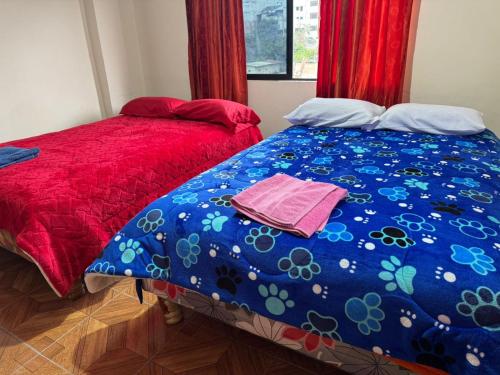
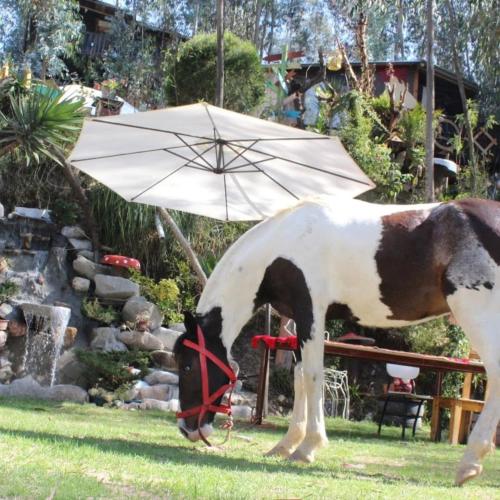

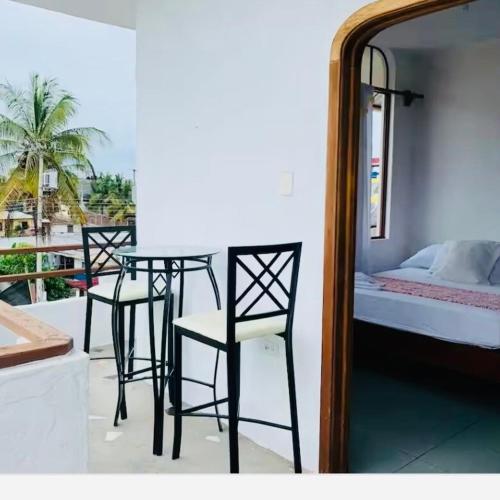

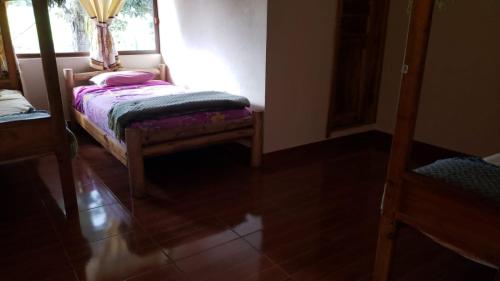


Live rates across our partner network (Booking.com, VRBO, Expedia, Hotels.com) via Stay22. Makutet may earn a commission when you book — at no extra cost to you. Prices update in real time and may vary before booking.
Experience

Guided cultural day
Begin in Quito for a guided day connecting the city with Mitad del Mundo; allow a full day including road transfers. It can be arranged year-round, with a guide and transport reserved ahead, particularly in the wetter months when road time may be less predictable.
culture-focused travellers · first-time visitors

Scenic drive
Travel the Avenue of the Volcanoes by road, using Quito as the starting point and Cotopaxi or Chimborazo as named anchors. Plan a full day for a focused guided outing or longer for a slower route; arrange a driver and any guided access ahead, and favour the drier June-to-September period for clearer mountain conditions.
road-trip travellers · landscape photographers

Cruise
Join a multi-day cruise from the mainland to explore the Galapagos Islands; the sea crossing and island visits make this a separate trip rather than a day excursion from Quito. Sailings operate through the year, but reserve the vessel and itinerary well ahead, especially for the drier June-to-November season.
wildlife travellers · comfortable explorers

Guided nature journey
Use a guided, multi-day visit to Yasuni National Park, travelling from the mainland into the Oriente and onward by river where required by the chosen lodge. Allow several days rather than treating it as a day trip; reserve accommodation, transfers and a local guide ahead, with the wetter December-to-May period requiring particular attention to river access.
nature travellers · birdwatchers
Things to do
What Makutet's Ecuador research recommends, and where the tours that cover it can actually be booked.
Editorial recommendations from Makutet's Ecuador research. Tickets and tours are searched on GetYourGuide.
Guided Quito and Mitad del Mundo day
Begin in Quito for a guided day connecting the city with Mitad del Mundo; allow a full day including road transfers. It can be arranged year-round, with a guide and transport reserved ahead, particularly in the wetter months when road time may be less predictable.
Avenue of the Volcanoes overland drive
Travel the Avenue of the Volcanoes by road, using Quito as the starting point and Cotopaxi or Chimborazo as named anchors. Plan a full day for a focused guided outing or longer for a slower route; arrange a driver and any guided access ahead, and favour the drier June-to-September period for clearer mountain conditions.
Galapagos Islands multi-day cruise
Join a multi-day cruise from the mainland to explore the Galapagos Islands; the sea crossing and island visits make this a separate trip rather than a day excursion from Quito. Sailings operate through the year, but reserve the vessel and itinerary well ahead, especially for the drier June-to-November season.
Yasuni National Park guided river and forest stay
Use a guided, multi-day visit to Yasuni National Park, travelling from the mainland into the Oriente and onward by river where required by the chosen lodge. Allow several days rather than treating it as a day trip; reserve accommodation, transfers and a local guide ahead, with the wetter December-to-May period requiring particular attention to river access.
Cuenca
A city in the southern highlands recognized for its well-preserved colonial architecture and historic center.
Yasuni National Park
A large protected area in the Amazon rainforest region containing high biodiversity and various indigenous territories.
Activity cards are editorial — Makutet is not selling these specific experiences. The partner search opens GetYourGuide for Ecuador, where availability and price are theirs.
Understand
The context that turns a visit into an understanding.

macro_region
The coastal lowland region situated between the Pacific Ocean and the Andean foothills, characterized by plains and tropical forests.

macro_region
The high-altitude Andean mountain range running north to south through the center of the country, featuring volcanic peaks and plateaus.

macro_region
The eastern lowland region consisting of the Amazon rainforest basin, covering the eastern portion of the national territory.

sub_region
A stretch of the Andean highlands containing multiple mountain peaks and volcanic formations located between two main ranges.

Food
Encebollado, a tuna and onion soup, is closely associated with Ecuador's Costa. It is a substantial local meal rather than a light snack; ask for the accompaniments separately if you want to understand how each bowl is served.

Food
Locro de papa is a potato-based highland soup associated with the Sierra. Its warming, filling character makes it a natural choice after a cool day around Quito or the Avenue of the Volcanoes.

Drink and food culture
Ecuador is known for cacao, and chocolate is a useful way to encounter that agricultural tradition. Look for tasting or maker-led introductions in Quito, and ask about the cacao's origin rather than assuming every bar represents the same region or process.

Custom and tradition
Markets across the Sierra bring together food, household goods and regional craft, with trading practices rooted in everyday community life. Ask before photographing people, and approach a purchase as an exchange rather than treating a market stall as a display.

Urban culture
Quito combines a high-altitude setting with a historic urban core and contemporary city life. Allow time to move between areas by road, and take the change in elevation and steep streets into account when planning a walking day.
When to go
June to September
Drier highlands
A strong period for the Sierra
October to May
Wetter highlands
Expect more rain in the Sierra
December to May
Warmer, wetter islands
Galapagos conditions shift
June to November
Cooler, drier islands
A different island season
Practical
Money, transport, connectivity and the details that matter on the ground.
Budget
Ecuador uses the US dollar. Cards are useful in larger businesses in Quito and other established visitor services, but carry cash for smaller purchases, markets, local transport and remote stays in the Oriente or the Galapagos Islands. The largest costs are usually flights, island cruises, remote-lodge transfers and guided mountain or rainforest days; island and remote-region logistics cost more in time and money than a Quito-based stay. June-to-November island sailings can be in higher demand, so reserve well ahead.
Transport
Road travel links Quito with Mitad del Mundo, the Sierra and the Avenue of the Volcanoes; longer journeys to the Costa and Oriente need more planning than a city transfer. The Galapagos Islands require a separate mainland flight and onward island arrangements, while Yasuni National Park involves river access coordinated with a lodge. Ecuador drives on the right; book specialist transfers and remote-region connections ahead rather than relying on spontaneous connections.
Safety
Use established, pre-arranged transport for late arrivals and remote journeys, especially when continuing from the mainland to Yasuni National Park or a Galapagos Islands sailing. Ecuador's emergency number is 911. Keep valuables discreet in busy areas, follow local guidance around mountain and rainforest outings, and check current conditions with your guide before setting out.
Connectivity
Mobile coverage is most dependable in urban areas such as Quito and becomes less consistent in the Oriente, around Yasuni National Park and between Galapagos Islands sites. Arrange an eSIM or local service before leaving the mainland, but do not rely on continuous data for remote transfers. Ecuador uses 120-volt electricity and plug types A and B; carry a suitable adaptor and charge devices when accommodation provides reliable power.
Seasonal weather
Ecuador's regional seasons differ sharply. The Costa and Oriente are generally wetter from December to May and drier from June to November; in the Sierra, including Quito, the wetter period is broadly October to May and the drier, clearer period June to September. The Galapagos Islands are warmer and wetter from December to May, then cooler and cloudier from June to November. Pack for these contrasts: rain protection for wet-season travel and warm layers for highland evenings and cooler island conditions.
Accessibility and mobility
Travellers with reduced mobility should expect significant barriers: Quito and the Sierra have steep terrain, uneven pavements and altitude, while mountain outings around Cotopaxi and Chimborazo involve rough ground. Road transport may not have wheelchair access, and access to Yasuni National Park and the Galapagos Islands can involve steps, boats, uneven landings or river transfers. Pushchairs and older companions may find long transfers and unpaved approaches tiring; confirm step-free rooms, vehicle access and assistance directly with each accommodation and operator before booking.
Getting around
Airport transfers, rail, buses, ferries and car hire for Ecuador — arranged before you fly, priced by the supplier.
Stay connected
Install an eSIM before you fly and you are online the moment you land in Ecuador — no roaming charges, no shop queue at the airport.
Moments
Ecuador's story is written in geography as much as in its cities: the Costa looks to the Pacific, the Sierra rises through the Andes, and the Oriente opens into forest, while the Galapagos Islands extend the country's character offshore. To travel here is to encounter these regions as connected parts of a nation, not interchangeable scenery.
The signature moment
At first light in the Sierra, let the high country set the pace. From the landscape around Cotopaxi, the air feels thin and cool against the face; the mountain's broad presence draws the eye above the muted colours of the land. Listen for the quiet broken by wind and the small sounds of movement nearby. There is no need to hurry towards a viewpoint or to make the scene perform: the experience is the steady contrast between the open highland and the immense volcanic form. Taste the clean chill of the morning in a sip of water, feel it in your hands, and notice how quickly the light changes the slopes. This moment contains Ecuador because it begins with a specific place and opens into the country's larger logic. From the Sierra, the Costa, Oriente and Galapagos Islands are not distant abstractions but other worlds within the same national geography. The mountain makes that scale tangible: Ecuador is compact on a map, yet its regions ask the traveller to keep changing their expectations.
The story behind it
Ecuador's heritage has been shaped by Indigenous societies, Spanish colonial rule and the making of a modern republic. The highland setting of Quito and the wider Sierra carry visible layers of this history, while the country's Pacific coast and eastern forest belong to a broader national geography that has never been reducible to the capital. Colonial institutions and cultural inheritance sit alongside Indigenous histories and living identities; a neutral account must acknowledge both the profound disruption of conquest and the persistence of communities and traditions. Ecuador's present-day identity also rests on the distinctive relationship between its mainland regions and the Galapagos Islands, a national frame in which geography remains central to how the country is understood.
Before you go
Let Ecuador unfold by region rather than by a race between names. Give the Sierra time to establish its altitude and pace; then decide whether the next change should be towards the Pacific-facing Costa, the forested Oriente or the Galapagos Islands. The strongest memory may be a mountain held in morning light, the character of Quito, or the shift from mainland to island. What matters is leaving enough room for the country's contrasts to become experiences, not merely points joined on an itinerary.
Equator in the name
Ecuador takes its name from its position astride the equator. Mitad del Mundo and Quito make that geographical identity especially legible to visitors.
Four distinct settings
The country's geography includes the Costa, Sierra, Oriente and Galapagos Islands, with the Avenue of the Volcanoes marking a defining highland landscape.
June to September
Drier highland window
The Sierra is generally at its clearest and driest in this period, making it a practical choice for time around Quito, Cotopaxi and the Avenue of the Volcanoes. Pack for cool highland conditions.
October to May
Mixed mainland conditions
Conditions vary across Ecuador: the Costa is typically wetter, while the Sierra has a wetter season. Build the itinerary around regional forecasts and allow flexibility between highlands, coast and Oriente.
December to May
Wettest island seas
The warmer, wetter season in the Galapagos Islands can bring rougher sea conditions. If island travel is central, plan transfers and activities with changing conditions in mind rather than treating the islands as a simple mainland extension.
FAQ
For clearer highland conditions, June to September is generally the drier period in the Sierra. The Costa and Oriente are broadly drier from June to November; the Galapagos Islands are warmer and wetter from December to May.
Plan a separate flight from mainland Ecuador and reserve your island arrangements in advance; a cruise is a multi-day trip, not a day excursion from Quito.
Ecuador uses the US dollar. Cards are useful in larger businesses, while cash remains practical for markets, smaller purchases and remote journeys.
It is better planned as a multi-day guided stay: access can involve mainland road travel and onward river transport arranged with a lodge.
Pack layers and rain protection. Quito and the Sierra have a wetter period broadly from October to May, while highland evenings can be cool even during the drier months.
Not consistently. Steep terrain, uneven pavements, limited accessible transport and boat or river transfers can pose obstacles; confirm step-free access and assistance with each operator before booking.
Before you go
The last thing most travellers forget — and the disclosure that applies to every partner link on this page.
Booking and rate checks run on the partner's own site; prices and availability are theirs and can change. Some links are affiliate links and Makutet may earn a commission at no extra cost to you. See our affiliate disclosure.
Makutet builds a day-by-day itinerary around the places above — then keeps it updated as you travel.
Country guide: /country/ecuador
Your assessment works without optional tracking. Necessary storage keeps your trip and privacy choice. Embedded flight search includes TravelPayouts tracking; ordinary partner links remain available if you decline.
Cookie policy · Privacy policy. Reopen Cookie settings to change your choice. Supplier-site cookies are controlled by that supplier.