
Historical Site
Casbah of Algiers
A historic citadel and UNESCO World Heritage site known for its winding streets and traditional Ottoman-era architecture.

africa
Algeria is a country of Mediterranean edge and Saharan breadth, where the Tell, Hauts Plateaux and desert regions give travel a distinctly changing scale. Its Roman remains, old urban fabric and immense southern landscapes belong to one national story, but call for different kinds of journey.
The country
The country
Algeria faces the Mediterranean in North Africa, yet its defining scale lies in the vast landmass that runs south into the Sahara. The Tell, Hauts Plateaux and desert regions form a country of marked contrasts: coastal cities and archaeological sites give way to inland plateaux, mountain country and immense desert terrain.
Why visit
Algeria rewards a traveller who is willing to think in regions rather than in a single itinerary. The Mediterranean coast is the northern threshold: around Algiers, the Casbah brings the experience into a dense historic urban setting, while Tipasa places ancient remains beside the sea. Further east, Timgad and Djemila open another register, where the scale and arrangement of Roman cities can be read across the landscape. These places are not interchangeable stops; together they show how the northern part of the country carries successive forms of settlement and public life. Beyond the coast, the country changes in both distance and character. The Hauts Plateaux mark an inland transition, while the Sahara occupies much of the south. The M'zab Valley, the Grand Erg Occidental, Tassili n'Ajjer and the Ahaggar Mountains point to different ways of encountering this vast interior: inhabited valley, open sand sea, distinctive regional terrain and mountain landscape. A visit here is not simply a search for scenery. It is an encounter with the practical reality of scale, where moving between regions requires planning and where the landscape itself shapes the pace of the day. Algeria therefore suits journeys built around attention rather than accumulation. The contrast between the Mediterranean and the Sahara is real, but so is the variety within each: urban fabric, archaeological heritage, plateaux, valleys and desert horizons. To travel through Algeria is to see how a single country can hold these different geographies without reducing them to one image.
What it feels like
On the coast, Mediterranean light meets the close texture of city streets and the open setting of Tipasa. Inland, the horizon broadens across the Hauts Plateaux; farther south, the Sahara and the Ahaggar Mountains give the day a more elemental scale. Algeria's atmosphere is shaped by these shifts—from urban density to archaeological quiet and the silence of desert distances—rather than by one uniform scene.
Who it suits
Algeria suits culturally curious travellers, independent-minded planners and people drawn to landscape on a large scale. It is especially rewarding for those prepared to devote time to the Casbah of Algiers, the Roman remains at Timgad or Djemila, and a carefully planned journey towards the Sahara, Tassili n'Ajjer or the Ahaggar Mountains. It is less suited to travellers seeking a compact itinerary with short, effortless transfers.
How to get here
Live fares into Algeria across hundreds of airlines, compared in one search. Book directly with the airline or agent — Makutet never adds a fee.
Live fares to Algeria across hundreds of airlines. Book directly with the airline or agent — no extra cost to you.
Embedded flight search uses TravelPayouts cookies and tracking. Enable partner search to load it here, or continue directly on the partner site.
The external partner link includes Makutet's affiliate marker; confirm your route, dates and passengers there. No booking is made on Makutet.
Live search and booking run on the TravelPayouts partner engine. Fares update in real time and may vary before booking. Any prices shown elsewhere on Makutet are monitored observations, not live quotes.
Identity
The places that define the country rather than merely sit inside it.
Historical Site
A historic citadel and UNESCO World Heritage site known for its winding streets and traditional Ottoman-era architecture.

Ancient Ruins
An extensive Roman colonial town featuring well-preserved grid-pattern ruins dating back to the second century AD.

Ancient Ruins
A mountain site containing ruins of a Roman town adapted to a rugged terrain, showcasing distinctive urban planning.

Nature
A mountainous highland region in the central Sahara characterized by volcanic rock formations and high elevation.
Imagery


Discover

Cultural Heritage
A pentapolis of fortified hill-top settlements known as ksour, built in the 10th century according to Ibadite architectural styles.

Urban
A major coastal port city in northwestern Algeria known for its unique Mediterranean climate and historic colonial influence.

Historical Site
A former Punic trading post that became a Roman provincial capital, notable for its coastal ruins and proximity to the sea.

Nature
A massive sand dune sea located in the northern Sahara region, covering a vast area of shifting landscape.
Stay
The bases that actually change the trip.

Guesthouse
Choose a small guesthouse in or near the Casbah of Algiers for a stay shaped by historic lanes and steep, often uneven walking. Reach the area from the coast-side city transport network, then expect to cover the final stretch on foot; confirm luggage assistance and step-free access before booking. Spring and autumn suit exploring the district on foot.
culture-focused travellers · light packers

Desert camp
A camp stay in Tassili n'Ajjer is part of a guided desert itinerary, not an independently reached hotel stop. Confirm transport, meals, water, sleeping arrangements and the route with the organiser in advance. Cooler-season travel is better suited to time outdoors; expect basic facilities and limited access to services compared with an urban stay.
adventurous travellers · trekkers

Mountain lodge or camp
Staying near the Ahaggar Mountains prioritises access to guided desert drives and walking over convenience between urban sights. Arrange the approach journey and any onward excursion before arrival, and check what meals and supplies are included. The cooler season is the more practical period for outdoor itineraries; remote access can take time and limit last-minute changes.
landscape travellers · guided-excursion guests

Town hotel
A town hotel on the Hauts Plateaux offers an urban base between inland journeys, rather than a resort stay. Reach it by arranging intercity transport or a driver, then plan site visits separately: the region's distances make day trips dependent on transport availability. Spring and autumn are generally more comfortable for overland touring than summer heat.
independent travellers · overland visitors
Where to stay
Live rates across Booking.com, Agoda, VRBO and Expedia for Algeria. Compare the areas above, then check what a night actually costs.
Popular destinations
Live rates across Booking.com, Agoda, VRBO and Expedia for Algeria — no extra cost to you.
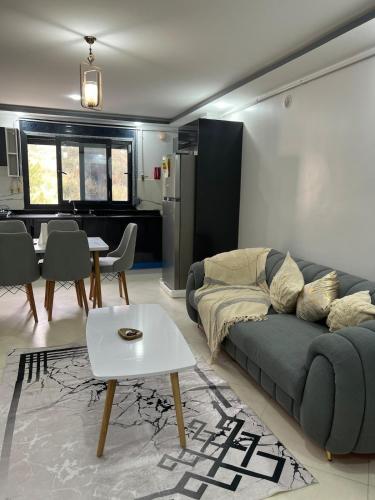


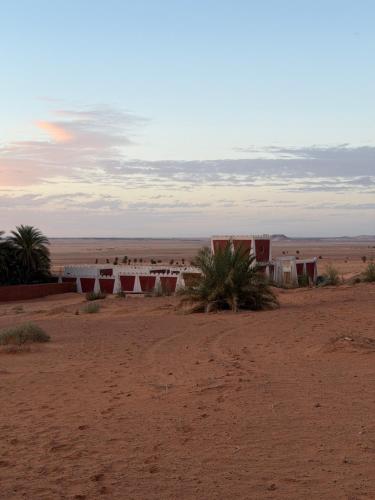
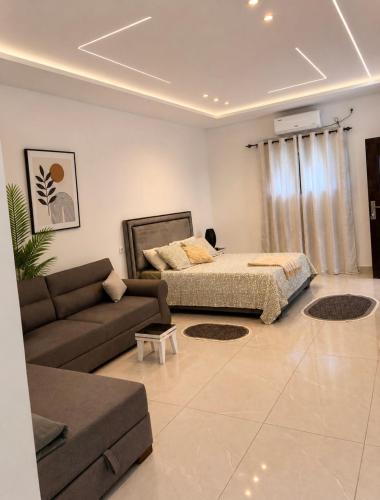

Live rates across our partner network (Booking.com, VRBO, Expedia, Hotels.com) via Stay22. Makutet may earn a commission when you book — at no extra cost to you. Prices update in real time and may vary before booking.
Experience

Guided walking tour
Start in the Casbah of Algiers for a guided half-day on foot through its historic lanes and hillside setting. Arrange a local guide and meeting details ahead; allow extra time for steep steps and uneven surfaces. The cooler spring and autumn months are more comfortable for extended walking.
history-minded travellers · walkers

Guided trek
Use Tassili n'Ajjer as the base for a guided, multi-day walking journey across desert terrain. This is a remote trip requiring advance arrangements for a guide, transport, supplies and overnight plans; confirm the route and seasonal operating conditions before committing. Cooler months are generally the practical choice for sustained desert walking.
active travellers · landscape photographers

Guided heritage day
Plan a full guided day centred on Timgad, allowing time to explore the archaeological site on foot rather than treating it as a brief stop. Arrange a guide and transport in advance, particularly if travelling from outside the immediate area. Spring and autumn make a long outdoor visit more comfortable than the hottest part of summer.
history enthusiasts · cultural travellers

Guided 4WD excursion
Set out from the Ahaggar Mountains on a guided desert drive, with the route, vehicle, guide and any overnight arrangements agreed before departure. Distances and remote conditions make this a planned excursion rather than an improvised hire-car outing. Choose the cooler season and confirm access and operating conditions with the organiser.
photographers · comfort-seeking adventurers
Things to do
What Makutet's Algeria research recommends, and where the tours that cover it can actually be booked.
Editorial recommendations from Makutet's Algeria research. Tickets and tours are searched on GetYourGuide.
Guided Casbah of Algiers walk
Start in the Casbah of Algiers for a guided half-day on foot through its historic lanes and hillside setting. Arrange a local guide and meeting details ahead; allow extra time for steep steps and uneven surfaces. The cooler spring and autumn months are more comfortable for extended walking.
Tassili n'Ajjer guided trek
Use Tassili n'Ajjer as the base for a guided, multi-day walking journey across desert terrain. This is a remote trip requiring advance arrangements for a guide, transport, supplies and overnight plans; confirm the route and seasonal operating conditions before committing. Cooler months are generally the practical choice for sustained desert walking.
Timgad archaeological day with a guide
Plan a full guided day centred on Timgad, allowing time to explore the archaeological site on foot rather than treating it as a brief stop. Arrange a guide and transport in advance, particularly if travelling from outside the immediate area. Spring and autumn make a long outdoor visit more comfortable than the hottest part of summer.
Ahaggar Mountains escorted desert drive
Set out from the Ahaggar Mountains on a guided desert drive, with the route, vehicle, guide and any overnight arrangements agreed before departure. Distances and remote conditions make this a planned excursion rather than an improvised hire-car outing. Choose the cooler season and confirm access and operating conditions with the organiser.
M'zab Valley
A pentapolis of fortified hill-top settlements known as ksour, built in the 10th century according to Ibadite architectural styles.
Oran
A major coastal port city in northwestern Algeria known for its unique Mediterranean climate and historic colonial influence.
Activity cards are editorial — Makutet is not selling these specific experiences. The partner search opens GetYourGuide for Algeria, where availability and price are theirs.
Understand
The context that turns a visit into an understanding.

macro_region
A narrow, fertile coastal region in the north that contains the majority of the country's population and main cities.

macro_region
A vast arid desert region covering over four-fifths of Algeria's total land area, characterized by ergs and plateaus.

sub_region
A semi-arid zone located between the Tell and the Saharan Atlas mountain ranges, featuring endorheic basins.

sub_region
A southern plateau region known for its prehistoric rock art and unique sandstone geologic formations.

Food
Couscous is a central Algerian meal, commonly served with vegetables and broth and shared at the table. Treat it as a substantial sit-down meal rather than a quick snack; in a family setting, follow the host's lead on serving and eating.

Drink and hospitality
Mint tea is a familiar expression of hospitality, including on desert journeys around Tassili n'Ajjer and the Ahaggar Mountains. A tea stop may be part of the welcome and conversation, so allow time for it rather than scheduling every pause as a brief refreshment break.

Neighbourhood character
The Casbah of Algiers is both a historic district and a lived-in neighbourhood. Its compact lanes, slopes and stairs reward slow exploration, but visitors should keep voices and photography considerate around homes and daily activity; a local guide can help with orientation.

Custom and calendar
During Ramadan, daytime eating and service routines change, while evenings become more active around the meal that breaks the fast. Travellers should check opening arrangements locally and avoid eating conspicuously in public during fasting hours; the timing and character of the visit depend on the lunar calendar.
When to go
April–May
Spring
A useful season for coast and interior
September–October
Autumn
A measured balance across regions
November–March
Cooler months
Consider for the Sahara
June–August
High summer
Heat shapes the itinerary
Practical
Money, transport, connectivity and the details that matter on the ground.
Budget
The currency is the Algerian dinar. Do not assume a foreign bank card will work everywhere: confirm card acceptance before relying on it and keep cash available for smaller purchases, local transport and places outside major urban centres. Spend is shaped by transport distances, guided desert logistics around Tassili n'Ajjer or the Ahaggar Mountains, and the level of accommodation; remote-region arrangements can cost more in time and services than a city stay. Carry cash for tips and incidental expenses, and check exchange arrangements through legitimate providers.
Transport
Algeria's large landmass makes overland distances a central part of planning: the Mediterranean-facing north and the Sahara are not a quick hop apart. Use urban transport for city movement, and organise intercity journeys and guided vehicles ahead for places such as Timgad, Tassili n'Ajjer and the Ahaggar Mountains. Drive on the right; remote desert travel should be arranged with an experienced operator rather than treated as an ordinary self-drive excursion.
Safety
For visits to the Casbah of Algiers, Timgad or remote desert regions, plan routes and transport in advance and follow current local advice. Desert outings around Tassili n'Ajjer and the Ahaggar Mountains require a guide, suitable supplies and a confirmed return plan; do not set out alone or assume services will be close at hand. Keep valuables discreet in crowded settings and check local conditions before travelling between regions.
Connectivity
Mobile coverage and data availability can be less dependable away from Algeria's urban north, especially on journeys into the Sahara. Arrange an eSIM or local connectivity option before departure where possible, but keep offline maps and confirmed meeting details for trips around Tassili n'Ajjer and the Ahaggar Mountains. Algeria uses plug types C and F; check that your adapter and devices are compatible. Use bottled or otherwise treated water when unsure about local tap-water safety.
Seasonal weather
Algeria has a Mediterranean-influenced north and a predominantly arid Sahara to the south. Winter, from December to February, is cooler and can bring rain to the north; spring, March to May, and autumn, September to November, are generally the most comfortable periods for combining coastal cities, inland heritage and outdoor travel. Summer, June to August, brings strong heat, especially in the Sahara and on exposed inland sites, so plan outdoor activity early and confirm desert itineraries with operators. The north-to-south climate contrast means one itinerary may need different clothing and pacing.
Accessibility and mobility
Travellers with reduced mobility, wheelchair users, pushchairs and older companions should expect significant access limits. The Casbah of Algiers has steep slopes, steps and uneven lanes; archaeological and desert sites such as Timgad, Tassili n'Ajjer and the Ahaggar Mountains involve rough or exposed ground. Public transport, pavements and accommodation may not provide consistent step-free access, so request specific access details directly before booking and arrange vehicle-based transfers where possible. A companion and flexible itinerary can help, but remote terrain remains a genuine obstacle.
Getting around
Airport transfers, rail, buses, ferries and car hire for Algeria — arranged before you fly, priced by the supplier.
Stay connected
Install an eSIM before you fly and you are online the moment you land in Algeria — no roaming charges, no shop queue at the airport.
Moments
Algeria's story is written across a country too large for one landscape to stand for all the others. The Mediterranean north, the inland Hauts Plateaux and the Sahara each set a different pace; the Casbah of Algiers, Timgad, Djemila and the Ahaggar Mountains make those contrasts legible through places rather than slogans.
The signature moment
At first light in the Ahaggar Mountains, the rock holds the last coolness of night. As the sun reaches the ridges, the stone shifts from shadow to warm colour, and the lines of the mountains emerge one after another against a wide, clear sky. The air feels dry on the skin; underfoot, the ground is firm and uneven. There is little to interrupt the quiet, so small sounds—a footstep, a breath, the faint movement of air—seem unusually distinct. Take water and pause rather than hurrying from one view to the next: the changing light is the event. No invented itinerary or distant landmark is needed to make the scene legible. In that measured attention lies something of Algeria as a whole. The Ahaggar is one named region within a country of many, yet its scale speaks to the vast southern interior, while the contrast with the Mediterranean north and the inhabited places between them explains why Algeria cannot be reduced to desert alone. Here, the landscape makes distance tangible and asks the traveller to travel at its pace.
The story behind it
Algeria's heritage is not a single, uninterrupted narrative. Its landscapes preserve evidence of different societies and forms of settlement, most visibly in the Roman remains at Timgad and Djemila, while the Casbah of Algiers speaks to a distinct urban inheritance on the Mediterranean coast. These places should be approached on their own terms: archaeological remains are not simply scenery, and a living historic district is not a museum frozen in time. The country’s varied regions have shaped different histories of habitation and movement, from the Tell to the Sahara. A neutral account also recognises that Algeria's national past includes difficult histories and contested memories; the evidence available here does not justify assigning dates or simplifying those experiences into a single founding story.
Before you go
Algeria is best approached without trying to compress it into a single image. Let the coast, the Tell, the plateaux and the Sahara remain distinct in your mind; each gives a different account of the country. A journey may begin with the Casbah of Algiers or the shore at Tipasa and continue towards the quiet breadth of the interior. What matters is not how many regions are covered, but the attention given to each change of ground and light.
A continent-scale country
Algeria is the largest country in Africa, and the Sahara dominates much of its vast southern landmass; the Mediterranean coast is only one part of its geography.
More than desert
The country's recorded regions include the Tell, the Hauts Plateaux, the Sahara and Tassili n'Ajjer—a range of named landscapes that resists any single-image account of Algeria.
April–May and September–October
Favourable balance
These shoulder seasons generally offer a more manageable balance for combining the Mediterranean north with inland travel. Even so, the Sahara has its own conditions; plan desert movement separately rather than assuming coastal weather applies across Algeria.
November–March
Cooler season
Cooler months can make the southern desert more comfortable for exploration, while the northern coast is cooler and can be wetter. Keep the regions distinct in your plans, and allow for changing conditions as you move inland from the Tell.
June–August
Peak summer heat
Summer heat is intense across the Sahara and can make exposed journeys demanding. If travelling then, favour a carefully arranged coastal-focused itinerary and do not treat desert routes or long inland transfers as casual day trips.
FAQ
Spring and autumn are generally the most comfortable for combining northern cities, inland sites and outdoor travel. Summer heat is strongest in the Sahara and exposed inland areas.
Allow substantial time for overland distances and arrange transport in advance. Desert trips from Tassili n'Ajjer or the Ahaggar Mountains need a guide and a confirmed itinerary.
Access is difficult: the Casbah has steep slopes, stairs and uneven lanes. Confirm specific access and transfer arrangements before visiting.
Yes. The currency is the Algerian dinar, and card acceptance is not universal; keep cash for smaller purchases, local transport and incidental costs.
Confirm the guide, vehicle, route, duration, supplies and overnight arrangements in advance, and check seasonal operating conditions for Tassili n'Ajjer or the Ahaggar Mountains.
Daytime eating and service routines change, while evenings become more active. Check opening arrangements locally and be considerate about eating in public during fasting hours.
Before you go
The last thing most travellers forget — and the disclosure that applies to every partner link on this page.
Booking and rate checks run on the partner's own site; prices and availability are theirs and can change. Some links are affiliate links and Makutet may earn a commission at no extra cost to you. See our affiliate disclosure.
Makutet builds a day-by-day itinerary around the places above — then keeps it updated as you travel.
Country guide: /country/algeria
Your assessment works without optional tracking. Necessary storage keeps your trip and privacy choice. Embedded flight search includes TravelPayouts tracking; ordinary partner links remain available if you decline.
Cookie policy · Privacy policy. Reopen Cookie settings to change your choice. Supplier-site cookies are controlled by that supplier.