
urban
Kabul
The capital and largest city of the country, located in a high mountain valley at the confluence of the Kabul and Logar rivers.

asia
Afghanistan is a landlocked country of high ranges, desert plateaux and valleys shaped by distance and encounter. Its places—from Kabul and Herat to the Wakhan Corridor—reward attention to landscape as much as to history.
The country
The country
At the meeting point of Central and South Asia, Afghanistan is a landlocked, mountainous country whose geography is inseparable from its character. The Hindu Kush Range, Southern Desert Plateau, Wakhan Corridor and Registan Desert frame a varied landscape, while Kabul, Bamiyan Valley, Herat and Kandahar give its national story distinct points of reference.
Why visit
Afghanistan is best understood through the contrasts held within its geography. The Hindu Kush Range gives the country its mountainous scale; beyond it, the Southern Desert Plateau and Registan Desert make clear that this is not a landscape defined by peaks alone. To the far east, the Wakhan Corridor extends Afghanistan towards China, while the country's position between Central and South Asia places it at a crossroads of routes, communities and histories. Travelling here means paying attention to how distance and terrain shape experience: a valley is not simply a view, but a world bounded by mountains; a city is not an isolated stop, but a point of connection within a much larger land. The named places offer different ways into that character. Kabul and Kandahar anchor an understanding of the country's urban and regional life; Herat and Mazar-i-Sharif broaden the picture of its inhabited geography. Bamiyan Valley brings the traveller into a landscape where cultural memory and physical setting meet. Band-e Amir National Park, the Minaret of Jam and Panjshir Valley show other dimensions of the country, from striking natural formations to places whose significance is inseparable from their surroundings. None should be treated as a quick checklist: the distances, terrain and conditions call for a deliberate itinerary and careful preparation. Afghanistan suits visitors willing to approach its complexity without reducing it to scenery or a single historical narrative. Its reward is a deeper sense of how mountain, desert, corridor and city coexist in one country, and how geography has continually influenced the ways people move through it.
What it feels like
The atmosphere shifts with the terrain: mountain horizons and enclosed valleys give way to broad, dry plateaux and desert. In Kabul, Herat, Kandahar and Mazar-i-Sharif, the city becomes the focus; in Bamiyan Valley and Panjshir Valley, landforms command attention. Afghanistan's position at a regional crossroads is felt in the variety of its settings and the weight of its historical associations.
Who it suits
Afghanistan is suited to experienced, well-prepared travellers with a serious interest in geography, cultural heritage and history, and the patience to plan around distance and changing conditions. It is not a destination for an improvised itinerary: travellers should assess current conditions carefully and arrange suitable local guidance and transport before setting out.
How to get here
Live fares into Afghanistan across hundreds of airlines, compared in one search. Book directly with the airline or agent — Makutet never adds a fee.
Live fares to Afghanistan across hundreds of airlines. Book directly with the airline or agent — no extra cost to you.
Embedded flight search uses TravelPayouts cookies and tracking. Enable partner search to load it here, or continue directly on the partner site.
The external partner link includes Makutet's affiliate marker; confirm your route, dates and passengers there. No booking is made on Makutet.
Live search and booking run on the TravelPayouts partner engine. Fares update in real time and may vary before booking. Any prices shown elsewhere on Makutet are monitored observations, not live quotes.
Identity
The places that define the country rather than merely sit inside it.
urban
The capital and largest city of the country, located in a high mountain valley at the confluence of the Kabul and Logar rivers.

heritage
A historic site known for its ancient Buddhist archaeological remains and cliff-carved niches located in the central highlands.

urban
A historical city in the western region known for its medieval architecture, including the Citadel of Herat and the Great Mosque.

urban
The second-largest city in the country, serving as a major historical and commercial hub in the southern plains.
Imagery


Discover

park
A series of six deep blue interconnected lakes separated by natural travertine dams located in the Bamiyan Province.

heritage
A 65-meter tall UNESCO World Heritage brick tower dating back to the 12th century, located in a remote valley of Ghor province.

valley
A deep valley in the Hindu Kush mountains known for its rugged terrain, clear rivers, and strategic historical significance.

urban
A city in the north famous for the Blue Mosque, a significant religious site featuring intricate tile work and large courtyards.
Stay
The bases that actually change the trip.

Guesthouse
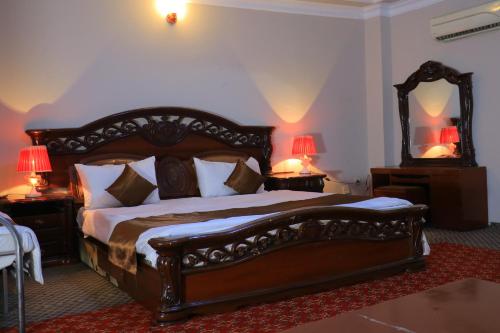
A guesthouse in Kabul offers an urban base for arranging onward transport and local guidance. Reaching the city involves a flight or a long overland journey; spring and autumn are more comfortable for moving around outdoors. Allow time for arrival arrangements and confirm security, access and services directly before booking.
independent travellers · cultural visitors

Guesthouse
A locally run guesthouse in Bamiyan Valley makes early starts for valley visits possible, but reaching it requires a dedicated overland journey or a separately arranged flight and onward transfer. Spring and autumn suit outdoor exploration best. Reserve transport and a room together where possible, and check current access before travel.
heritage visitors · slow travellers

Guesthouse
Staying in a guesthouse in Herat gives a traveller a settled city base rather than attempting a hurried stop on a long overland route. Spring and autumn are generally more comfortable for exploring on foot. Plan the journey separately, allow time for road transfers, and verify transport and accommodation availability before arrival.
city explorers · culture-minded travellers

Lodge
A simple locally arranged lodge in the Panjshir Valley trades urban convenience for proximity to the valley landscape. It is best considered for a spring or autumn visit; getting there takes a planned road transfer, and choice of services may be limited. Confirm the route, room and return transport in advance.
outdoor travellers · photographers
Where to stay
Live rates across Booking.com, Agoda, VRBO and Expedia for Afghanistan. Compare the areas above, then check what a night actually costs.
Popular destinations
Live rates across Booking.com, Agoda, VRBO and Expedia for Afghanistan — no extra cost to you.




Live rates across our partner network (Booking.com, VRBO, Expedia, Hotels.com) via Stay22. Makutet may earn a commission when you book — at no extra cost to you. Prices update in real time and may vary before booking.
Experience

Guided walking
Start from a locally arranged base in the Hindu Kush Range for a guided day walk. Allow a full day for the outing and transfers; choose the milder spring or autumn conditions, and reserve a guide, transport and route arrangements ahead. The route and access should be confirmed before setting out.
active travellers · landscape photographers

Guided drive
Arrange a private, guided day drive through the Panjshir Valley, with time for stops and short walks rather than a rushed transit. Spring and autumn are the more comfortable seasons for a valley outing; reserve the vehicle, driver and guide in advance and confirm current road access.
road-trippers · photographers

Guided cultural day
Use Bamiyan Valley as the starting point for a full guided day focused on its landscape and recorded heritage. Spring and autumn are generally more suitable for time outdoors. Arrange a guide and transport ahead, and confirm what sites are accessible before committing to the day.
culture-minded travellers · history enthusiasts

Multi-day guided journey
Plan an escorted, multi-day journey through the Wakhan Corridor, allowing substantial time for remote-road travel and changes in access. The warmer part of the year is the practical season to investigate, but conditions vary; arrange local guiding, transport, accommodation and permissions well ahead, then reconfirm before departure.
experienced travellers · remote-landscape enthusiasts
Things to do
What Makutet's Afghanistan research recommends, and where the tours that cover it can actually be booked.
Editorial recommendations from Makutet's Afghanistan research. Tickets and tours are searched on Klook.
Hindu Kush guided mountain walk
Start from a locally arranged base in the Hindu Kush Range for a guided day walk. Allow a full day for the outing and transfers; choose the milder spring or autumn conditions, and reserve a guide, transport and route arrangements ahead. The route and access should be confirmed before setting out.
Panjshir Valley landscape drive
Arrange a private, guided day drive through the Panjshir Valley, with time for stops and short walks rather than a rushed transit. Spring and autumn are the more comfortable seasons for a valley outing; reserve the vehicle, driver and guide in advance and confirm current road access.
Bamiyan Valley heritage day
Use Bamiyan Valley as the starting point for a full guided day focused on its landscape and recorded heritage. Spring and autumn are generally more suitable for time outdoors. Arrange a guide and transport ahead, and confirm what sites are accessible before committing to the day.
Wakhan Corridor escorted journey
Plan an escorted, multi-day journey through the Wakhan Corridor, allowing substantial time for remote-road travel and changes in access. The warmer part of the year is the practical season to investigate, but conditions vary; arrange local guiding, transport, accommodation and permissions well ahead, then reconfirm before departure.
Band-e Amir National Park
A series of six deep blue interconnected lakes separated by natural travertine dams located in the Bamiyan Province.
Minaret of Jam
A 65-meter tall UNESCO World Heritage brick tower dating back to the 12th century, located in a remote valley of Ghor province.
Activity cards are editorial — Makutet is not selling these specific experiences. The partner search opens Klook for Afghanistan, where availability and price are theirs.
Understand
The context that turns a visit into an understanding.

macro_region
A vast mountain system that spans the central and northeastern portions of the country, dominating the national topography.

macro_region
A region consisting of arid plains and sandy deserts located in the southern and southwestern parts of the country.

sub_region
A narrow strip of territory in the extreme northeast that serves as a land bridge between Afghanistan and China.

sub_region
An extremely arid region characterized by sand dunes and rock outcrops located in the southern province of Kandahar.

Food
Kabuli pulao, a rice dish associated with Afghanistan, is a useful introduction to a more substantial local meal. Ask what accompanies the rice and allow time for a sit-down meal rather than treating food as a quick stop between long journeys.

Drink and hospitality
Green tea is part of everyday hospitality in Afghanistan. Accepting a cup can be a simple way to join a pause in conversation; take your time, follow the host's lead and treat the invitation as social rather than a service transaction.

Dining customs
Bread is a familiar part of Afghan meals and is commonly shared at the table. Follow the host's example when serving yourself, use the bread as part of the meal, and avoid rushing a communal meal as though it were only a refuelling stop.

City character
Kabul is the country's capital and a practical point for arranging onward travel, but its urban pace contrasts with the mountain and valley journeys elsewhere in Afghanistan. Leave time for local arrangements rather than assuming intercity travel can be fitted around a brief city stop.
When to go
Spring
Spring travel
A generally balanced period for varied landscapes
Autumn
Autumn travel
A useful shoulder season
Summer
Summer heat
Mixed conditions by elevation
Winter
Winter conditions
Cold and snow in mountain areas
Practical
Money, transport, connectivity and the details that matter on the ground.
Budget
Afghanistan uses the afghani. Do not assume card acceptance: arrange access to cash and confirm payment methods with accommodation and guides before travelling; cash is especially important away from Kabul. Spending is likely to centre on long-distance transport, drivers, guides and locally arranged stays. Remote journeys in the Wakhan Corridor or Hindu Kush can require more time and logistics than a Kabul-based visit; no reliable price level is established here.
Transport
Afghanistan is landlocked and mountainous, so journeys between Kabul, Herat, Bamiyan Valley and the Panjshir Valley are not simple short hops. Arrange a driver and route advice in advance, allow generous time for road travel, and reconfirm conditions before departure. For the Wakhan Corridor, plan an escorted journey with local support rather than relying on spontaneous transport.
Safety
Travel conditions and access can change, particularly on long overland routes and in remote areas such as the Wakhan Corridor. Check current official travel advice, local guidance and road access before each leg; use an established local contact for transport and excursions, and avoid setting out on a remote route without agreed support and a return plan.
Connectivity
Mobile coverage and reliable data should not be assumed throughout Afghanistan, especially on mountain and remote journeys such as the Hindu Kush or Wakhan Corridor. Arrange an eSIM or other service before travel only after confirming compatibility and coverage, and keep offline maps and essential contacts available for periods without a signal.
Seasonal weather
Afghanistan has sharply seasonal conditions: winter brings cold and snow to the mountains, while summer can be very hot, especially across the Southern Desert Plateau and Registan Desert. Spring and autumn are generally the more comfortable periods for city visits and outdoor travel. Mountain routes may be affected by snow in winter, so confirm access and conditions before planning the Hindu Kush, Panjshir Valley or Wakhan Corridor.
Accessibility and mobility
Reduced-mobility travellers should expect significant barriers: Afghanistan's mountainous terrain, remote roads and uneven outdoor ground make access difficult, while pavements and step-free accommodation cannot be assumed. A wheelchair, pushchair or older companion may find transfers, vehicle entry and visits around Bamiyan Valley or the Hindu Kush especially demanding. Confirm room access, vehicle arrangements and walking distances directly, and plan a private transfer with assistance rather than relying on standard public transport.
Getting around
Airport transfers, rail, buses, ferries and car hire for Afghanistan — arranged before you fly, priced by the supplier.
Stay connected
Install an eSIM before you fly and you are online the moment you land in Afghanistan — no roaming charges, no shop queue at the airport.
Moments
To travel across Afghanistan in the imagination is to move between different measures of space: the enclosing walls of a valley, the open breadth of a desert plateau, and the long mountain lines of the Hindu Kush. The country's cities and named landscapes do not form a simple sequence; together they suggest a place shaped by terrain, passage and layered memory.
The signature moment
Late in the day in Bamiyan Valley, the mountains begin to hold the light in their folds. From the valley floor, the eye follows the rising slopes and the open space between them; the scale is felt before it can be measured. Wind moves across the ground, and the surrounding rock gives the scene its quiet, muted colours. There is no need to hurry towards a viewpoint: staying still makes the changing light and the enclosure of the valley more apparent. The air cools as the sun lowers, and the silence is interrupted only by the sounds nearby and the wind passing through the open landscape. What is tasted or heard will depend on the hour and the people around you; the essential impression is one of space held within mountains. Bamiyan contains something of Afghanistan without pretending to contain all of it. The valley makes the country's terrain tangible, while its cultural associations recall a history that cannot be separated from the land. From this stillness, the broader geography comes into focus: elsewhere, the Hindu Kush rises, the Registan stretches dry and open, and the Wakhan Corridor carries the country eastwards towards China. Afghanistan is not a single scene but a set of very different places linked by distance and terrain.
The story behind it
Afghanistan's position between Central and South Asia has made movement across its terrain a persistent feature of its history. Mountain ranges, deserts and corridors have at once connected communities and made journeys difficult, while cities such as Kabul, Herat and Kandahar occupy distinctive places in the country's historical geography. Its heritage is not a single, uninterrupted account: it includes varied local histories and cultural traditions, as well as difficult periods of conflict and upheaval. Bamiyan Valley, the Minaret of Jam and Mazar-i-Sharif invite attention to the depth and variety of that inheritance, but no one monument or city can stand for the whole. A careful account recognises both the richness of Afghanistan's cultural past and the disruptions that have shaped its present, without assigning a simple or settled meaning to either.
Before you go
Afghanistan asks to be approached attentively: to look beyond the familiar outline of mountains and recognise the deserts, corridors, valleys and cities that make the country varied. Kabul, Herat, Bamiyan Valley and Band-e Amir each offer a different point of entry into that geography. The most meaningful preparation is also an attitude: allow time for complexity, seek current local advice, and resist the temptation to turn a difficult, layered place into a simple story. What remains is a more grounded sense of Afghanistan's scale and character.
A corridor to China
The Wakhan Corridor is one of Afghanistan's named geographic regions and reaches towards China, extending the country's landscape far beyond its better-known cities.
Desert and high range
Afghanistan's geography includes both the Hindu Kush Range and the Registan Desert: a reminder that its national landscape is not mountain country alone.
Spring
A balanced season
Spring is generally a practical time to plan around Afghanistan's mountain and lowland contrasts. Conditions can still vary with elevation, so check local weather and access before travelling between cities and valleys.
Summer
Heat and altitude
Summer brings strong heat to lower, arid areas such as the Registan Desert, while mountain conditions differ. Keep an itinerary flexible, limit exposed travel in the heat and confirm route conditions locally.
Winter
Cold, difficult travel
Winter can bring severe cold and snow to mountainous areas, making journeys through the Hindu Kush more difficult. Avoid relying on fixed connections between regions; obtain current local advice before travelling.
FAQ
Spring and autumn are generally the most comfortable seasons for city visits and outdoor travel; check mountain access before setting dates.
Winter is cold and snowy in the mountains, while summer can be very hot across the Southern Desert Plateau and Registan Desert.
Allow substantial time for overland journeys: Afghanistan is mountainous, and routes between Kabul, Herat, Bamiyan Valley and other regions need advance transport planning.
Treat the Wakhan Corridor as a remote, multi-day journey; arrange local guiding, transport and accommodation ahead and reconfirm access before departure.
The currency is the afghani. Carry cash and confirm payment methods in advance, as card acceptance should not be assumed, especially outside Kabul.
Expect substantial obstacles from uneven ground, mountainous routes and limited assured step-free access; confirm accommodation and vehicle arrangements directly.
Before you go
The last thing most travellers forget — and the disclosure that applies to every partner link on this page.
Booking and rate checks run on the partner's own site; prices and availability are theirs and can change. Some links are affiliate links and Makutet may earn a commission at no extra cost to you. See our affiliate disclosure.
Makutet builds a day-by-day itinerary around the places above — then keeps it updated as you travel.
Country guide: /country/afghanistan
Your assessment works without optional tracking. Necessary storage keeps your trip and privacy choice. Embedded flight search includes TravelPayouts tracking; ordinary partner links remain available if you decline.
Cookie policy · Privacy policy. Reopen Cookie settings to change your choice. Supplier-site cookies are controlled by that supplier.